
Paper rank
Oral and Spotlight Paper Figures: Figure 1 Examples
Oral and spotlight paper figures come from papers that a conference chose for a talk or a highlighted presentation. This page collects 675 Figure 1 images from such papers at ICLR, ICML and NeurIPS, plus the few marked with an award, each verified as CC BY 4.0. ACL papers carry no rank mark in our data, so none appear here. Conceptual and teaser figures make up more than half of this set, a larger share than in the rest of the gallery. Filter by venue, year or type, and open a figure for its palette and credit.
675 Figure 1 images, 2024 to 2026, all from CC BY 4.0 papers
675 figures
Habits that show up in oral and spotlight Figure 1s
- 1
Same layout twice: old method, then yours
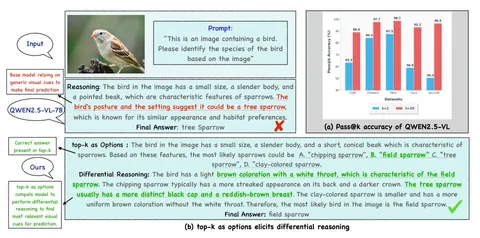
The traditional method and the new one are drawn as two dashed rows with identical images and boxes. Only the changed part differs, a text branch added below, and each row ends with its outcome: noisy samples selected or not selected.
- 2
A one sentence takeaway in a callout
Each of two dashed sections ends in a yellow callout that states its finding in a sentence: the old setup only helps on math, the new one helps beyond it. Small bar charts with checks and crosses sit beside them as evidence.
- 3
Observation first, then the method
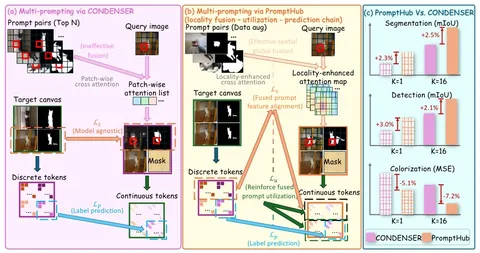
Panel (a), titled Observation, shows an effect the authors noticed in existing models. Panel (b) shows how the method uses it, with a green check label on each step. The figure tells the story of a finding, not only a pipeline.
- 4
Three big blocks and labeled arrows
Agent, environment and robot are three large colored blocks, and the text on each arrow says exactly what passes between them, such as state, action and reward. With so few elements the figure stays readable when shrunk to a slide or a thumbnail.
- 5
Method and results in one figure
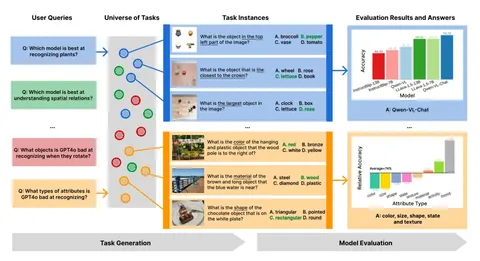
The top half contrasts the old way, with people doing every step, against the agent loop of the new method. A strip of input and output photo pairs runs along the bottom, so readers see what the system does and what it produces.
- 6
A radial layout for many backbones
The method's name sits in the center and tinted wedges fan out around it, one per backbone model, each with its own low and high resolution feature maps. The shape says the method works with all of them before any text does.
Questions about oral and spotlight paper figures
What do oral and spotlight mean at a conference?
They are presentation formats a conference assigns to selected papers after review. An oral paper is chosen for a talk in a main session, and a spotlight paper is highlighted in the program, with the exact format set by each conference and year. Most accepted papers are presented as posters only. This page follows the status each paper received at its own conference.
Do oral papers have better Figure 1s?
Not necessarily. A paper's rank reflects the whole paper as judged by reviewers and chairs, not its figure. Still, the figures in this set lean toward conceptual and teaser layouts, which state an idea or show results quickly. Treat them as examples of clear communication, not as a formula for acceptance.
Where do the oral, spotlight and award marks come from?
Each mark comes from the paper's status at its conference: oral, spotlight or an award. ICLR, ICML and NeurIPS papers appear only when the license on their OpenReview record was verified as CC BY 4.0. ACL papers have no such mark in our data, so none appear on this page.
Should my Figure 1 show results or the method?
Show whatever makes your main claim believable at a glance. If the contribution is a new capability, a teaser of outputs works; if it is a mechanism, draw the method next to the baseline. Several figures here do both, with a method sketch on top and a strip of outputs or a small chart below. Keep the result panel small enough that the method still reads first.
Can I reuse these oral and spotlight figures?
Copyright stays with the authors. These papers are under CC BY 4.0, which allows reuse, including commercial use, if you credit the authors, link to the paper and to the license, and note any changes you made. For your own paper it is usually better to borrow the layout idea and draw your own figure. If you start from an AI draft, check your venue's policy on AI-generated images before you submit.
Draft a Figure 1 around one clear claim
Describe your method and the one claim Figure 1 must carry, and SciFigure's AI figure tools draft a first version. Then check every label and arrow against your paper before you use it.
Open the AI figure generatorData and license
Every figure here is Figure 1 of a paper released under CC BY 4.0, cropped and resized, and each one credits its title, authors, venue and year with links to the paper and the license. Listing a figure does not mean its authors endorse SciFigure. How the licenses were checked.