
Free unit circle chart maker
Make a unit circle chart with radians, degrees and exact values
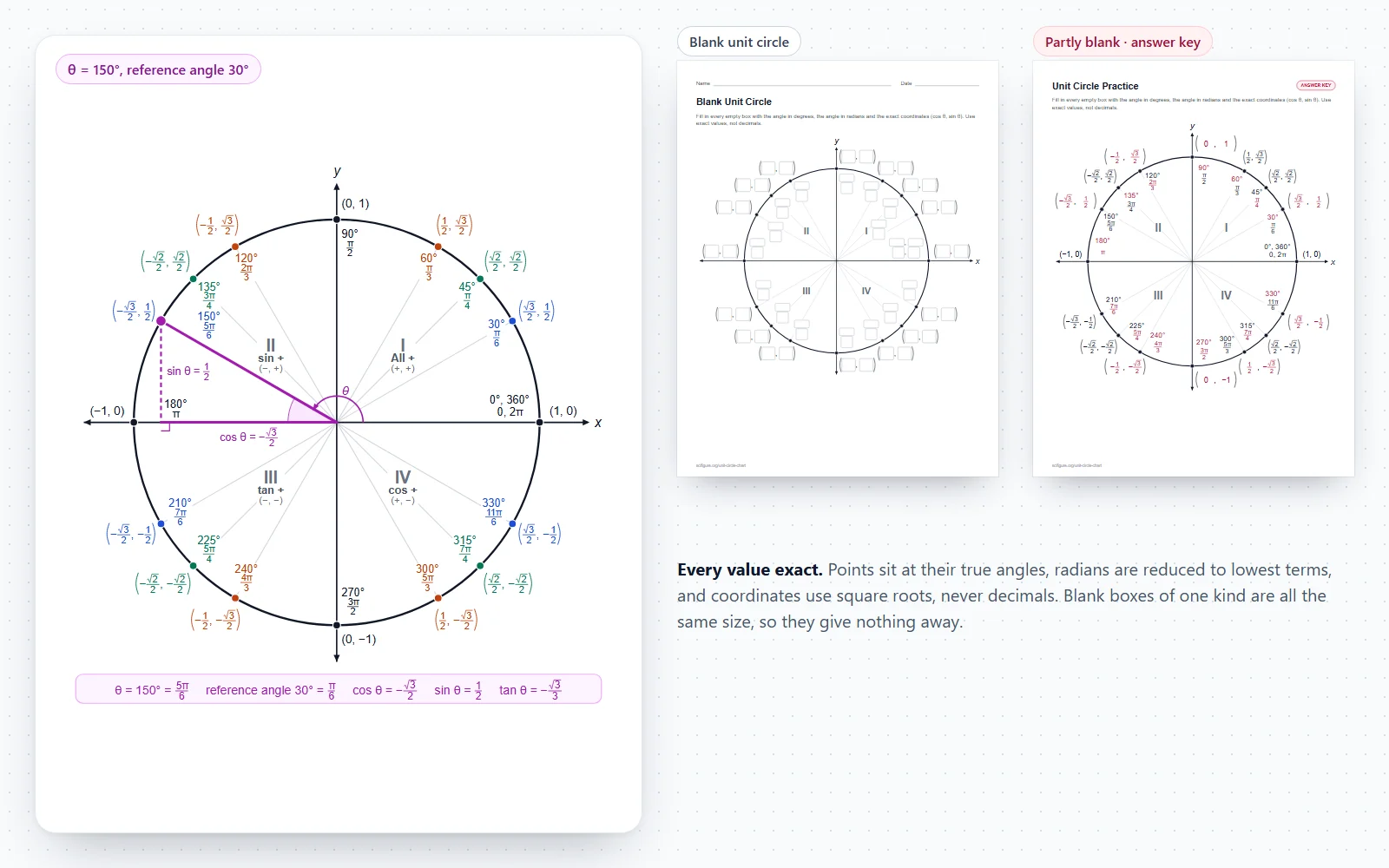
Every angle on this unit circle is drawn at its true position and labelled with its degree measure, its radian measure as a fraction of π, and its exact point (cos θ, sin θ) with square roots, never decimals. Choose the 16 standard angles or every 15°, add tan θ, quadrant signs and a highlighted reference triangle, then print a full chart, a blank unit circle or a partly blank one with an answer key.
Free, with no sign-up. Everything runs in your browser, and your last chart is kept on this device only. Undo with Ctrl+Z.
Worked examples
Exact values from the quadrant and the reference angle
Any angle on the chart takes the same three steps: find its quadrant, find its reference angle, then copy the first-quadrant values with the quadrant’s signs. Here they are for four angles, including one from the 15° family.
θ = 210° (7π/6)
- 210° = 210 × π/180 = 7π/6.
- It lies in quadrant III, where the signs of (x, y) are (−, −), so only tan θ is positive.
- Reference angle: 210° − 180° = 30° (π/6). In quadrant I that angle has cos √3/2, sin 1/2.
- Apply the signs: cos 210° = −√3/2, sin 210° = −1/2, tan 210° = √3/3.
θ = 225° (5π/4)
- 225° = 225 × π/180 = 5π/4.
- It lies in quadrant III, where the signs of (x, y) are (−, −), so only tan θ is positive.
- Reference angle: 225° − 180° = 45° (π/4). In quadrant I that angle has cos √2/2, sin √2/2.
- Apply the signs: cos 225° = −√2/2, sin 225° = −√2/2, tan 225° = 1.
The quadrant I values for 75° come from the sum formula: sin(45° + 30°) = sin 45° cos 30° + cos 45° sin 30° = (√6 + √2)/4.
θ = 300° (5π/3)
- 300° = 300 × π/180 = 5π/3.
- It lies in quadrant IV, where the signs of (x, y) are (+, −), so only cos θ is positive.
- Reference angle: 360° − 300° = 60° (π/3). In quadrant I that angle has cos 1/2, sin √3/2.
- Apply the signs: cos 300° = 1/2, sin 300° = −√3/2, tan 300° = −√3.
θ = 105° (7π/12)
- 105° = 105 × π/180 = 7π/12.
- It lies in quadrant II, where the signs of (x, y) are (−, +), so only sin θ is positive.
- Reference angle: 180° − 105° = 75° (5π/12). In quadrant I that angle has cos (√6 − √2)/4, sin (√6 + √2)/4.
- Apply the signs: cos 105° = (√2 − √6)/4, sin 105° = (√6 + √2)/4, tan 105° = −2 − √3.
The quadrant I values for 75° come from the sum formula: sin(45° + 30°) = sin 45° cos 30° + cos 45° sin 30° = (√6 + √2)/4.
Reference table
Unit circle values for all 16 standard angles
The same values the chart prints, in one table. The point on the unit circle is (cos θ, sin θ); tan θ = sin θ / cos θ.
| Degrees | Radians | Quadrant | Reference | cos θ | sin θ | tan θ |
|---|---|---|---|---|---|---|
| 0° | 0 | axis | 0° | 1 | 0 | 0 |
| 30° | π/6 | I | 30° | √3/2 | 1/2 | √3/3 |
| 45° | π/4 | I | 45° | √2/2 | √2/2 | 1 |
| 60° | π/3 | I | 60° | 1/2 | √3/2 | √3 |
| 90° | π/2 | axis | 90° | 0 | 1 | undefined |
| 120° | 2π/3 | II | 60° | −1/2 | √3/2 | −√3 |
| 135° | 3π/4 | II | 45° | −√2/2 | √2/2 | −1 |
| 150° | 5π/6 | II | 30° | −√3/2 | 1/2 | −√3/3 |
| 180° | π | axis | 0° | −1 | 0 | 0 |
| 210° | 7π/6 | III | 30° | −√3/2 | −1/2 | √3/3 |
| 225° | 5π/4 | III | 45° | −√2/2 | −√2/2 | 1 |
| 240° | 4π/3 | III | 60° | −1/2 | −√3/2 | √3 |
| 270° | 3π/2 | axis | 90° | 0 | −1 | undefined |
| 300° | 5π/3 | IV | 60° | 1/2 | −√3/2 | −√3 |
| 315° | 7π/4 | IV | 45° | √2/2 | −√2/2 | −1 |
| 330° | 11π/6 | IV | 30° | √3/2 | −1/2 | −√3/3 |
The eight 15° angles
Odd multiples of 15°, from the sum and difference formulas. Choose Every 15° in the tool to print them on the circle.
| Angle | cos θ | sin θ | tan θ |
|---|---|---|---|
| 15° = π/12 | (√6 + √2)/4 | (√6 − √2)/4 | 2 − √3 |
| 45° = π/4 | √2/2 | √2/2 | 1 |
| 75° = 5π/12 | (√6 − √2)/4 | (√6 + √2)/4 | 2 + √3 |
| 105° = 7π/12 | (√2 − √6)/4 | (√6 + √2)/4 | −2 − √3 |
| 135° = 3π/4 | −√2/2 | √2/2 | −1 |
| 165° = 11π/12 | −(√6 + √2)/4 | (√6 − √2)/4 | √3 − 2 |
| 195° = 13π/12 | −(√6 + √2)/4 | (√2 − √6)/4 | 2 − √3 |
| 225° = 5π/4 | −√2/2 | −√2/2 | 1 |
| 255° = 17π/12 | (√2 − √6)/4 | −(√6 + √2)/4 | 2 + √3 |
| 285° = 19π/12 | (√6 − √2)/4 | −(√6 + √2)/4 | −2 − √3 |
| 315° = 7π/4 | √2/2 | −√2/2 | −1 |
| 345° = 23π/12 | (√6 + √2)/4 | (√2 − √6)/4 | √3 − 2 |
What a unit circle chart shows
The unit circle is the circle of radius 1 centred at the origin. Walk counterclockwise from the point (1, 0) through an angle θ and you land on the point whose x-coordinate is cos θ and whose y-coordinate is sin θ. A unit circle chart marks the angles you meet most often and writes that point next to each one, so the whole of basic trigonometry fits on one page.
- Angles are measured from the positive x-axis, counterclockwise for positive angles and clockwise for negative ones.
- Each point is (cos θ, sin θ). Because the radius is 1, the hypotenuse of every reference triangle is 1 and the legs are exactly the cosine and the sine.
- Every point satisfies x² + y² = 1, which is the identity cos²θ + sin²θ = 1.
- tan θ is the slope of the terminal side: sin θ ÷ cos θ, or y ÷ x.
- The standard chart has 16 angles: the multiples of 30° (π/6) and of 45° (π/4). The 15° version adds the eight angles such as 15°, 75° and 105°.
How to make your unit circle chart
The chart redraws as you change a setting, and nothing leaves your browser.
- Pick the angles under Chart: the 16 standard angles, every 15°, only the multiples of 30°, or only the multiples of 45°.
- Choose the labels: degrees, radians, the coordinates (cos θ, sin θ), tan θ, quadrant numerals and the ASTC signs. Switch degrees off for a radian circle chart.
- Set stacked fractions (√3 over 2) for a classroom poster or inline ones (√3/2) for notes, a text size, and colour by reference angle or plain black for photocopying.
- Under Angle, highlight any multiple of 15° to draw its terminal side, the angle θ, the shaded reference angle and the right triangle whose legs are cos θ and sin θ.
- Under Worksheet, make a blank unit circle or a partly blank one, choose which values students fill in, and add a values table page.
- Download a vector PDF with the answer key after the worksheet, print it straight away, or save the chart as a 300 dpi PNG or an SVG.
The unit circle with radians and degrees
A full turn is 360° or 2π radians, so 180° = π and you convert by multiplying: radians = degrees × π/180, and degrees = radians × 180/π. On a unit circle the radian measure is also the length of the arc the angle cuts off, because arc length is radius × angle and the radius is 1.
- 30° = π/6, 45° = π/4, 60° = π/3, 90° = π/2: the four fractions every other angle on the chart is built from.
- Count in sixths around the circle for the 30° family: π/6, 2π/6 = π/3, 3π/6 = π/2, 4π/6 = 2π/3, 5π/6, 6π/6 = π, then 7π/6, 4π/3, 3π/2, 5π/3, 11π/6. The chart reduces every fraction to lowest terms.
- Count in quarters for the 45° family: π/4, 3π/4, 5π/4, 7π/4, with the even quarters falling on the axes.
- The 15° angles are twelfths of π: π/12, 5π/12, 7π/12, 11π/12 and so on.
- A radian circle chart is the same circle labelled only in radians; switch Degrees off to make one. Calculus works almost entirely in radians, so it is the version to learn before then.
Where the exact values come from
Only three triangles are needed. Drop a perpendicular from the point to the x-axis and the triangle formed has hypotenuse 1, so its legs are the coordinates.
- 45°: a 45-45-90 triangle has equal legs, and with hypotenuse 1 each leg is 1/√2 = √2/2. The point is (√2/2, √2/2).
- 30°: a 30-60-90 triangle has legs in the ratio 1 : √3 : 2. With hypotenuse 1 the short leg is 1/2 and the long leg √3/2, so the point is (√3/2, 1/2).
- 60°: the same triangle stood on its other leg, so the coordinates swap: (1/2, √3/2).
- A memory pattern for the first quadrant: the sines of 0°, 30°, 45°, 60° and 90° are √0/2, √1/2, √2/2, √3/2 and √4/2, which simplify to 0, 1/2, √2/2, √3/2 and 1. The cosines run the same list backwards.
- Every other point is one of these with signs changed, because the circle is symmetric about both axes.
Signs in the four quadrants: All Students Take Calculus
The coordinates of a point carry its signs: x is negative left of the y-axis and y is negative below the x-axis. Read those signs as cos θ and sin θ and you have the ASTC rule, which the chart prints in each quadrant.
- Quadrant I, 0° to 90°: (+, +). All six trigonometric functions are positive.
- Quadrant II, 90° to 180°: (−, +). Only sine, and its reciprocal cosecant, is positive.
- Quadrant III, 180° to 270°: (−, −). Only tangent, and its reciprocal cotangent, is positive, because a negative divided by a negative is positive.
- Quadrant IV, 270° to 360°: (+, −). Only cosine, and its reciprocal secant, is positive.
- Angles on an axis, the quadrantal angles 0°, 90°, 180° and 270°, belong to no quadrant; one of their coordinates is 0.
Reference angles: one triangle for four angles
An angle’s reference angle is the acute angle between its terminal side and the x-axis. Angles with the same reference angle have the same sine and cosine up to sign, which is why the chart colours them alike.
- Quadrant I: the reference angle is θ itself.
- Quadrant II: 180° − θ, or π − θ. For 150°, it is 30°.
- Quadrant III: θ − 180°, or θ − π. For 225°, it is 45°.
- Quadrant IV: 360° − θ, or 2π − θ. For 300°, it is 60°.
- So sin 150° = sin 30° = 1/2, cos 225° = −cos 45° = −√2/2, and tan 300° = −tan 60° = −√3. Highlight an angle in the tool to see its reference triangle shaded.
Tangent, and the three reciprocal functions
tan θ = sin θ / cos θ, the y-coordinate divided by the x-coordinate. Switch on tan θ to print it under each point in its rationalised form.
- tan 30° = (1/2) ÷ (√3/2) = 1/√3, written √3/3 after rationalising the denominator. tan 45° = 1 and tan 60° = √3.
- tan θ is undefined at 90° and 270°, where cos θ = 0 and the terminal side is vertical. It is 0 at 0° and 180°.
- The reciprocals are csc θ = 1/sin θ, sec θ = 1/cos θ and cot θ = 1/tan θ, so they share the signs of the function they come from.
- cot θ is undefined at 0° and 180°, where sin θ = 0, and sec θ is undefined wherever tan θ is.
The 15° angles and their exact values
Choose Every 15° to add the eight angles between the standard ones. Their values come from the difference and sum formulas, which is where most precalculus classes meet them.
- cos 15° = cos(45° − 30°) = cos 45° cos 30° + sin 45° sin 30° = √6/4 + √2/4 = (√6 + √2)/4.
- sin 15° = sin(45° − 30°) = sin 45° cos 30° − cos 45° sin 30° = (√6 − √2)/4.
- tan 15° = 2 − √3 and tan 75° = 2 + √3.
- 75° is the complement of 15°, so its sine and cosine swap: cos 75° = (√6 − √2)/4 and sin 75° = (√6 + √2)/4.
- The other six follow by the quadrant signs, for example cos 105° = (√2 − √6)/4.
Blank unit circle worksheets
Filling in a blank unit circle from memory, then checking it against the key, is the usual way to learn it. The tool makes three kinds of sheet from the same chart.
- Blank: every degree, radian and coordinate box is empty, with the points and the quadrant numerals left as guides.
- Partly blank: about half of each kind of value is missing, chosen at random. Shuffle for a fresh version each day; the answer key always matches.
- Choose which values students fill in, for example radians and coordinates only, with the degrees given as prompts.
- Every empty box of a kind has the same size, so a short answer such as 1/2 is not given away by a small box.
- Add the values table page for practice in rows: degrees, radians, location, cos θ, sin θ and tan θ for every angle on the chart.
Common unit circle mistakes
These are the errors that cost the most marks, and the chart is set up to show the right version of each.
- Swapping sine and cosine: the x-coordinate is cos θ and comes first. At 30° the point is (√3/2, 1/2), not (1/2, √3/2).
- Losing a sign: decide the quadrant before writing a value. 210° is in quadrant III, so both coordinates are negative.
- Measuring a reference angle from the y-axis: it is always to the x-axis, so the reference angle of 120° is 60°, not 30°.
- Leaving radians unsimplified: 4π/6 should be 2π/3, and 3π/6 is π/2.
- Writing tan 90° = 0 or ∞: it is undefined, because cos 90° = 0.
- Using decimals such as 0.866 for √3/2: exact-value questions want the surd.
Printing and exporting
Pages are laid out in points and drawn the same way on screen, in the PDF and in the PNG, so what you preview is what prints.
- US Letter or A4, with a half-inch margin that every office printer can reach. The chart is scaled to fill the width of the page.
- The PDF is vector: lines, square roots and fraction bars stay sharp at any zoom, and the text stays selectable.
- PNG at 300 dpi for slides, learning platforms and notes; SVG for editing in Illustrator, Inkscape, PowerPoint or Keynote.
- Switch off the colours, the name line or the site address for a clean page.
Where the unit circle fits in the curriculum
In the US Common Core standards the unit circle belongs to high school Functions, Trigonometric Functions (HSF-TF), and it is the core of every precalculus course.
- HSF-TF.A.1: radian measure as the length of the arc on the unit circle that an angle cuts off.
- HSF-TF.A.2: using the unit circle to extend sine, cosine and tangent to all real numbers, read as radian measures traversed counterclockwise.
- HSF-TF.A.3 (+): special triangles for π/3, π/4 and π/6, and the unit circle for the values at π − x, π + x and 2π − x.
- Later it carries the graphs of sine and cosine, inverse functions, polar coordinates and complex numbers in polar form.
Frequently asked questions
What is a unit circle chart?
A diagram of the circle of radius 1 centred at the origin, with the common angles marked in degrees and radians and the exact coordinates (cos θ, sin θ) of each point. It is a reference sheet for the sine and cosine of every special angle.
What is a radian circle chart?
A unit circle labelled in radians, as fractions of π, instead of or as well as degrees. Switch Degrees off under Chart for a radians-only version; the coordinates stay the same.
How do you memorise the unit circle?
Learn the first quadrant only: (√3/2, 1/2) at 30°, (√2/2, √2/2) at 45° and (1/2, √3/2) at 60°. Every other point repeats these with the signs of its quadrant. Then practise on a partly blank sheet until a fully blank unit circle takes a few minutes.
Why does the unit circle have a radius of 1?
With hypotenuse 1, the legs of the triangle from any point are exactly cos θ and sin θ, so the point itself is (cos θ, sin θ) with nothing to divide by. On a circle of radius r the point would be (r cos θ, r sin θ).
How do I convert degrees to radians?
Multiply by π/180. For example 150° × π/180 = 5π/6. To go back, multiply by 180/π: 7π/4 × 180/π = 315°.
What are the coordinates of 30°, 45° and 60° on the unit circle?
30° (π/6) is (√3/2, 1/2), 45° (π/4) is (√2/2, √2/2), and 60° (π/3) is (1/2, √3/2).
Why is tan 90° undefined?
tan θ = sin θ / cos θ, and at 90° the point is (0, 1), so it would mean dividing 1 by 0. The same happens at 270°, where the point is (0, −1).
What does ASTC stand for?
All, Sine, Tangent, Cosine: the functions that are positive in quadrants I, II, III and IV. The usual mnemonic is All Students Take Calculus.
What is a reference angle?
The acute angle between the terminal side of an angle and the x-axis. It is θ in quadrant I, 180° − θ in II, θ − 180° in III and 360° − θ in IV. The reference angle gives the size of sin θ and cos θ; the quadrant gives their signs.
How do you find the exact values for 15° and 75°?
Use the difference formula with 45° and 30°: cos 15° = cos 45° cos 30° + sin 45° sin 30° = (√6 + √2)/4 and sin 15° = (√6 − √2)/4. 75° swaps them. Choose Every 15° to print all 24 angles.
Is √3/3 the same as 1/√3?
Yes. Multiply 1/√3 by √3/√3 to get √3/3. Both equal tan 30°; the chart uses the rationalised form √3/3, as most textbooks do.
Can I print a blank unit circle with an answer key?
Yes. Choose Blank or Partly blank under Worksheet and keep Answer key pages on. The PDF has the worksheet first and the key after it, with the answers in red in the same boxes.
What about negative angles or angles over 360°?
Add or subtract 360° (2π) until the angle lies between 0° and 360°; the result is coterminal and lands on the same point. −30° lands on the point of 330°, (√3/2, −1/2), and 390° on the point of 30°, (√3/2, 1/2).
Can I use the chart in slides or a class handout?
Yes. Download a 300 dpi PNG for slides or a learning platform, or an SVG to edit the colours and labels in PowerPoint, Keynote, Illustrator or Inkscape. The tool is free and needs no sign-up.
Related tools
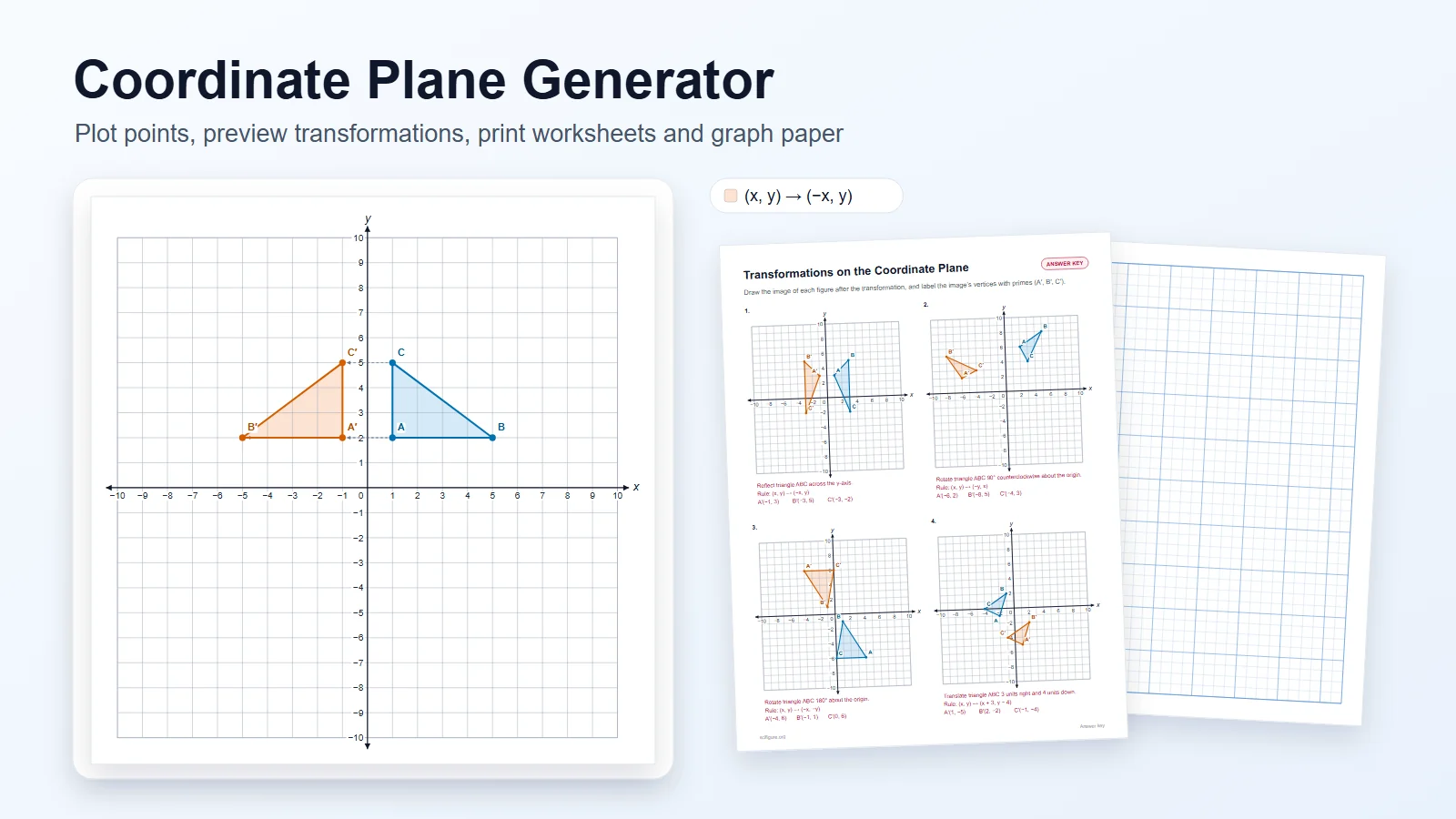
Coordinate Plane Generator
Four-quadrant grids, plotted points, reflections and rotations, with worksheets and keys.
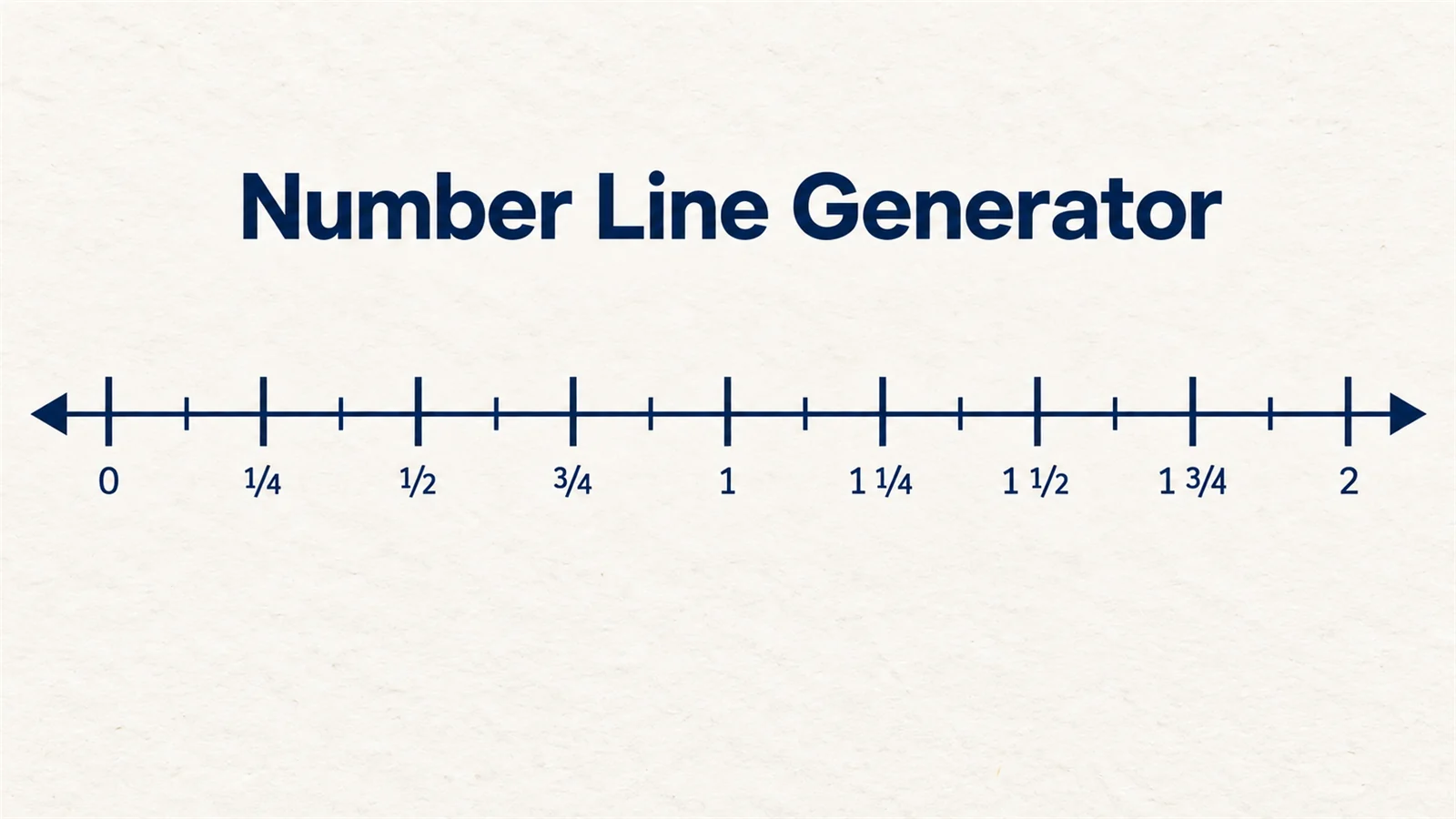
Number Line Generator
Number lines with fractions, marked points and shaded inequalities, ready to print.
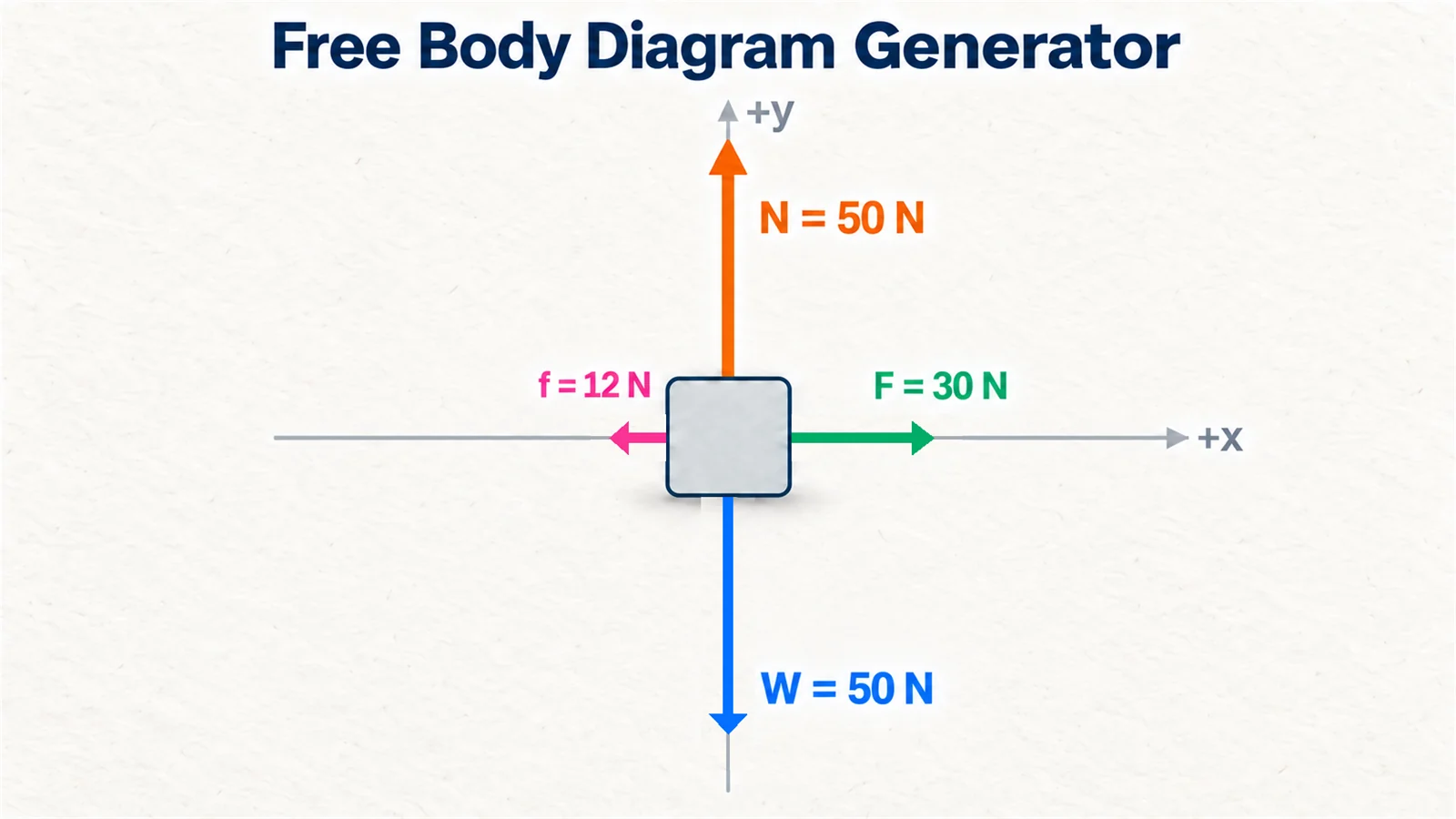
Free Body Diagram Generator
Forces drawn to scale and split into x and y components with sin θ and cos θ.
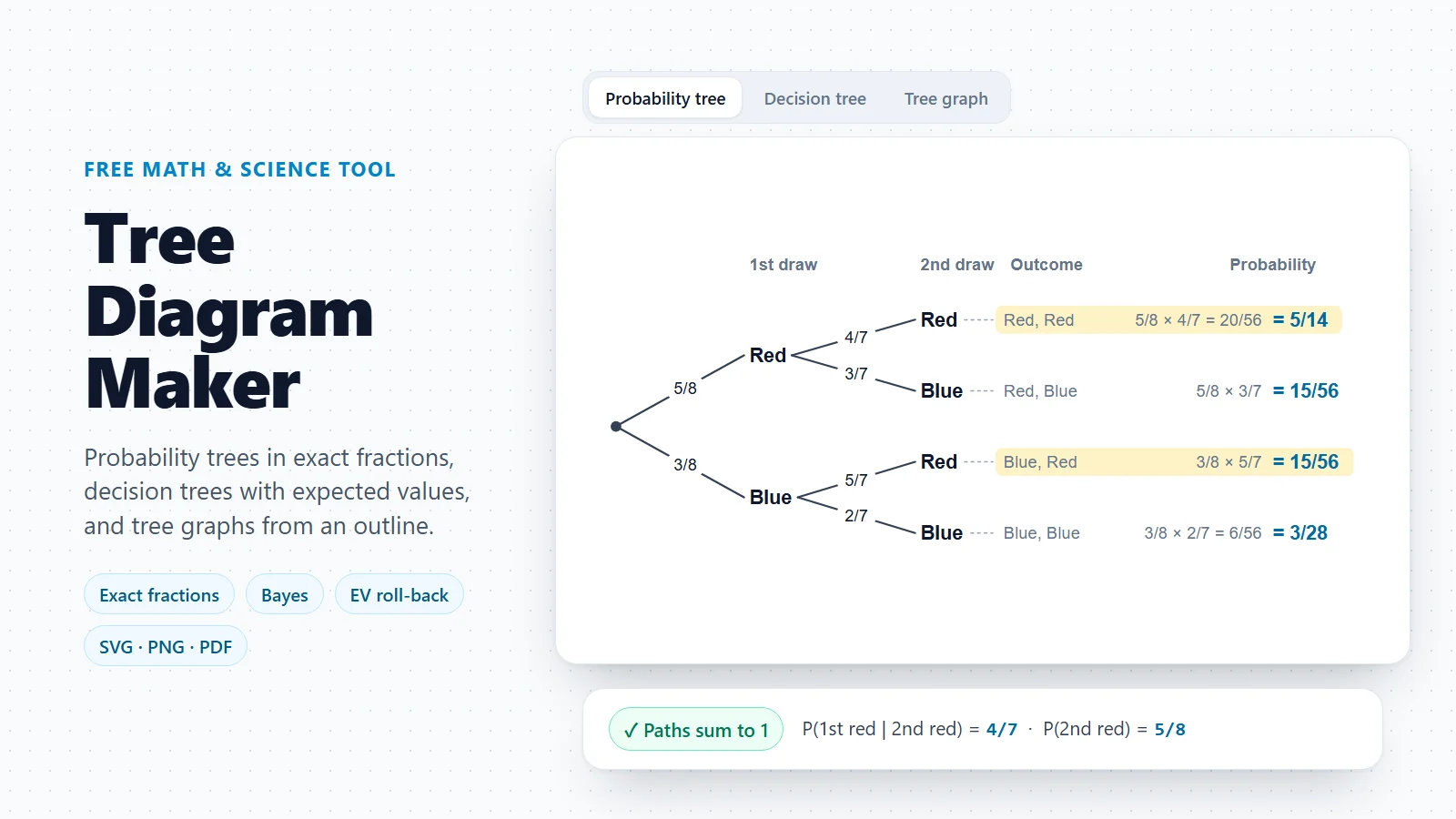
Tree Diagram Maker
Probability trees with branch probabilities and outcomes multiplied out exactly.
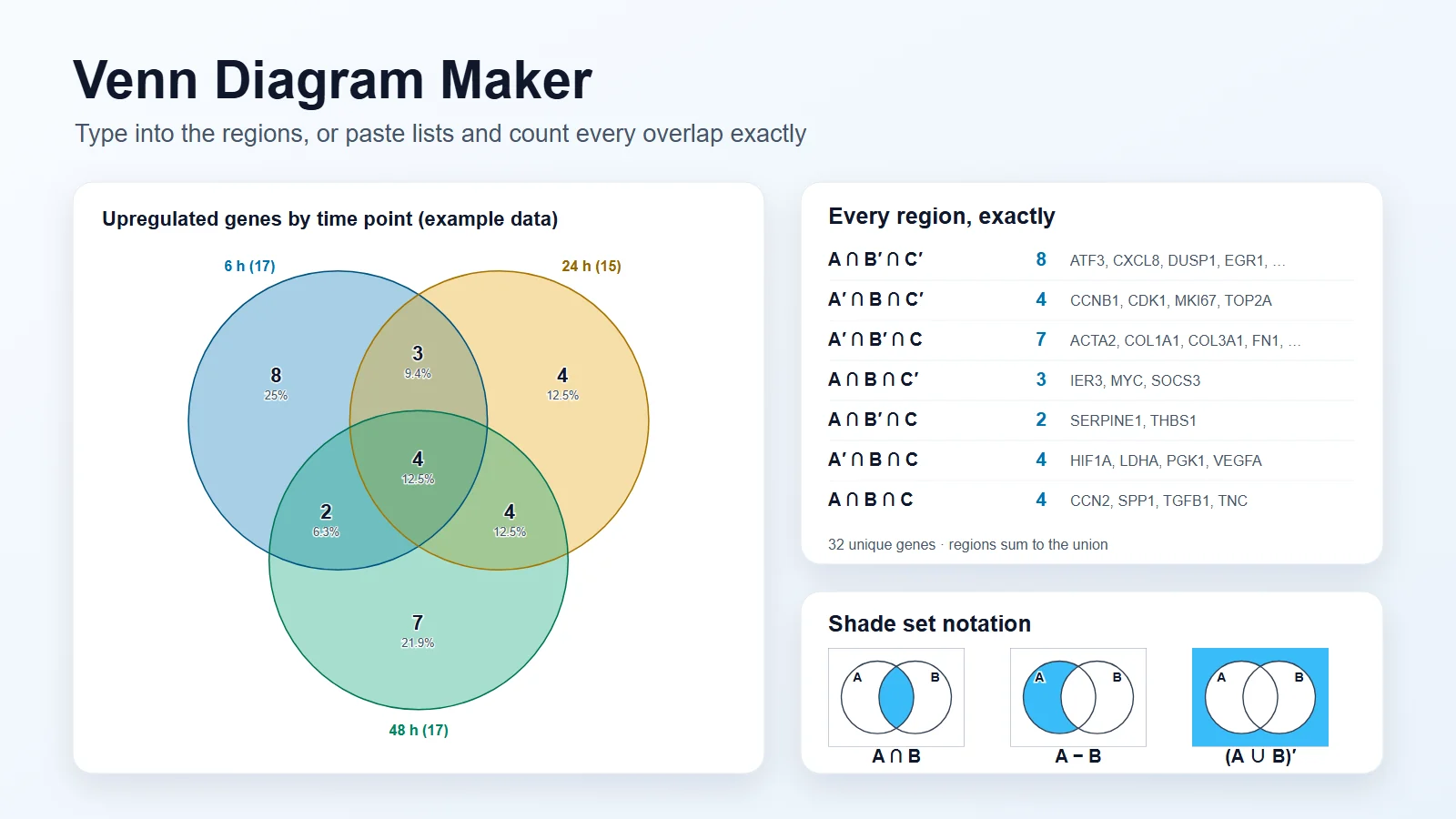
Venn Diagram Maker
Two- and three-set Venn diagrams with exact regions for sets and probability.
More free tools for maths and science classes
Coordinate planes, number lines, hundreds charts, probability trees and diagram makers, free to use and print.
Browse the free toolsLast checked: November 17, 2026. Sources: OpenStax Precalculus 2e, 5.1 Angles; 5.2 Unit Circle: Sine and Cosine Functions; 5.3 The Other Trigonometric Functions; 7.2 Sum and Difference Identities; Common Core: High School Trigonometric Functions.