SciFigure AI logoSciFigure AI

Molecular Orbital AI

Molecular Orbital Diagram Maker

Create clean molecular orbital diagrams for chemistry lessons, homework, lab reports, and study materials. Describe the molecule, orbital ordering, electron configuration, bond order, and labels you need, then generate a polished MO energy-level diagram.

Bonding and antibonding orbitalsElectron arrows and bond orderChemistry class ready

AI Molecular Orbital Diagram Maker

Describe the molecule, orbital ordering, electron occupancy, bond order, and labels you need.

Costs 5 credits401 / 2000 characters

Generate a publication-ready PNG from your description.

Preview

Molecular Orbital Example Previews

Target aspect ratio: 4:3

Nitrogen molecular orbital diagram with sigma and pi orbitals, electron arrows, s-p mixing, bond order 3, and diamagnetic label
Oxygen molecular orbital diagram with pi star antibonding orbitals, two unpaired electrons, bond order 2, and paramagnetic label
Carbon monoxide molecular orbital diagram with offset carbon and oxygen atomic orbital energies, filled orbitals, HOMO/LUMO labels, and bond order

Sample previews. Describe your molecule to generate your own MO diagram.

Molecular Orbital Diagram Examples

Use these examples as visual directions for N2, O2, CO, F2, H2, and C2 molecular orbital diagrams.

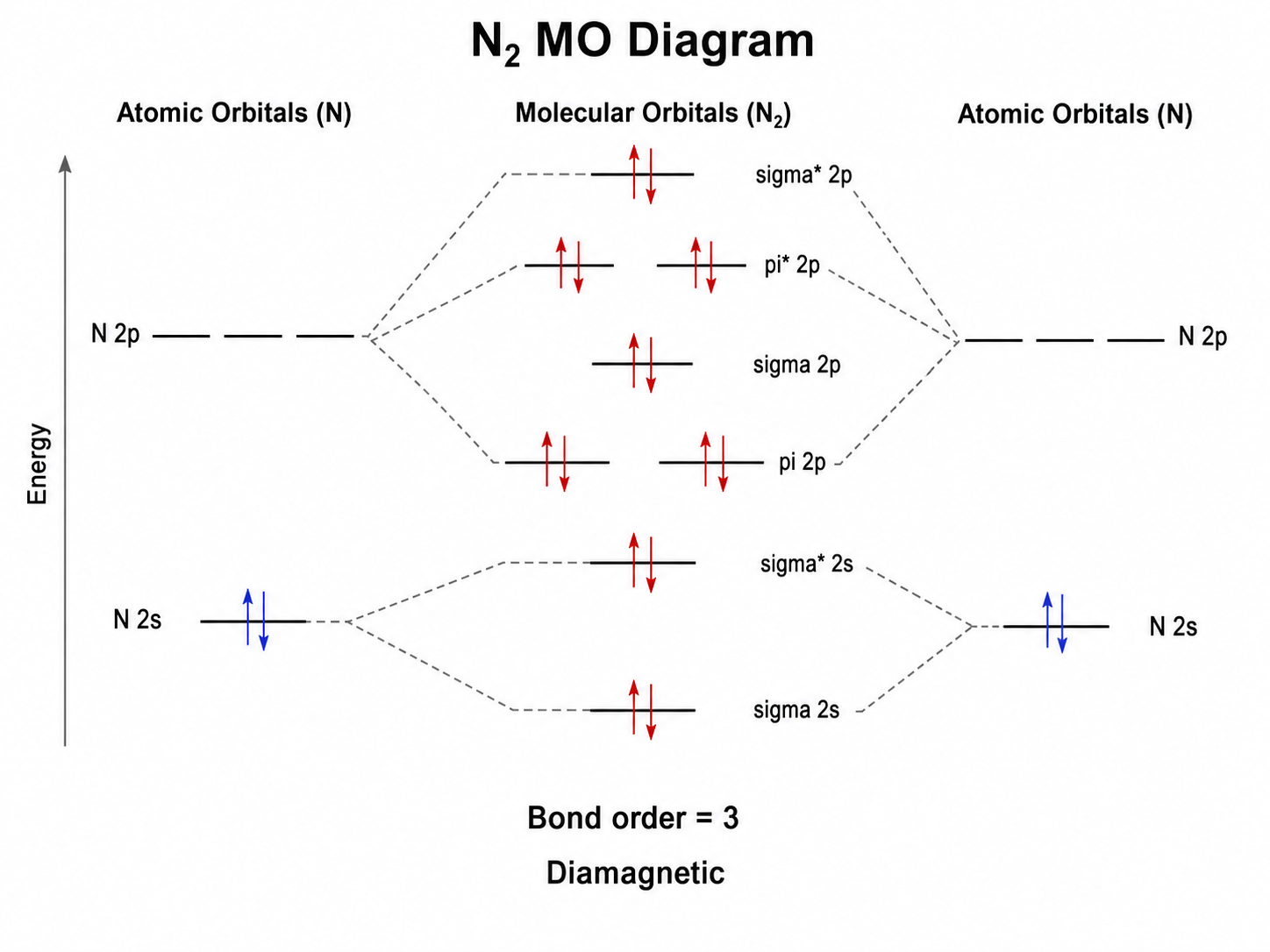
Nitrogen molecular orbital diagram with sigma and pi orbitals, electron arrows, s-p mixing, bond order 3, and diamagnetic label

Prompt

Create a labeled molecular orbital diagram for N2. Show nitrogen atomic orbitals on both sides, molecular orbitals in the center, s-p mixing, filled sigma and pi bonding orbitals, electron occupancy arrows for 10 valence electrons, bond order 3, HOMO/LUMO labels, and a diamagnetic note. Use a clean chemistry textbook style on a white background.
N2 MO Diagram

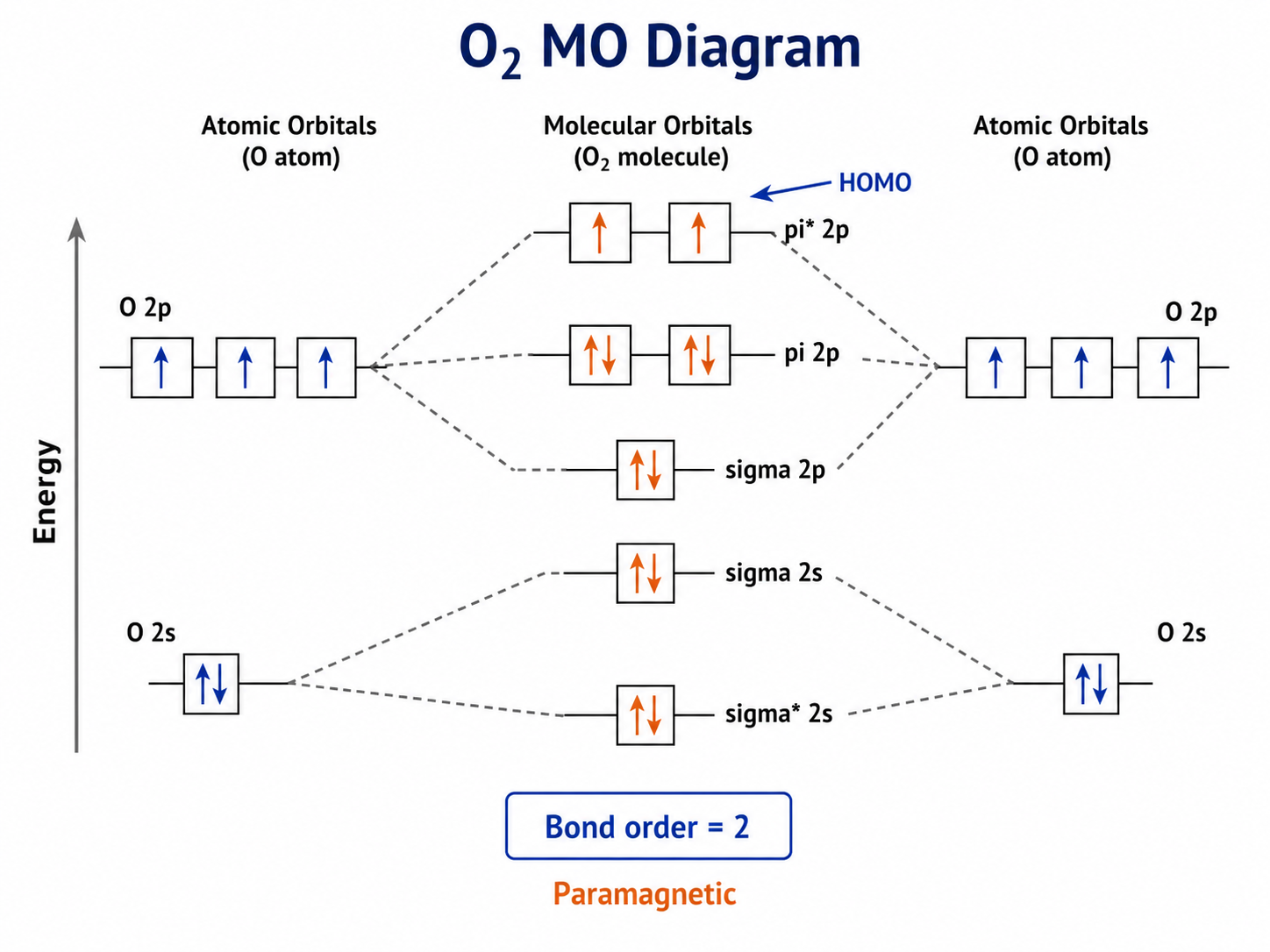
Oxygen molecular orbital diagram with pi star antibonding orbitals, two unpaired electrons, bond order 2, and paramagnetic label

Prompt

Create a labeled molecular orbital diagram for O2. Show oxygen atomic orbitals, sigma and pi bonding orbitals, sigma star and pi star antibonding orbitals, electron occupancy arrows, two unpaired electrons in the pi* orbitals, bond order 2, HOMO/LUMO labels, and a paramagnetic note.

O2 MO Diagram

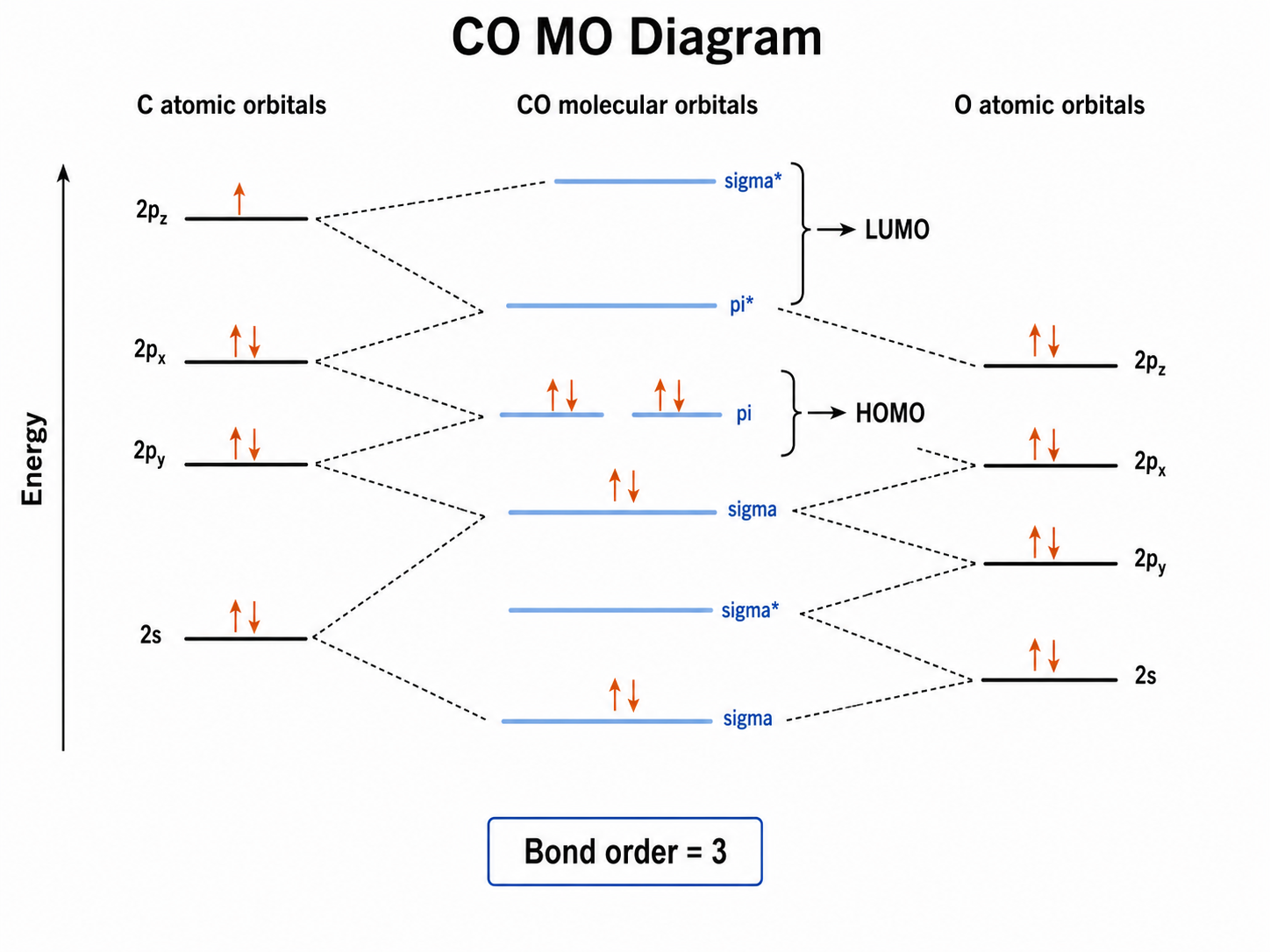
Carbon monoxide molecular orbital diagram with offset carbon and oxygen atomic orbital energies, filled orbitals, HOMO/LUMO labels, and bond order

Prompt

Create a heteronuclear carbon monoxide molecular orbital diagram. Show offset carbon and oxygen atomic orbital energies, labeled bonding and antibonding molecular orbitals, filled electron occupancy arrows, HOMO/LUMO labels, bond order, and a vertical energy axis. Keep all labels readable.

CO MO Diagram

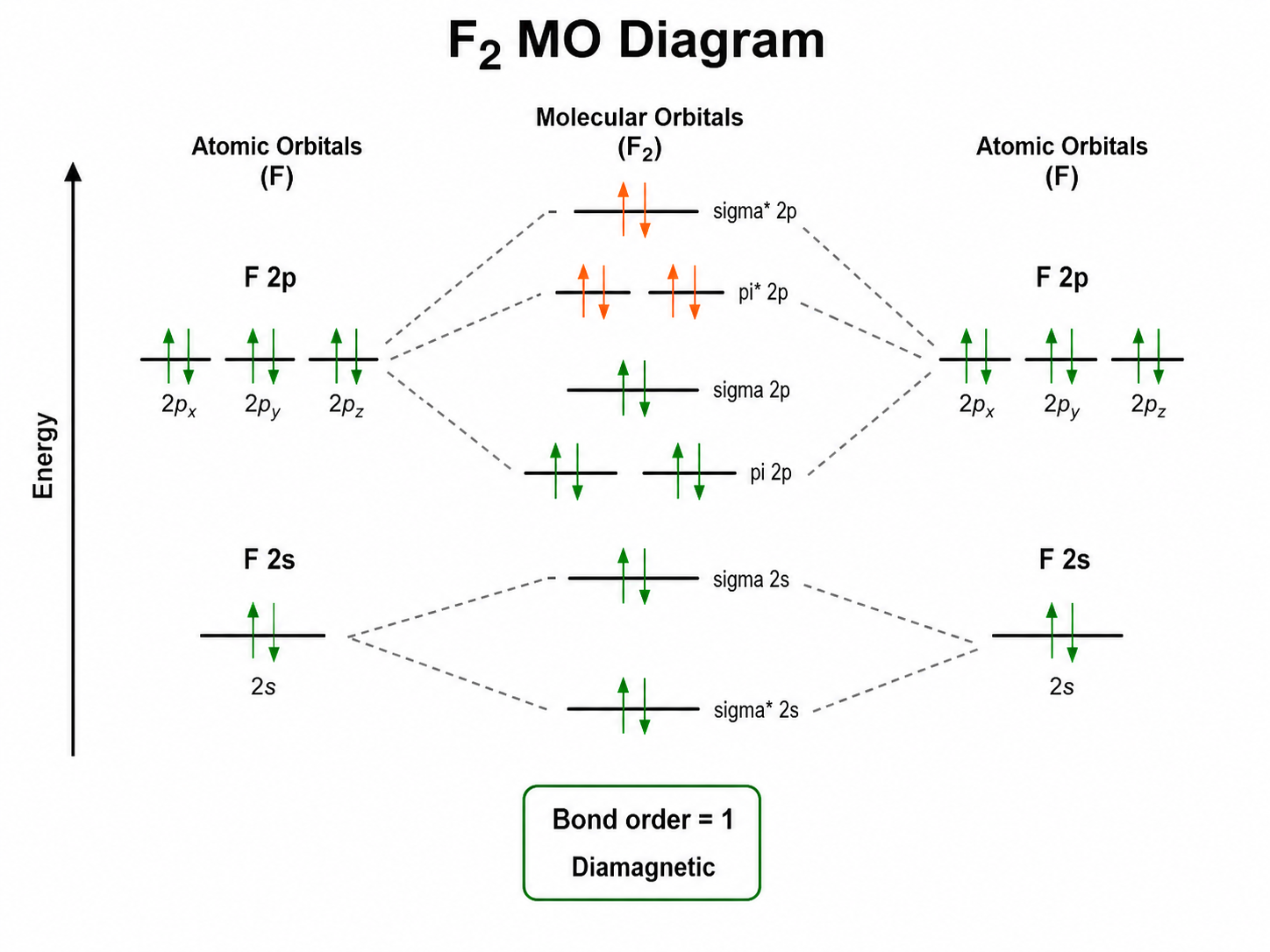
Fluorine molecular orbital diagram with filled sigma and pi bonding orbitals, filled pi star antibonding orbitals, bond order 1, and paired electrons

Prompt

Create a labeled molecular orbital diagram for F2. Show fluorine atomic orbitals, filled sigma and pi bonding orbitals, filled pi* antibonding orbitals, electron occupancy arrows for 14 valence electrons, bond order 1, all electrons paired, and a clean energy-level layout.

F2 MO Diagram

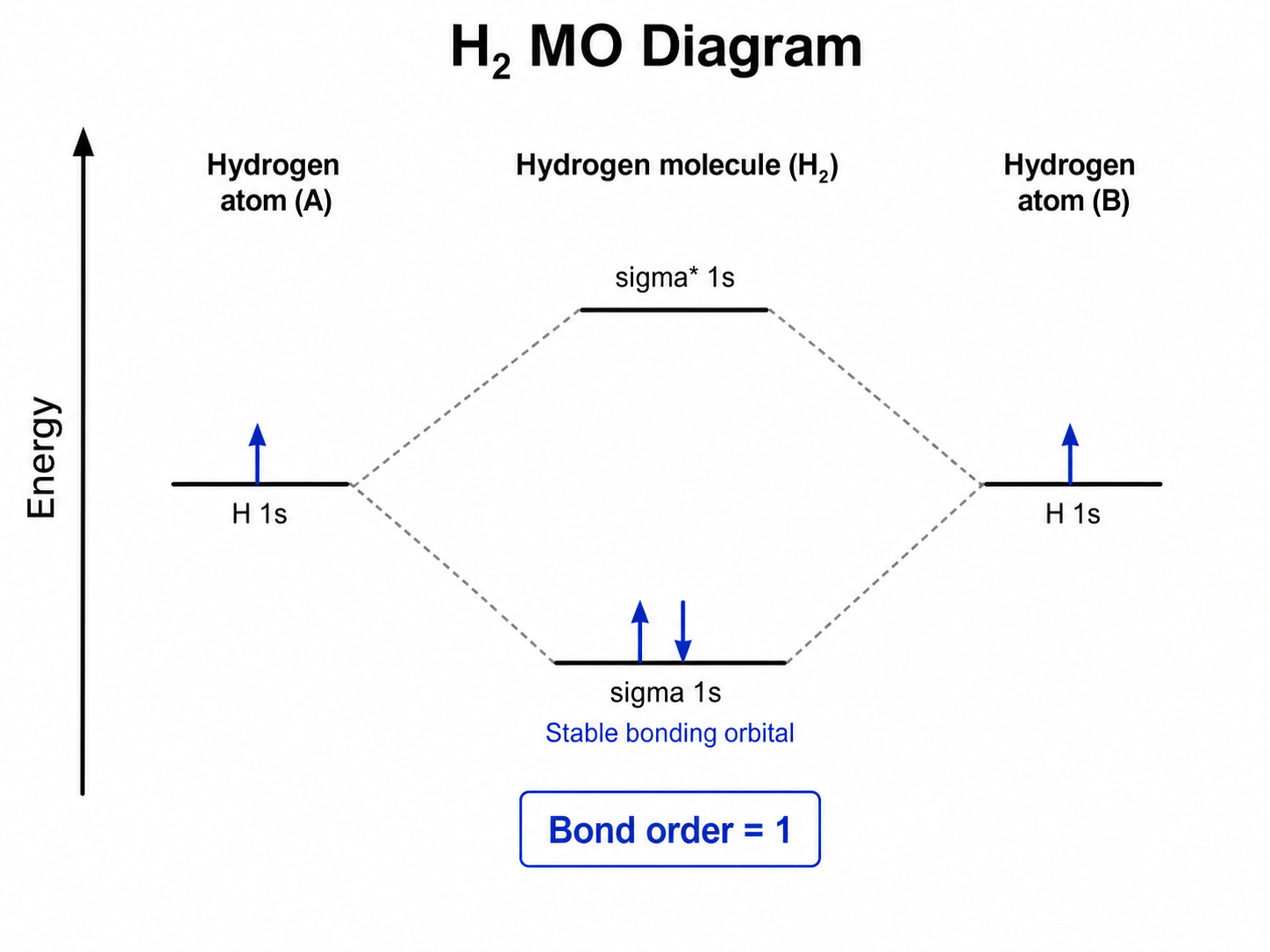
Hydrogen molecular orbital diagram with two hydrogen 1s atomic orbitals, sigma 1s bonding orbital, sigma star 1s antibonding orbital, and bond order 1

Prompt

Create a simple molecular orbital diagram for H2. Show two hydrogen 1s atomic orbitals combining into sigma 1s bonding and sigma star 1s antibonding molecular orbitals, two electron arrows in the bonding orbital, bond order 1, and a clear vertical energy axis.

H2 MO Diagram

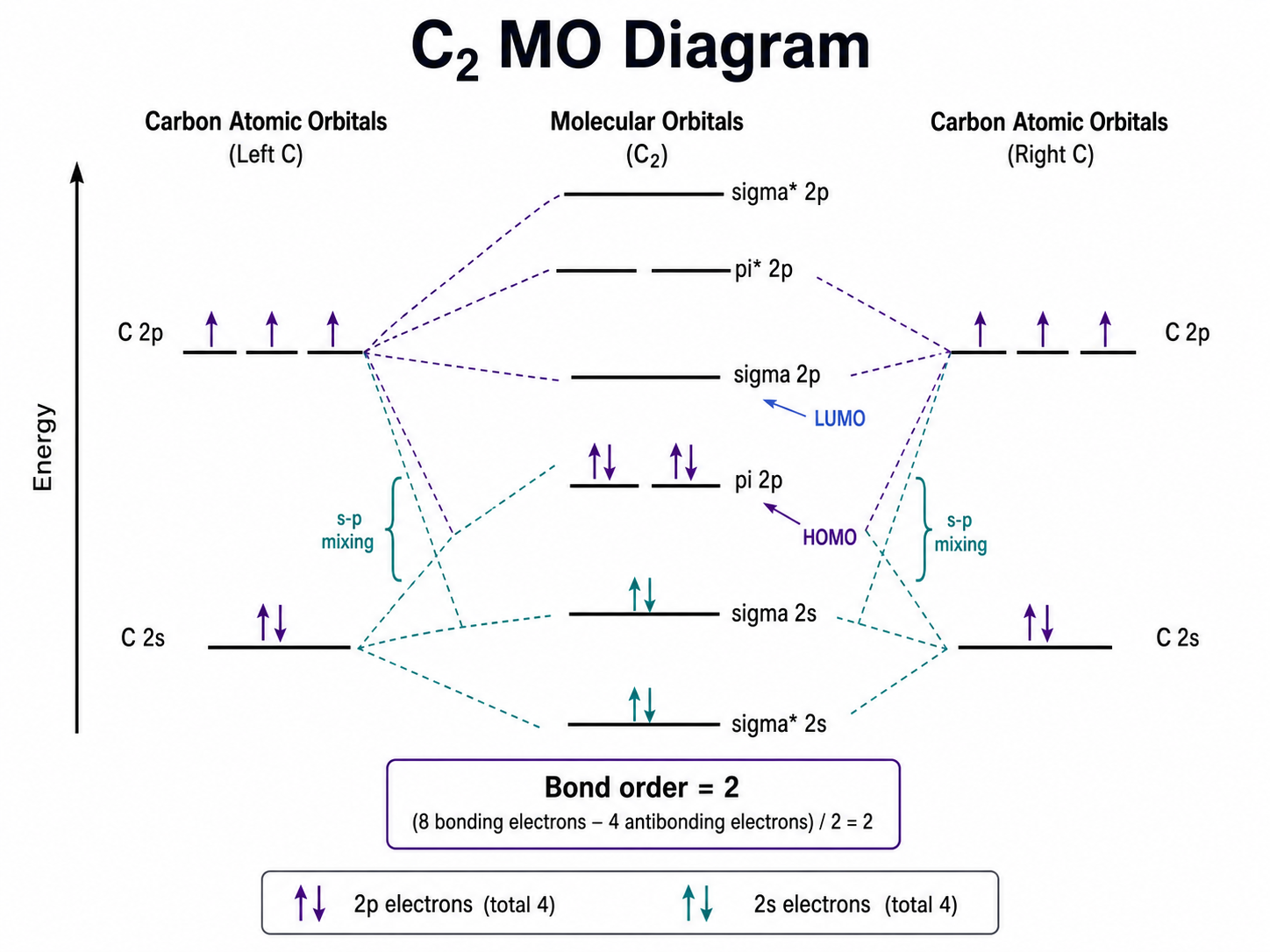
Carbon molecular orbital diagram with s-p mixing, pi 2p orbitals filled before sigma 2p, electron arrows, bond order 2, and HOMO/LUMO labels

Prompt

Create a labeled molecular orbital diagram for C2. Show carbon atomic orbitals, s-p mixing, pi 2p orbitals filled before sigma 2p, electron occupancy arrows for 8 valence electrons, bond order 2, HOMO/LUMO labels, and clear valence orbital labels.

C2 MO Diagram

How to make a molecular orbital diagram

1

Choose the molecule

Enter the molecule or ion, such as N2, O2, CO, F2, H2, C2, CN-, or N2-, and note whether it is neutral or charged.

2

Describe orbitals and electrons

Specify orbital ordering, s-p mixing, electron count, sigma and pi levels, HOMO/LUMO labels, bond order, and magnetic behavior.

3

Generate and review

Check electron occupancy, bond order, orbital labels, correlation lines, and chemistry details before using the diagram.

What is a molecular orbital diagram?

A molecular orbital diagram is an energy-level diagram that shows how atomic orbitals combine into bonding and antibonding molecular orbitals. It helps explain electron configuration, bond order, magnetic behavior, HOMO/LUMO, and orbital ordering in molecules such as N2, O2, CO, F2, H2, and C2.

Why use a molecular orbital diagram maker

  • Create a molecular orbital diagram faster than placing every orbital level and electron arrow by hand.
  • Keep sigma orbitals, pi orbitals, antibonding orbitals, HOMO/LUMO labels, and bond order readable.
  • Compare common MO diagrams for N2, O2, CO, F2, H2, C2, CN-, and related chemistry examples.
  • Draft chemistry homework, worksheets, slides, lab report visuals, and study guides from one focused prompt.

Parts of a molecular orbital diagram

  • Atomic orbitals appear on the left and right, usually grouped by atom and energy level.
  • Molecular orbitals sit in the center as bonding, antibonding, sigma, and pi levels.
  • Electron arrows show occupancy, pairing, unpaired electrons, and magnetic behavior.
  • The energy axis and correlation lines explain how atomic orbitals combine.
  • Bond order, HOMO/LUMO labels, s-p mixing, and notes help students check the result.

Where molecular orbital diagrams are used

  • General chemistry and inorganic chemistry lessons about bonding and electron configuration.
  • MO diagram homework, worksheets, study guides, classroom slides, and exam review materials.
  • Lab reports and teaching figures that compare bond order, paramagnetism, and orbital filling.
  • Chemistry diagrams for N2, O2, CO, F2, H2, C2, CN-, NO, and related molecular examples.

Molecular Orbital Diagram Maker FAQ

It is an energy-level diagram that shows how atomic orbitals combine into molecular orbitals, including bonding orbitals, antibonding orbitals, electron occupancy, and bond order.

Need other chemistry diagrams?

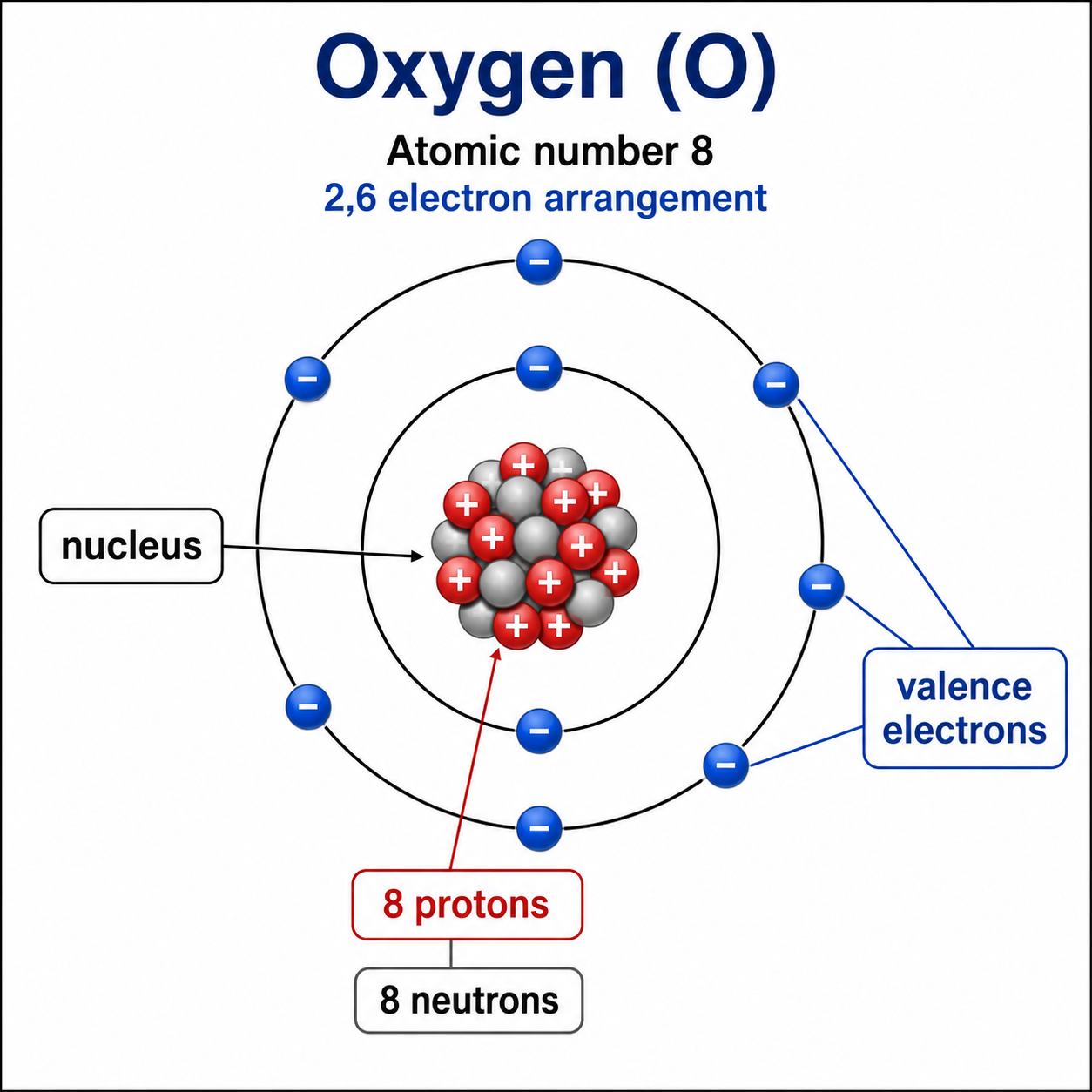
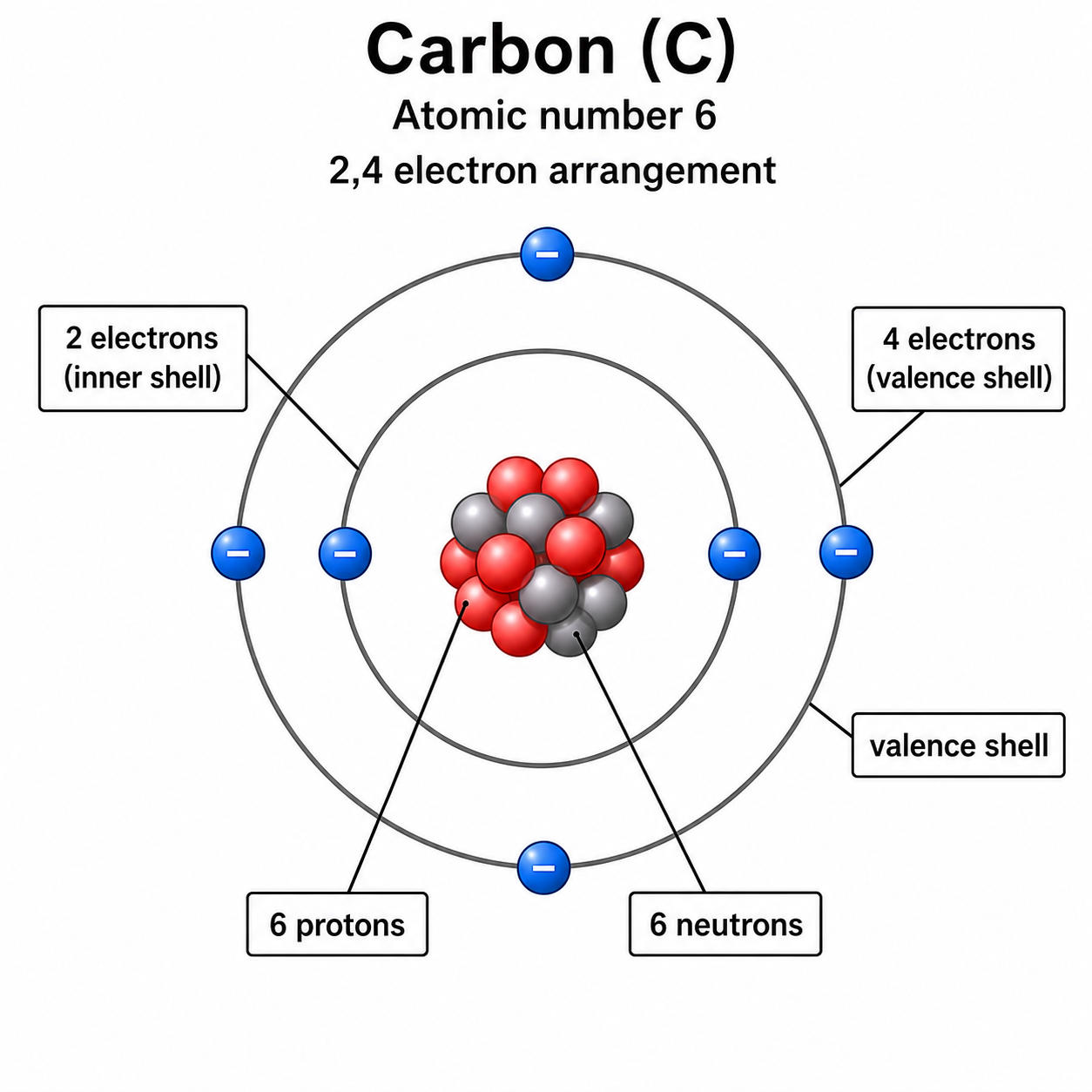
Generate Bohr models, Lewis structures, reaction mechanisms, molecular orbital diagrams, and classroom-ready chemistry visuals with the same SciFigure workflow.