Flower Parts Diagram AI

Labeled Flower Parts Diagram Generator

Create a labeled flower diagram for biology lessons, worksheets, and revision notes. Name the whorls you need, calyx, corolla, androecium, and gynoecium, or ask for a blank flower diagram to label, then generate a clean flower anatomy figure.

Four whorls in orderStamen and carpel detailBlank worksheet version

AI Flower Parts Diagram Generator

Describe the flower structure, labels, and worksheet style you need.

Costs 5 credits370 / 2000 characters

Generate a publication-ready PNG from your description.

Preview

Flower Parts Diagram Example Previews

Target aspect ratio: 4:3

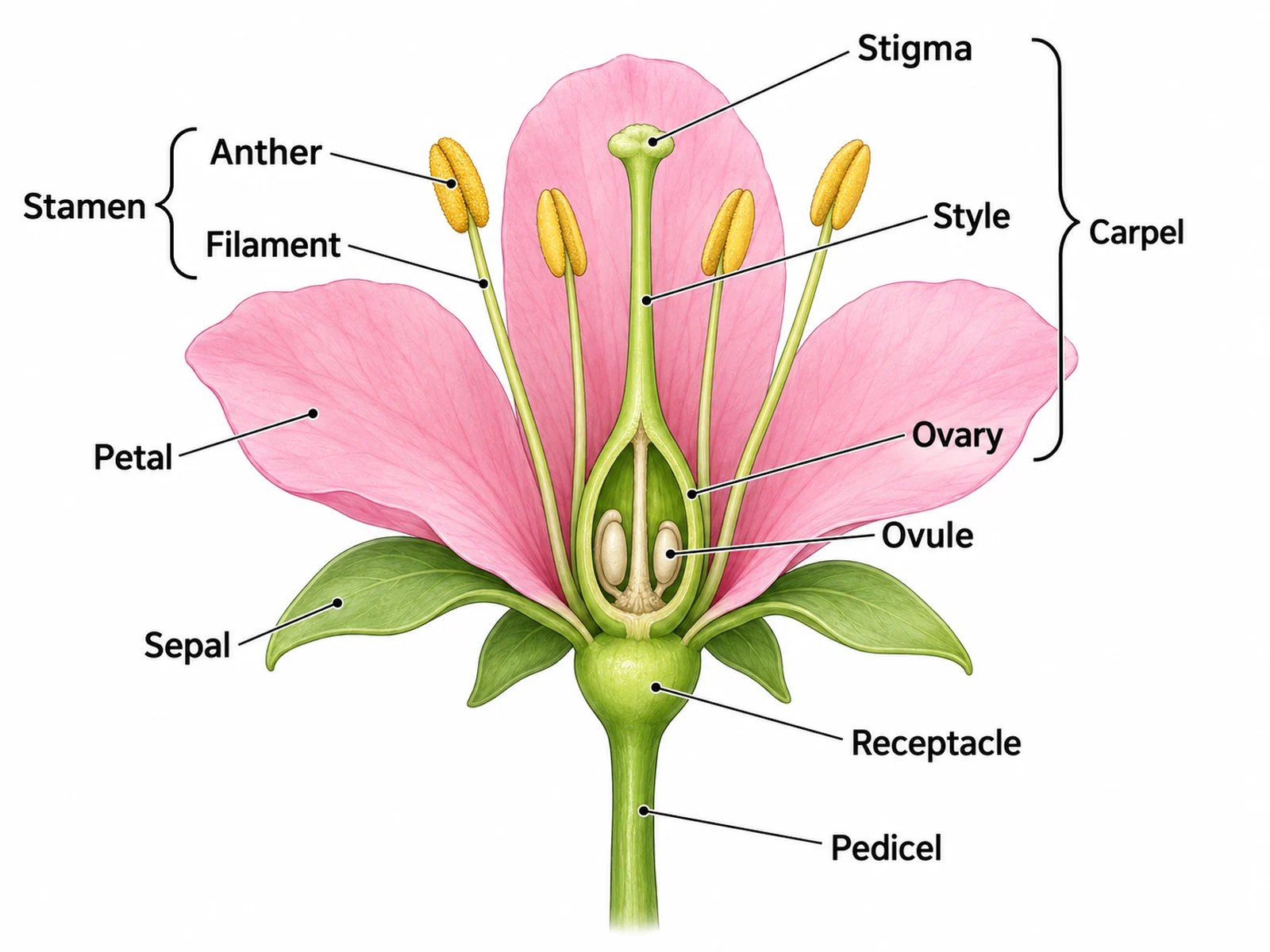
Labeled flower parts diagram showing sepal, petal, anther, filament, stigma, style, ovary, ovule, receptacle, and pedicel
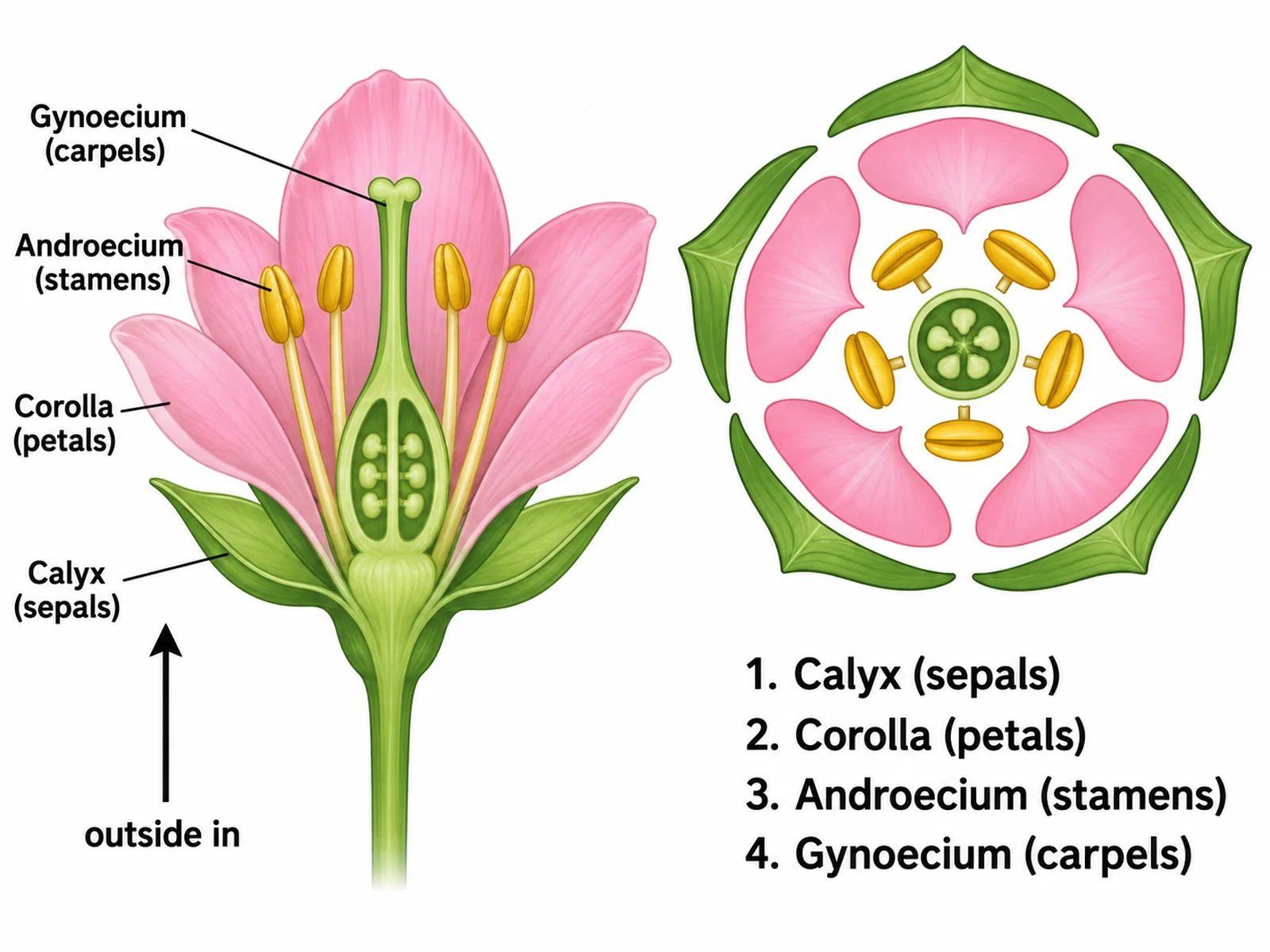
Flower anatomy diagram naming the four whorls from the outside in: calyx, corolla, androecium, and gynoecium
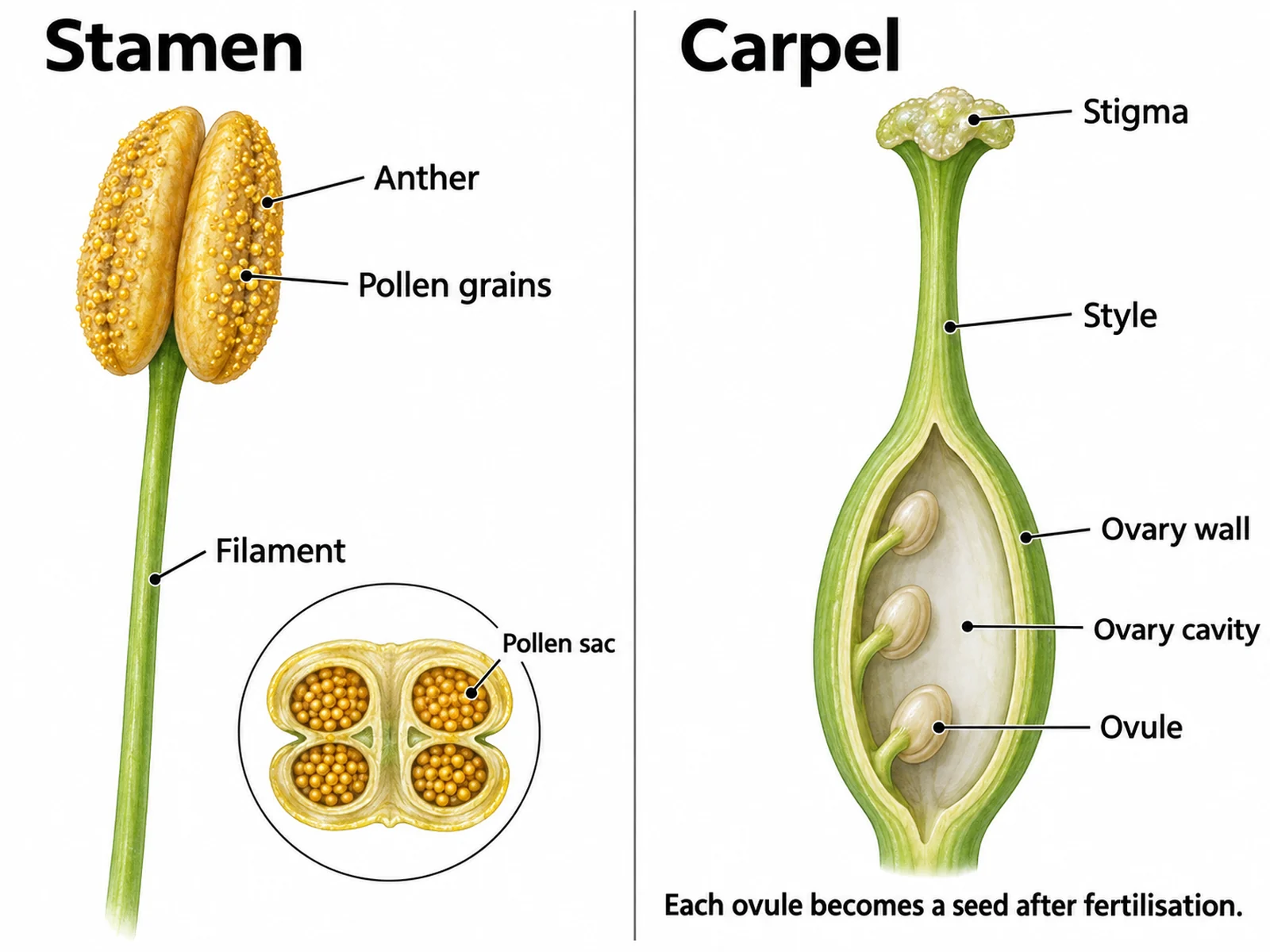
Close-up diagram of a stamen labeled anther and filament beside a carpel labeled stigma, style, ovary, and ovule

Sample previews. Describe your diagram to generate your own flower anatomy figure.

Labeled Flower Diagram Examples

Use these examples as visual directions for whorl order, stamen and carpel detail, worksheet layouts, and flower classification figures.

Labeled flower parts diagram showing sepal, petal, anther, filament, stigma, style, ovary, ovule, receptacle, and pedicel

Prompt

Based on your flower diagram description, create a labeled flower parts diagram as a vertical half section through a typical flower on a white background. Label sepal, petal, anther, filament, stigma, style, ovary, ovule, receptacle, and pedicel. Add a bracket grouping anther and filament as the stamen, and a second bracket grouping stigma, style, and ovary as the carpel. Every leader line must end on the structure it names.
Parts of a Flower Labeled

Flower anatomy diagram naming the four whorls from the outside in: calyx, corolla, androecium, and gynoecium

Prompt

Based on your flower diagram description, create a flower anatomy diagram that groups the parts into the four whorls read from the outside in. Label calyx made of sepals on the outermost whorl, corolla made of petals next, androecium made of stamens inside that, and gynoecium made of carpels at the centre. Add a concentric floral diagram inset on one side showing the same four rings in the same order.

Four Floral Whorls

Close-up diagram of a stamen labeled anther and filament beside a carpel labeled stigma, style, ovary, and ovule

Prompt

Based on your flower diagram description, create a two-panel close-up of the reproductive organs of a flower on a white background. In the left panel draw a single stamen with the anther and the filament labeled and pollen grains on the anther surface. In the right panel draw a single carpel cut open, labeling stigma, style, ovary wall, ovary cavity, and ovule, with a short note that the ovule becomes the seed.

Stamen and Carpel Close-Up

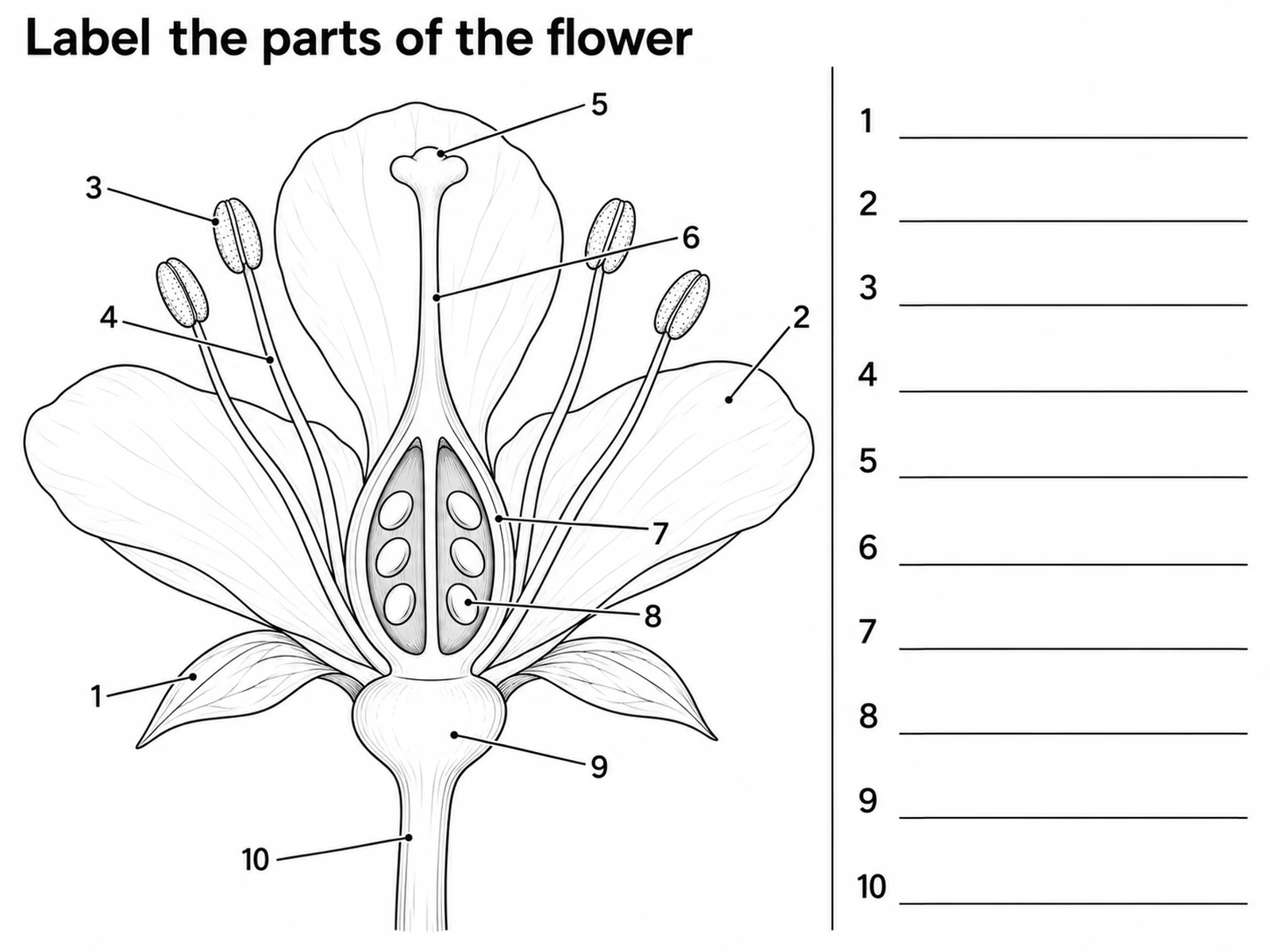
Blank flower diagram to label with numbered leader lines and answer lines for a flower structure worksheet

Prompt

Based on your flower diagram description, create a blank flower diagram to label for a flower structure worksheet. Draw the same half section with no part names written on it, add ten numbered leader lines pointing at sepal, petal, anther, filament, stigma, style, ovary, ovule, receptacle, and pedicel, and place numbered answer lines down the right side. Do not print the answers anywhere on the sheet.

Blank Flower Diagram to Label

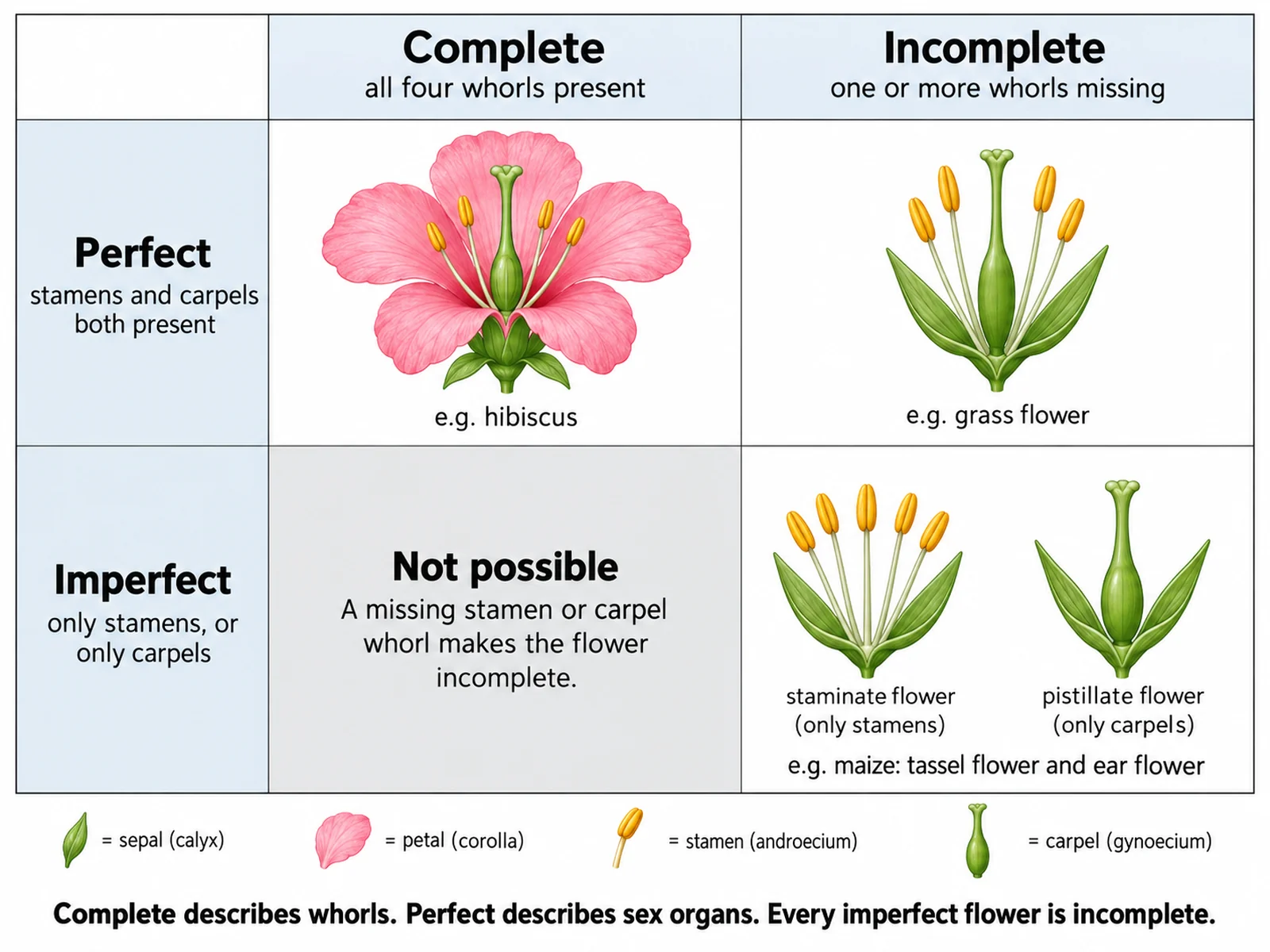
Comparison diagram defining complete, incomplete, perfect, and imperfect flowers with example flower drawings

Prompt

Based on your flower diagram description, create a four-cell comparison figure on a white background explaining two related ways of classifying flowers. Head one column Complete, meaning all four whorls present, and the other Incomplete, meaning one or more whorls missing. Head one row Perfect, meaning both stamens and carpels present, and the other Imperfect, meaning only one of the two present. Show a complete perfect flower, a perfect flower without petals, and an imperfect flower. Mark the Imperfect + Complete cell as impossible: without either stamens or carpels, a whorl is missing. Add a caption noting that every imperfect flower is incomplete.

Complete and Perfect Flowers

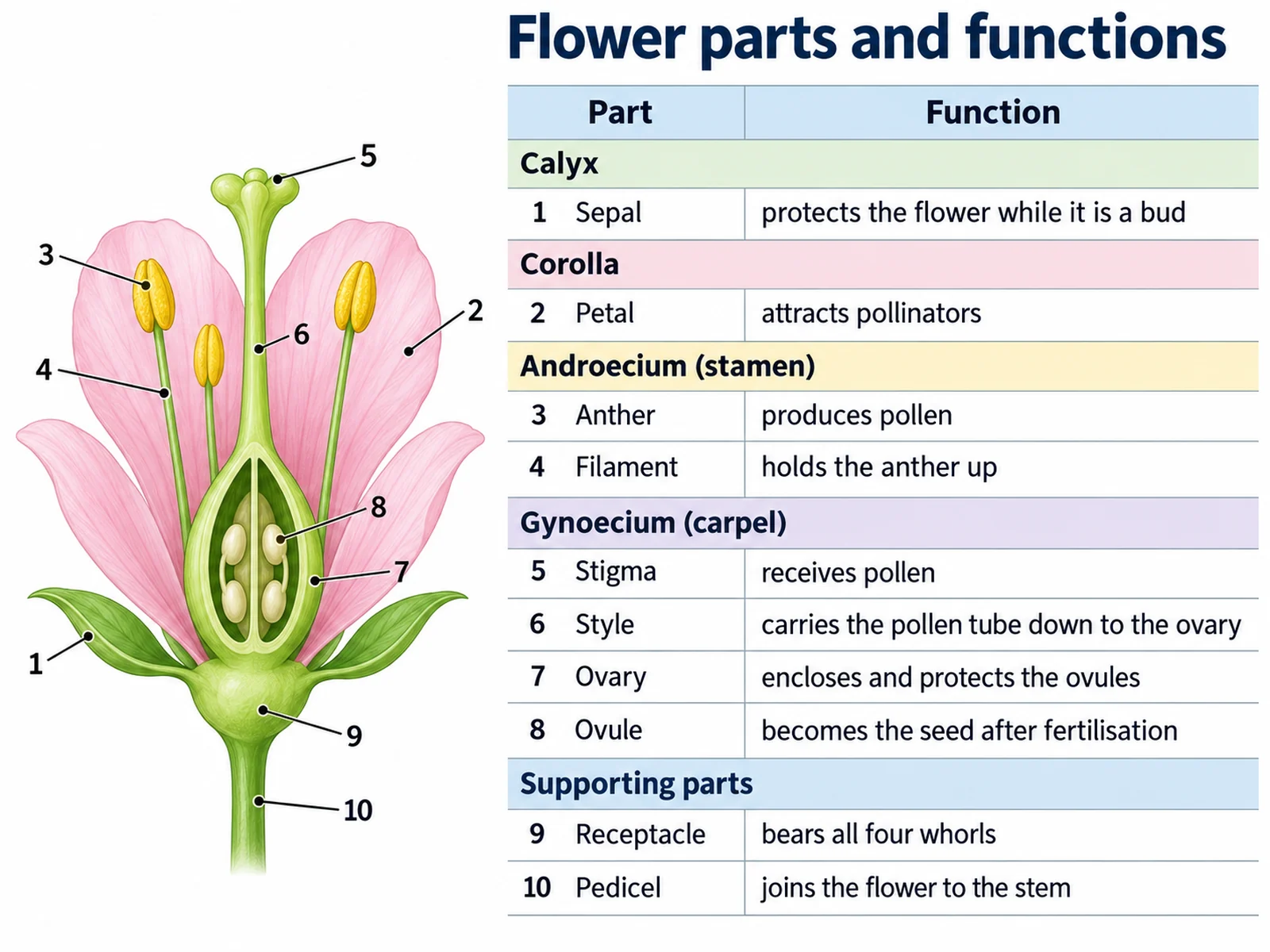
Flower parts and functions chart pairing sepal, petal, stamen, and carpel with the job each one does

Prompt

Based on your flower diagram description, create a flower parts and functions chart on a white background. Place a small labeled half section of a flower on the left, and on the right list the parts in whorl order with one short function each: sepal protects the bud, petal attracts pollinators, anther produces pollen, filament holds the anther up, stigma receives pollen, style carries the pollen tube down to the ovary, ovary encloses the ovules, ovule becomes the seed, receptacle bears the four whorls, and pedicel joins the flower to the stem.

Flower Parts and Functions

How to make a flower parts diagram

1

List the parts to label

Name the structures the diagram has to carry, such as sepal, petal, anther, filament, stigma, style, ovary, ovule, receptacle, and pedicel.

2

Choose the view and style

Ask for a half section, a whole flower, a whorl diagram, a close-up of one organ, or a blank flower structure worksheet with numbered leader lines.

3

Generate and check the labels

Generate the figure, confirm that every leader line ends on the right structure, then download it for slides, handouts, or revision notes.

What is a flower parts diagram?

A flower parts diagram is a labeled drawing of a flower, usually cut in half down the midline so the inner organs are visible. The standard school version names ten structures: sepal, petal, anther, filament, stigma, style, ovary, ovule, receptacle, and pedicel. Grouped by whorl, those parts become the calyx, the corolla, the androecium, and the gynoecium, which is the order a flower diagram should be read in.

The four whorls of a flower, from the outside in

  • Calyx: the outermost whorl, made of sepals. The sepals enclose and protect the flower while it is still a bud.
  • Corolla: the whorl of petals just inside the calyx. Petals are usually the showy part and advertise the flower to pollinators.
  • Androecium: the whorl of stamens. Each stamen is an anther, which produces pollen, carried on a stalk called the filament.
  • Gynoecium: the innermost whorl, built from one or more carpels. A carpel has a stigma that receives pollen, a style that the pollen tube grows down, and an ovary that holds the ovules.
  • Receptacle and pedicel: the receptacle is the swollen tip of the flower stalk that all four whorls attach to, and the pedicel is the stalk itself, joining the flower to the stem.

Carpel, pistil, and ovule: say what you mean

  • A carpel is the single building block of the gynoecium: one stigma, one style, one ovary.
  • A pistil is the female unit you can point at in a flower. A simple pistil is one free carpel, while a compound pistil is several carpels fused together, so one pistil can contain several carpels.
  • A flower with several free carpels therefore has several pistils. Treating carpel and pistil as interchangeable words is what produces a mislabeled diagram.
  • Ovules sit inside the ovary. After fertilisation each ovule becomes a seed and the ovary wall develops into the fruit.

Complete and perfect flowers are not the same thing

  • Complete means all four whorls are present: calyx, corolla, androecium, and gynoecium. If any whorl is missing the flower is incomplete.
  • Perfect means both stamens and carpels are present, so the flower is bisexual. If only one of the two is present the flower is imperfect, or unisexual.
  • The two labels test different features but are not independent. A grass flower has both stamens and carpels but no petals, so it is perfect and incomplete at the same time.
  • A maize tassel flower carries only stamens, so it is imperfect, and because the gynoecium whorl is missing it is incomplete as well.
  • Every imperfect flower is incomplete, but an incomplete flower is not always imperfect. That is the step most worksheets get wrong.

Where labeled flower diagrams are used

  • Middle school and high school biology lessons on flower structure and plant reproduction.
  • Flower structure worksheets, blank flower diagrams to label, and matching answer keys.
  • Revision notes and exam preparation where the whorl order has to be recalled quickly.
  • Botany practicals, field notebooks, and plant science slides that need a clean reference figure.

Flower Parts Diagram Generator FAQ

It can generate a labeled flower diagram, a half section through a flower, a four-whorl flower anatomy diagram, a close-up of a stamen or a carpel, a flower parts and functions chart, and a blank flower diagram to label.

Need other plant biology figures?

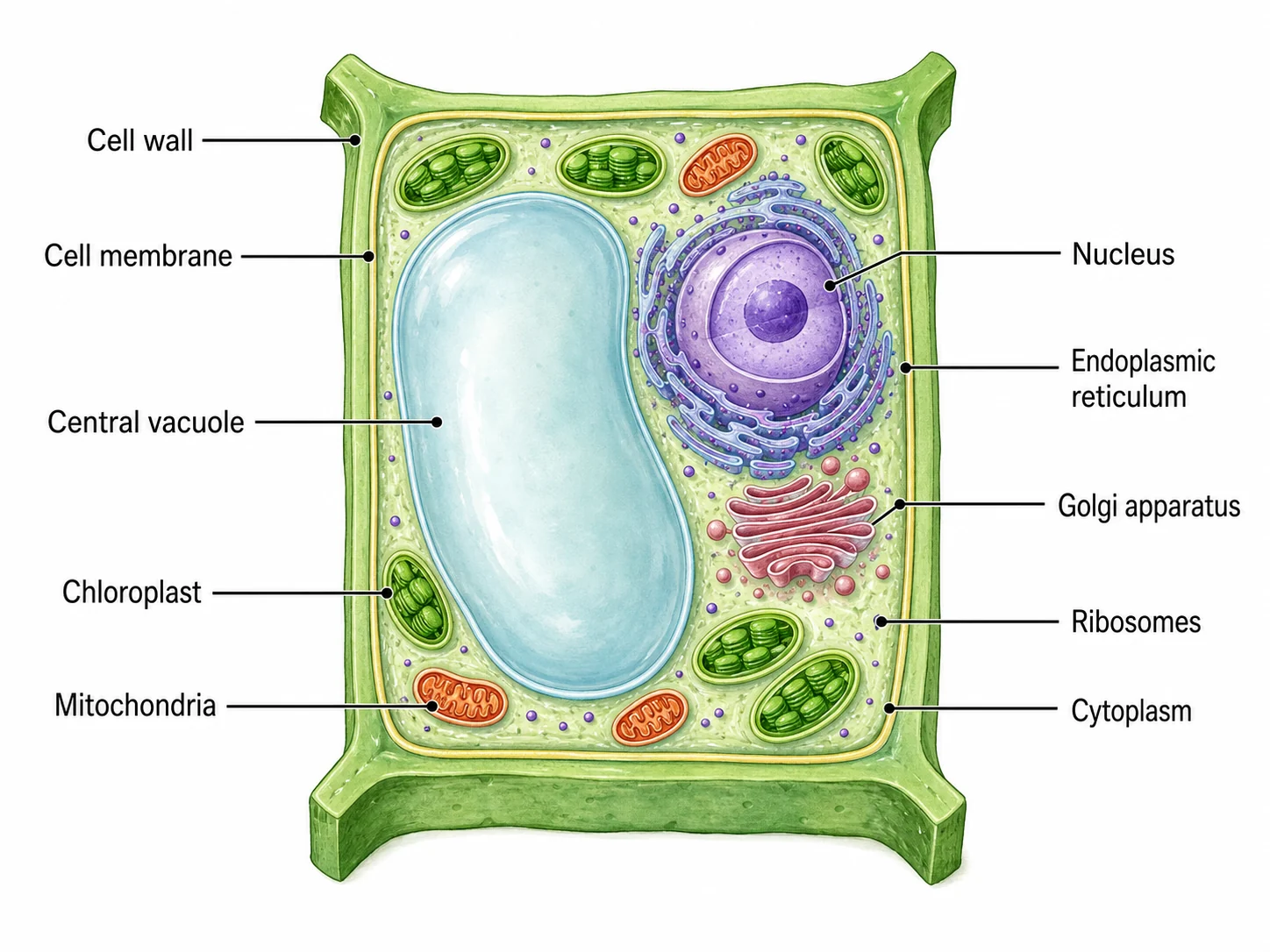
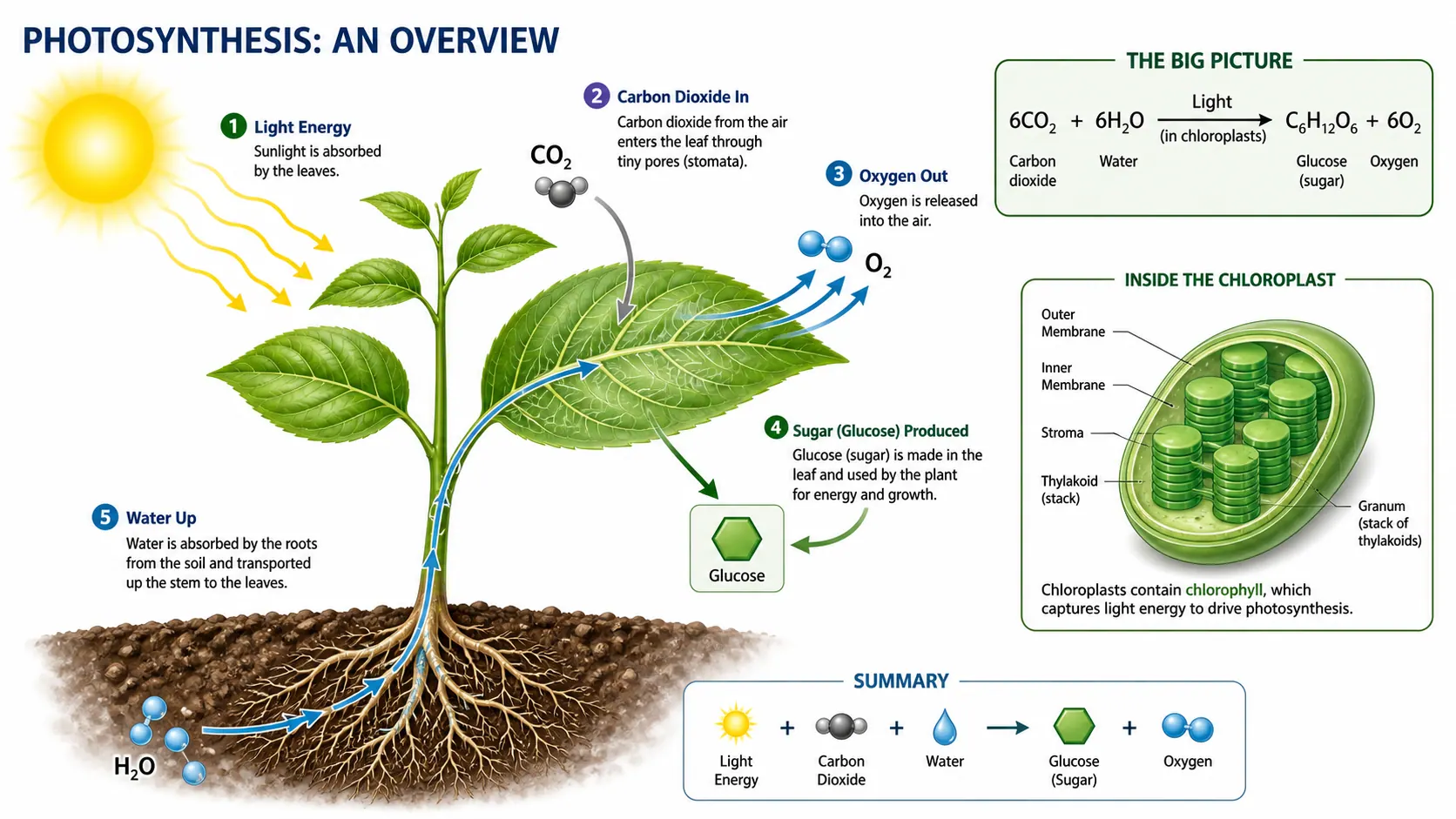
Generate plant cell diagrams, photosynthesis figures, leaf and root sections, pollination visuals, and worksheet-ready botany illustrations with the same SciFigure AI workflow.