Pedigree chart maker with standard symbols and an inheritance checker
Draw a genetic pedigree chart in your browser. Add parents, partners, children, twins and adoptions, mark who is affected or a carrier, and the chart lays itself out with clean lines and I, II, III numbering. This free pedigree maker also checks the family against six inheritance patterns, explains what it rules out, and exports SVG, PNG, PDF or a blank worksheet.
Free, no sign-upNothing is uploadedNSGC 2008 and 2022 symbolsSVG, PNG, PDF and CSV
Examples
Saved in this browser · nothing uploaded
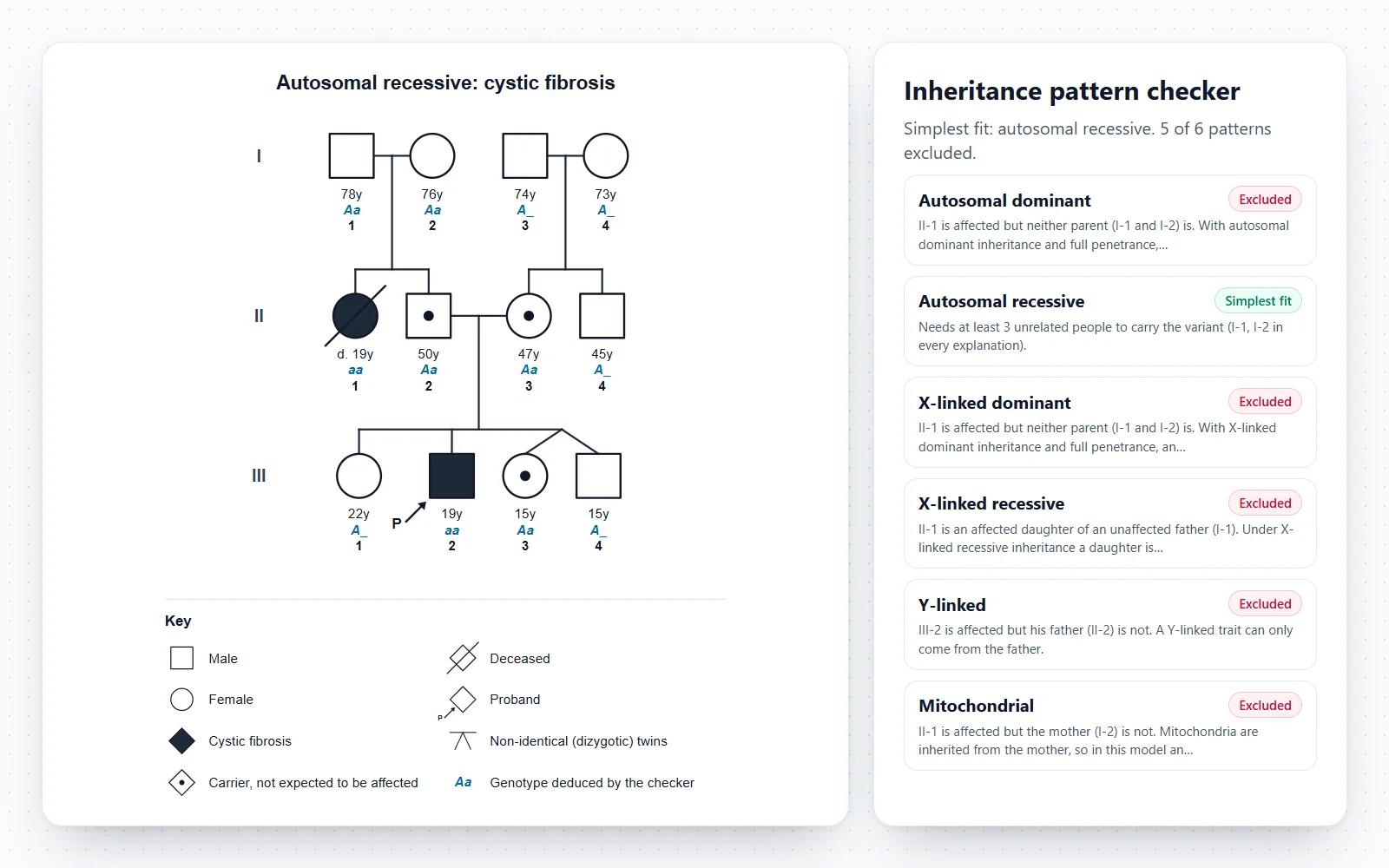
Inheritance pattern checker
Simplest fit: autosomal recessive. 5 of 6 patterns excluded.
Autosomal dominant
Excluded
II-1 is affected but neither parent (I-1 and I-2) is. With autosomal dominant inheritance and full penetrance, an affected child has an affected parent.
2 more reasonsFewer reasons
III-2 is affected but neither parent (II-2 and II-3) is. With autosomal dominant inheritance and full penetrance, an affected child has an affected parent.
II-2 is marked as an unaffected carrier, but with autosomal dominant inheritance and full penetrance anyone who carries the variant is affected.
Autosomal recessive
Simplest fit
Needs at least 3 unrelated people to carry the variant (I-1, I-2 in every explanation).
X-linked dominant
Excluded
II-1 is affected but neither parent (I-1 and I-2) is. With X-linked dominant inheritance and full penetrance, an affected child has an affected parent.
2 more reasonsFewer reasons
III-2 is affected but neither parent (II-2 and II-3) is. With X-linked dominant inheritance and full penetrance, an affected child has an affected parent.
II-2 is marked as an unaffected carrier, but with X-linked dominant inheritance and full penetrance anyone who carries the variant is affected.
X-linked recessive
Excluded
II-1 is an affected daughter of an unaffected father (I-1). Under X-linked recessive inheritance a daughter is affected only if her father is affected too, because she inherits his X chromosome.
1 more reasonFewer reasons
II-2 is a male marked as an unaffected carrier. Males have one X chromosome, so with X-linked recessive inheritance he would be affected.
Y-linked
Excluded
III-2 is affected but his father (II-2) is not. A Y-linked trait can only come from the father.
2 more reasonsFewer reasons
II-2 is marked as an unaffected carrier, but this pattern has no unaffected carriers in the simple model.
II-1 is affected and female. A Y-linked trait occurs only in males, passed from father to son.
Mitochondrial
Excluded
II-1 is affected but the mother (I-2) is not. Mitochondria are inherited from the mother, so in this model an affected child needs an affected mother.
2 more reasonsFewer reasons
III-2 is affected but the mother (II-3) is not. Mitochondria are inherited from the mother, so in this model an affected child needs an affected mother.
II-2 is marked as an unaffected carrier, but this pattern has no unaffected carriers in the simple model.
What the chart shows
Both sexes are affected (1 male, 1 female), as expected for autosomal and for X-linked dominant inheritance.
II-1, III-2 are affected with two unaffected parents (for example I-1 and I-2). The condition skipped a generation, which points to recessive inheritance, or to reduced penetrance or a new mutation.
Rule-based check of six single-gene patterns, assuming full penetrance, no new mutations, parentage as drawn, and (for mitochondrial) that every mitochondrion carries the variant. “Excluded” means excluded under these assumptions; real families can break any of them. “Simplest fit” needs the fewest unrelated carriers, which is the more likely explanation for a rare condition. Hover a reason to highlight the people it refers to.
Key
Built from the symbols your chart uses.
Male
Female
Cystic fibrosis
Carrier, not expected to be affected
Deceased
Proband
Non-identical (dizygotic) twins
Pedigree symbols key
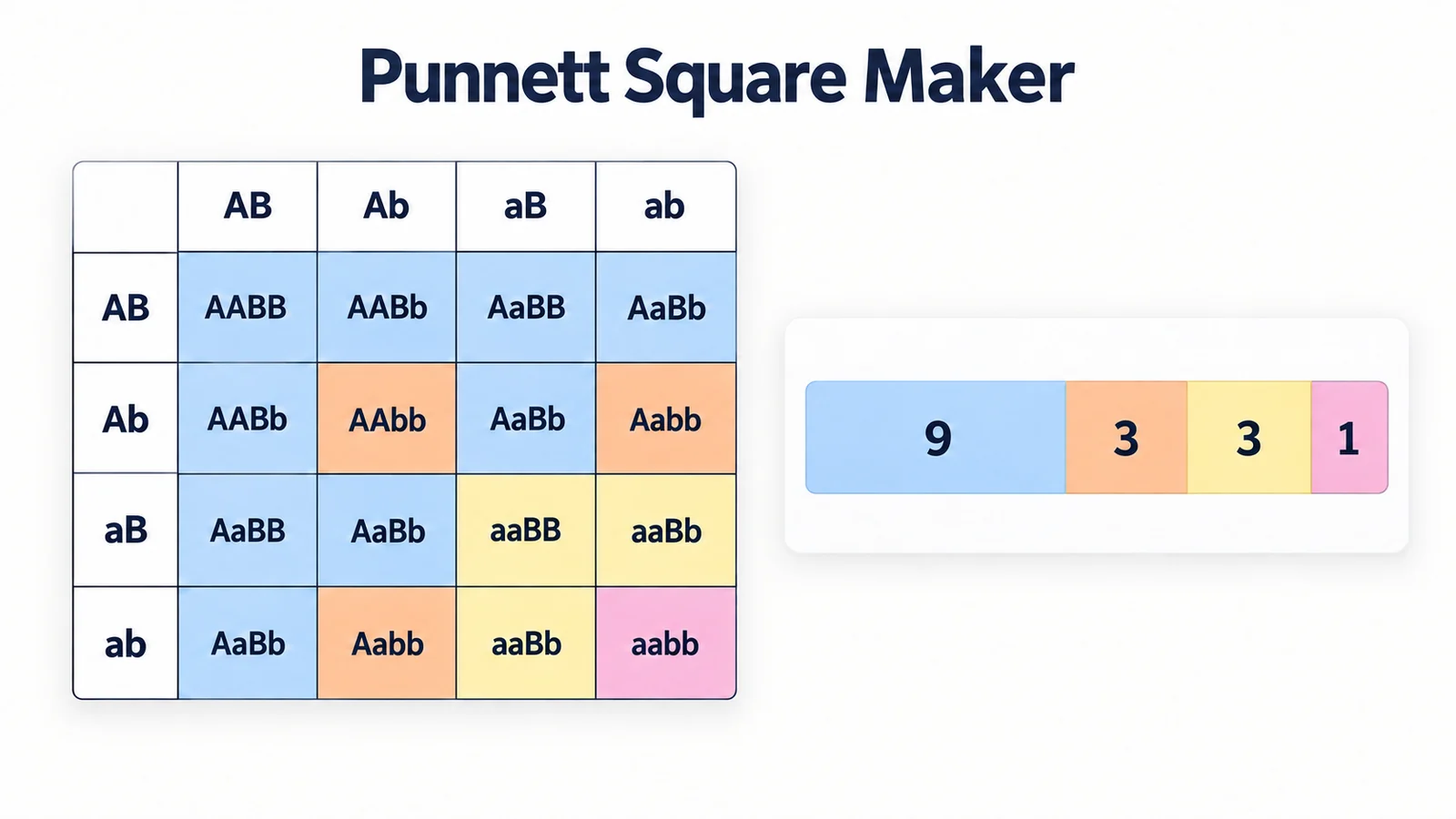
The standard pedigree symbols (NSGC), drawn by the same code as the editor above. Use them to read a genetic pedigree chart, or as a reference sheet next to a Punnett square when you work out the genotypes.
Male
Square. Under NSGC 2022: a man or boy.
Female
Circle. Under NSGC 2022: a woman or girl.
Sex not specified
Diamond. Under 2022 also non-binary, with AMAB or AFAB below.
Affected
Filled symbol, defined in the key.
Two conditions
Split symbol, one fill per condition.
Carrier
Dot: heterozygote not expected to be affected.
Carrier, half shaded
The textbook alternative to the dot.
Presymptomatic carrier
Vertical line: tested positive, not affected yet.
Deceased
Diagonal slash; age at death below.
Proband
Arrow and P: the affected person who brought the family to attention.
Consultand
Arrow only: the person seeking advice.
Pregnancy
P inside; gestational age below.
Miscarriage (SAB)
Small triangle; filled if affected.
Termination (TOP)
Triangle with a slash.
Stillbirth (SB)
Slash, with SB and gestational age below.
Adopted
Brackets; dashed line if adopted in.
Several siblings
Number inside, or n if unknown.
Partners
Relationship line.
Related partners
Double line: consanguinity.
Relationship ended
Two slashes across the line.
Identical twins
Monozygotic: a bar joins the branches.
Non-identical twins
Dizygotic: branches from one point.
Twins, zygosity unknown
A question mark between the branches.
No children
One bar; two bars for infertility.
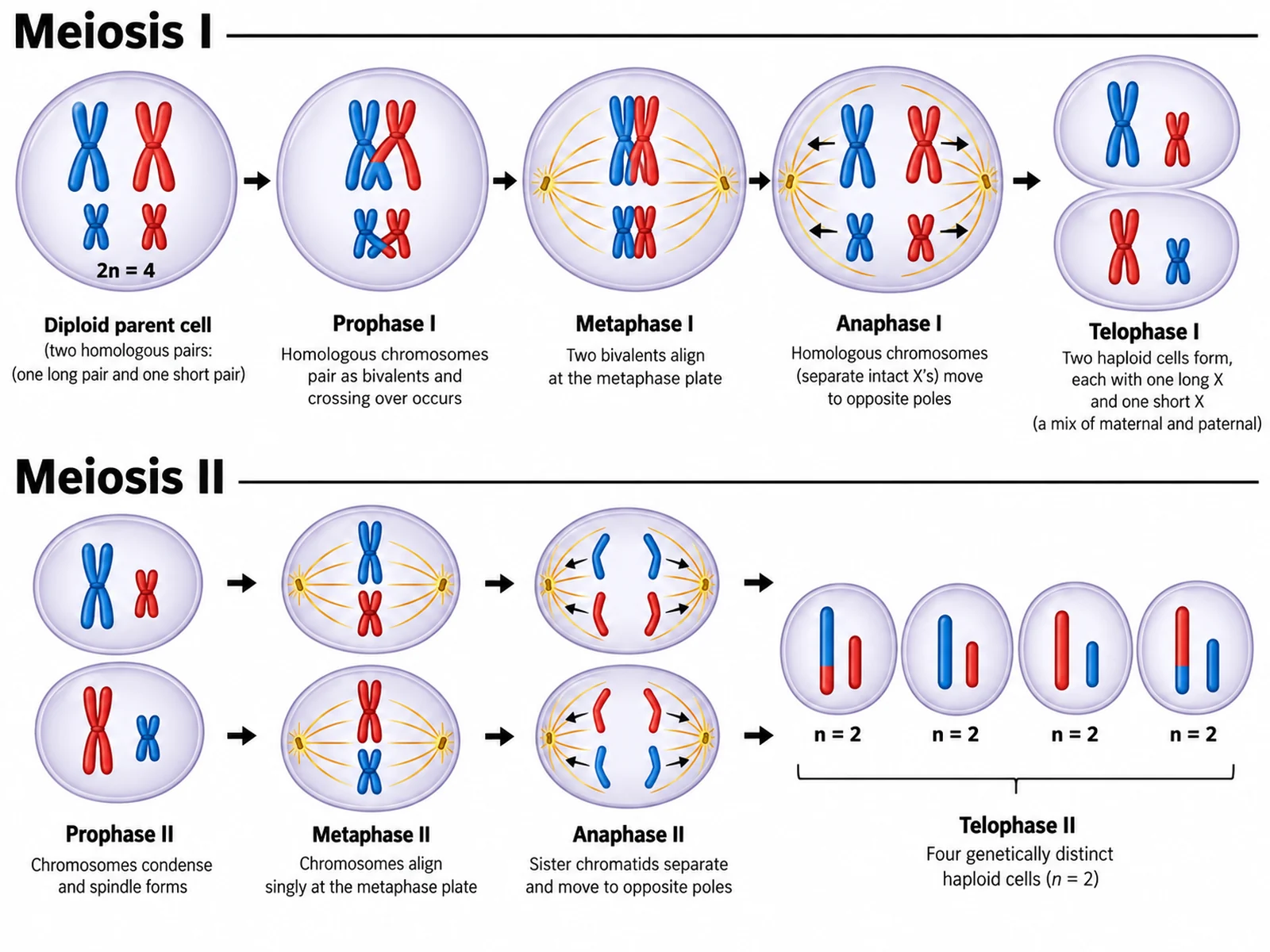
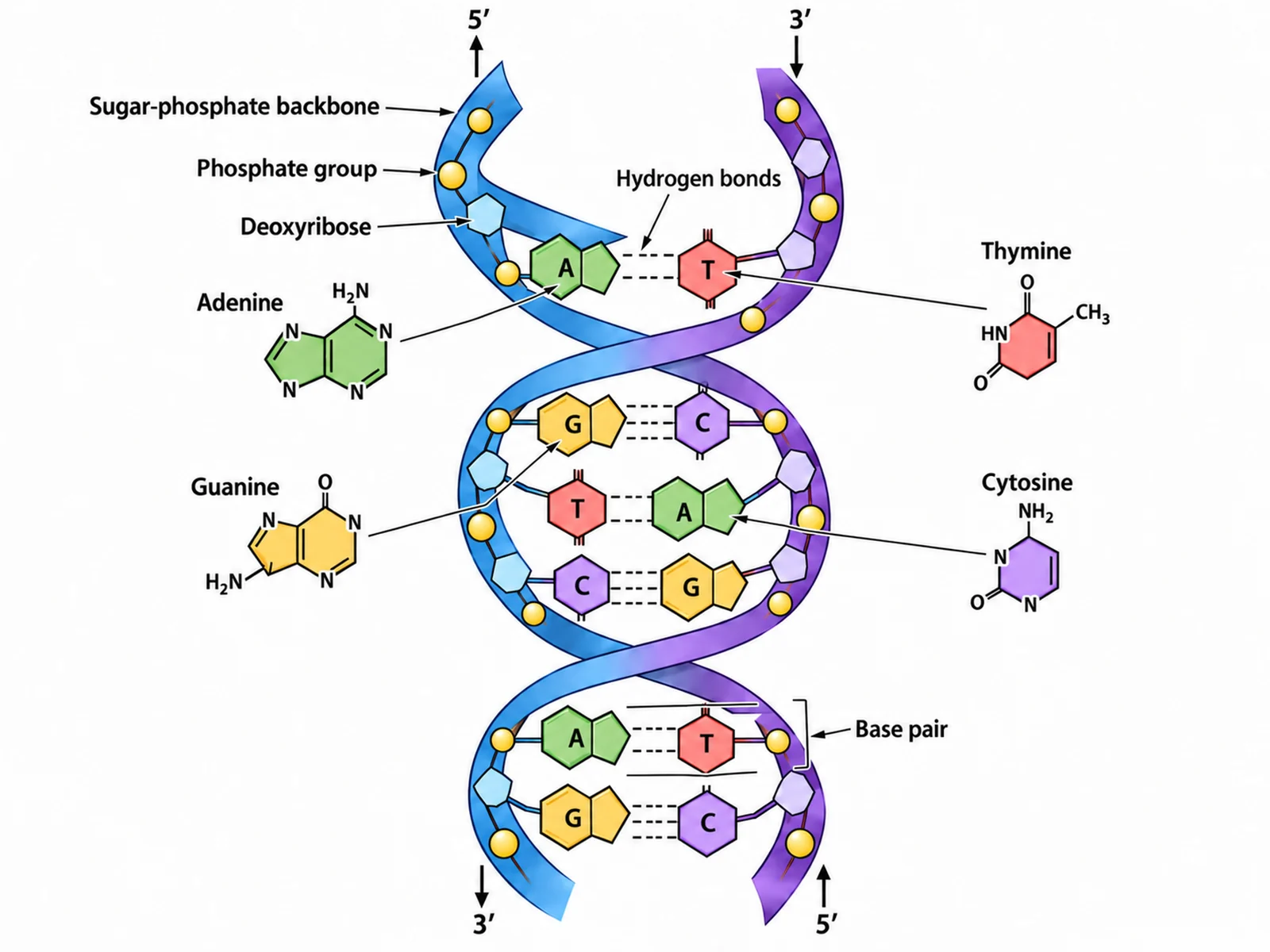
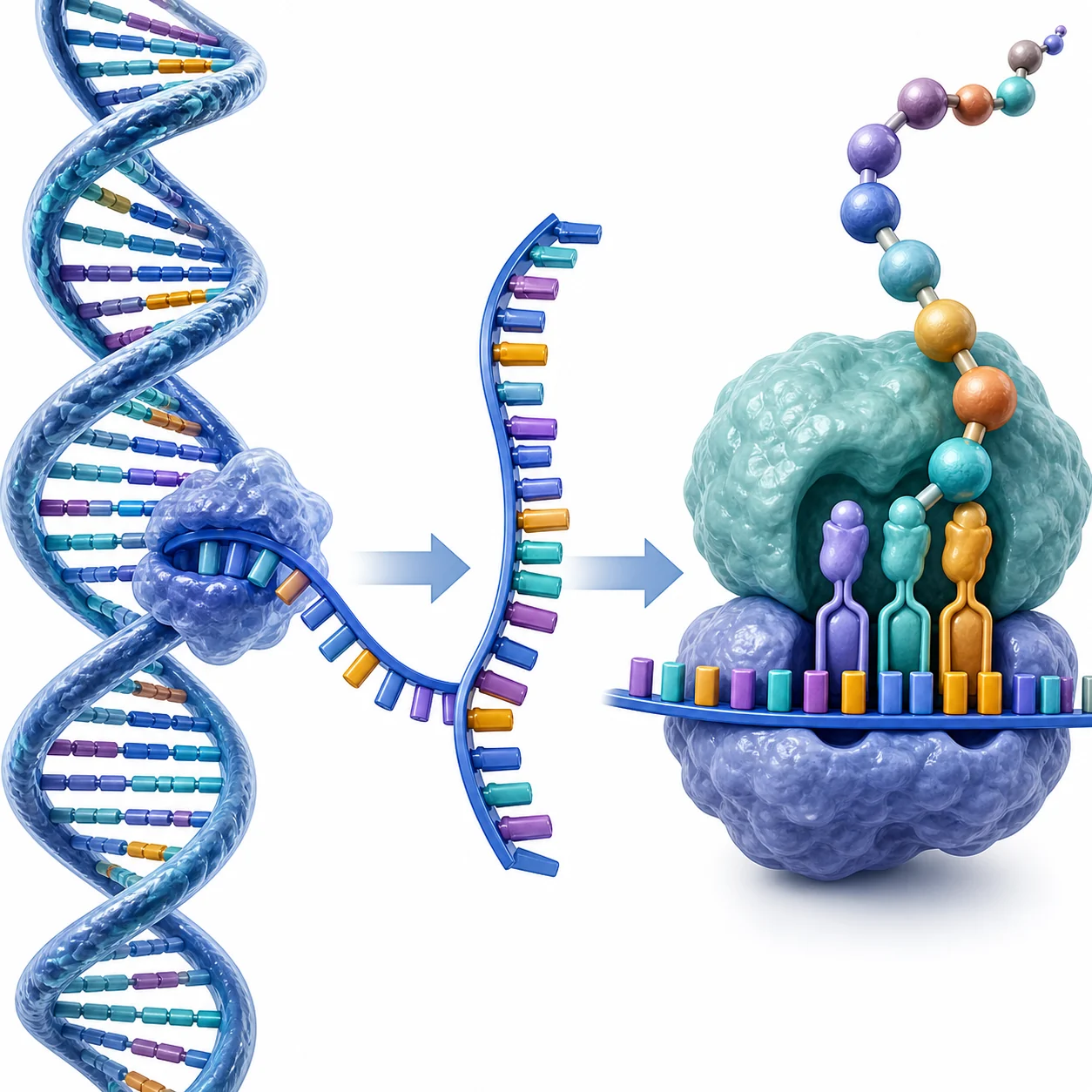
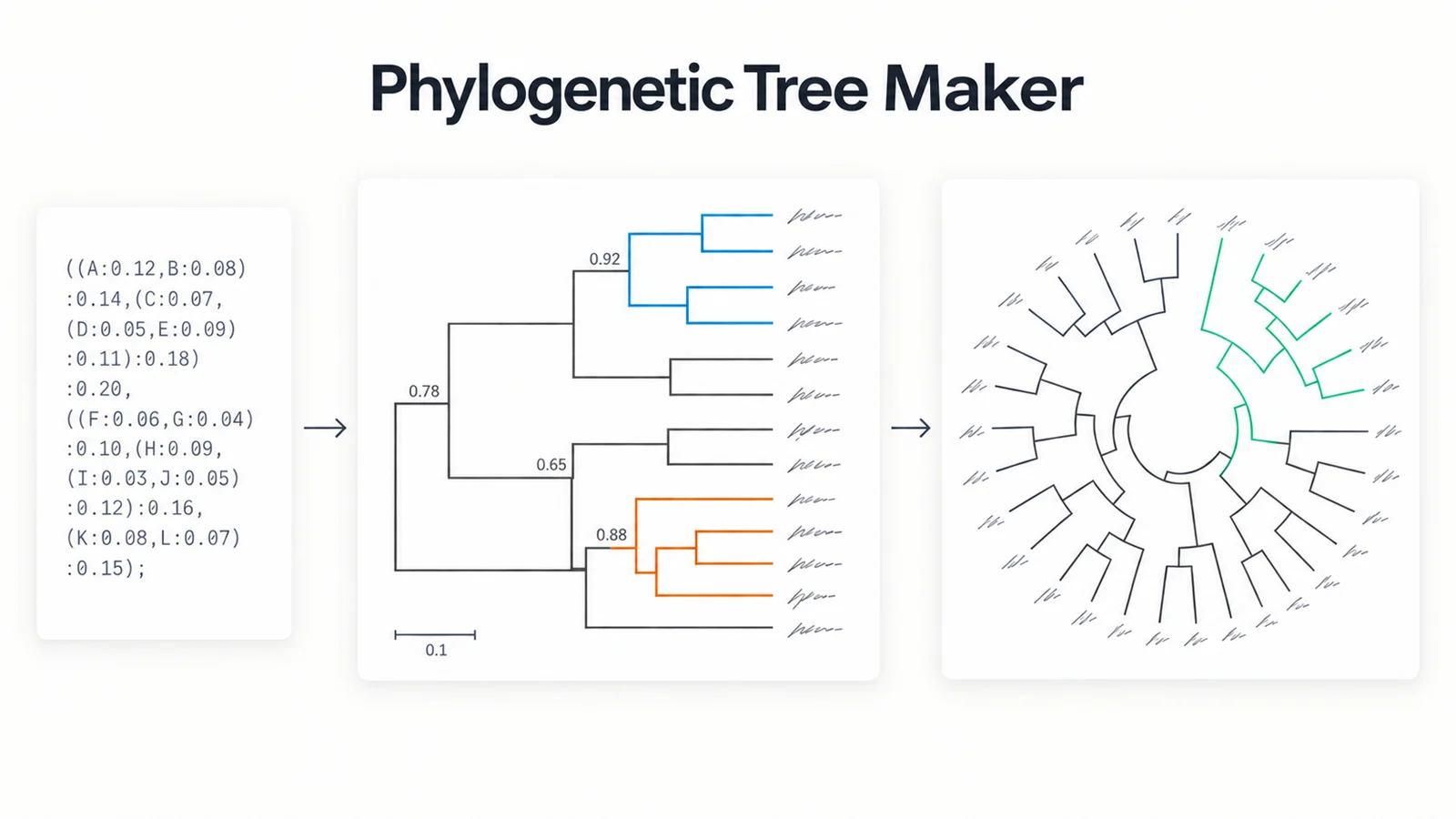
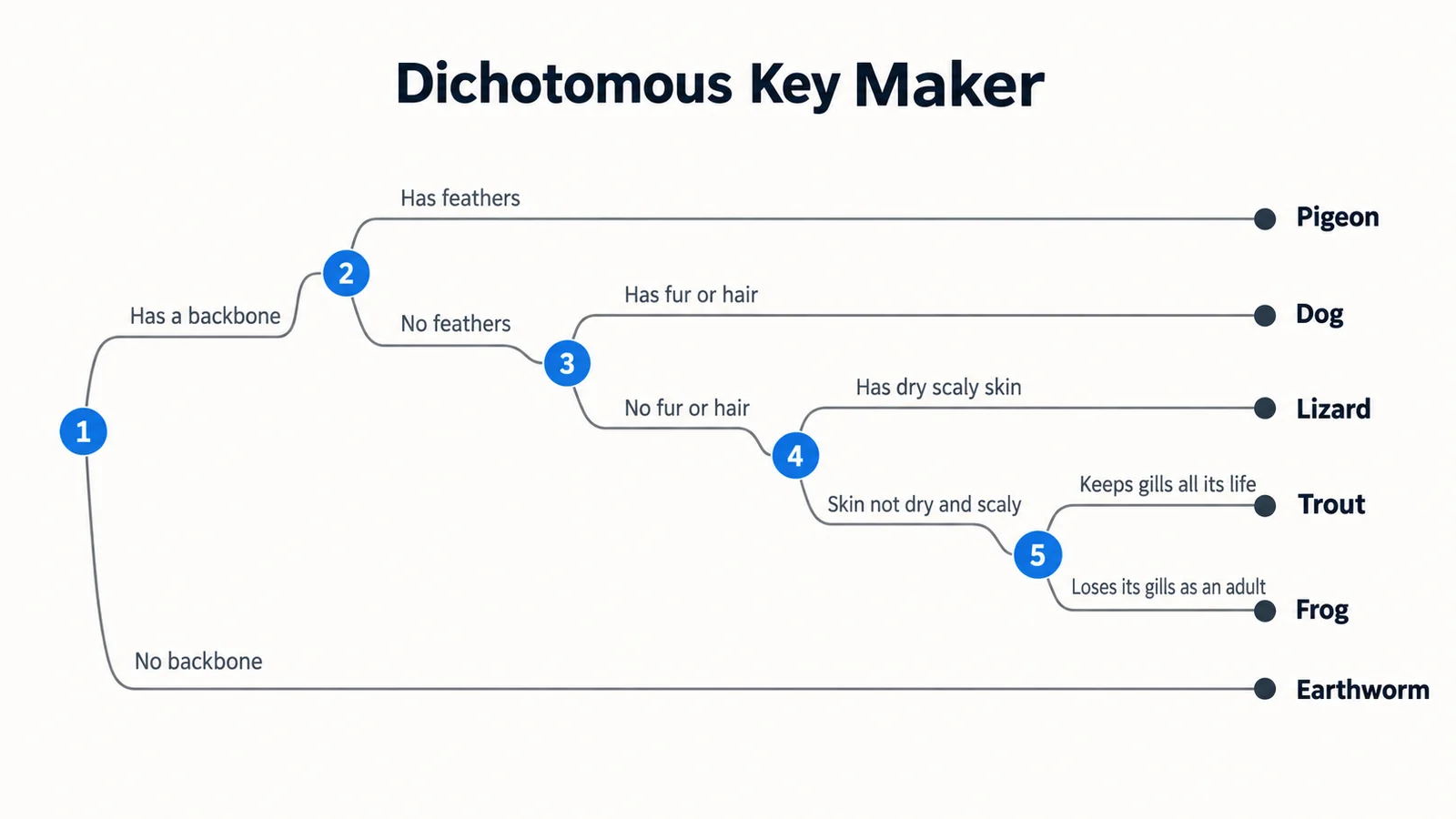
Pedigrees show who inherited what; to see why, pair them with a meiosis diagram of how alleles separate into gametes and a DNA diagram of the molecule they sit on. For relationships between species rather than family members, use the phylogenetic tree maker or the dichotomous key maker.
How to make a pedigree chart in six steps
A pedigree chart is a family tree drawn with standard symbols, so anyone can see who is related to whom and who has a condition. Whether you draw a pedigree by hand or make one online with the pedigree builder above, the steps are the same.
Start with the proband, or with the person asking for advice. Select their symbol and use the + handles, or press P, C and S, to add a partner, children and siblings. "Start blank" gives you a single person to build a pedigree from scratch.
Work up one generation at a time. Add both parents, then their brothers and sisters, partners and children. Draw relatives who married in even when they are unaffected: they matter for recessive conditions.
Use the right shape: a square for a male, a circle for a female and a diamond when sex is not specified. Partners share a horizontal relationship line, and their children hang from a sibship line below it, oldest on the left.
Mark each person's status: shade everyone who is affected, add a dot for known carriers, a diagonal slash for anyone who has died, and the arrow with a P for the proband. Ages, diagnoses and test results go under the symbol.
Number the chart: Roman numerals for generations (I, II, III) and Arabic numerals from left to right within each generation, so II-3 is the third person in the second generation. The pedigree chart maker numbers everyone for you and renumbers after every change.
Add a title and a key, then export. The key lists only the symbols your chart uses, and SVG or PDF keeps every line sharp for a paper, a slide or a printed worksheet.
Pedigree symbols and what they mean
The editor uses the symbols recommended by the National Society of Genetic Counselors (NSGC), which most genetics textbooks, clinics and journals follow. The visual key above redraws each one exactly as it appears in your chart.
Square: male. Circle: female. Diamond: sex not specified, or under the 2022 update a non-binary person.
Filled symbol: affected. With two or more conditions the symbol is split into halves or quadrants, each filled in its own colour and defined in the key.
Dot in the centre: a carrier who is not expected to develop the condition, such as a heterozygote for a recessive allele. Many textbooks shade half the symbol instead; switch to that style in Chart settings.
Vertical line through the symbol: a presymptomatic carrier, someone who tested positive but is not affected yet.
Diagonal slash: deceased. Write the age at death underneath, for example d. 62y. NSGC avoids a cross because + also means a positive test.
Arrow with P: the proband, the affected person through whom the family came to attention. Arrow without P: the consultand, the person asking for advice.
Line between partners: a relationship. A double line means the partners are related (consanguinity), and two short slashes mean the relationship has ended.
Twins branch from one point on the sibship line: a bar between the branches marks identical (monozygotic) twins, no bar non-identical (dizygotic) twins, and a question mark unknown zygosity.
Brackets: adoption. A dashed line joins a child adopted into the family; a solid line joins a child to the birth parents who placed them for adoption.
P inside a symbol: a pregnancy. A small triangle is a miscarriage (spontaneous abortion, SAB), a triangle with a slash a termination (TOP), and a slashed symbol marked SB a stillbirth.
A number inside a symbol stands for several siblings drawn once, with n when the number is not known.
How to read a pedigree chart
Read a pedigree from the top down. Each row is one generation, numbered I, II, III down the left side. A horizontal relationship line joins two partners; a vertical line of descent drops from it to the sibship line, and each child hangs from the sibship line by a short line of their own. Brothers and sisters are drawn from oldest on the left to youngest on the right. Anyone with no line above them married into the family. To point to one person, combine the generation and the position: III-4 is the fourth symbol from the left in the third generation, counting partners who married in.
Shading means the person has the condition, nothing more. Unaffected relatives can still be carriers; a carrier mark usually reflects a test result or an obligate carrier, such as the mother of two affected sons.
A pedigree records what the family reports. Ages, causes of death and diagnoses can be wrong, which is why clinical pedigrees note who gave the history and when.
Small families mislead. Three children of two carriers are all unaffected about 42% of the time, so a recessive condition can hide for a generation.
How to tell autosomal dominant, autosomal recessive and X-linked pedigrees apart
Most pedigree questions come down to a few tell-tale signs. Look for the strongest single clue first: one family can rule a pattern out, but no pedigree proves one.
Autosomal dominant: affected people in every generation, roughly half the children of an affected parent affected, males and females alike, and transmission from father to son is possible. An affected child of two unaffected parents rules it out, unless penetrance is reduced or the variant is new.
Autosomal recessive: the condition skips generations, affected children usually have two unaffected carrier parents, both sexes are affected, and it is more common when the parents are related. Two affected parents cannot have an unaffected child.
X-linked recessive: mostly males are affected, and the condition passes from an affected man through his daughters, who are all carriers, to about half of their sons. It never passes from father to son. All sons of an affected woman are affected, and an affected daughter needs an affected father.
X-linked dominant: an affected father passes it to all of his daughters and none of his sons; an affected mother to about half of her children of either sex. More females than males are affected.
Y-linked: only males are affected, and every son of an affected father is affected. Very few human traits work this way, so treat it as a teaching case.
Mitochondrial: passed only through mothers, often to all of their children, while affected fathers pass it to none. Real mitochondrial conditions vary within a family because cells can carry a mix of normal and variant mitochondria (heteroplasmy).
Pedigree chart solver: how the inheritance checker works
The checker under the editor treats each pattern as one gene with full penetrance and tries every possible genotype for everyone in the chart. If no combination explains a family, the pattern is excluded, and the checker names the people involved and the reason, for example an affected daughter whose father is unaffected under X-linked recessive inheritance. Patterns that survive are compared by how many unrelated people must carry the variant. For a rare condition, the fewest independent carriers is the most likely explanation, so the checker marks the simplest fit rather than declaring an answer. Choose "Show genotypes on chart" to see the genotypes it deduced, such as Aa for an obligate carrier or X^A X^a for a carrier mother.
Excluded means excluded under its assumptions: full penetrance, no new mutations, parentage as drawn, and a single gene.
In a small family several patterns often stay possible. Autosomal dominant and X-linked dominant, for example, separate only through the children of affected fathers, so the checker reports that split and the chance of seeing it by luck.
Hover over a reason to highlight the people it refers to. Use it to check your answer to a homework pedigree, not to diagnose anyone: real families need a genetics professional.
Worked example: solving an autosomal recessive pedigree
Load the "Autosomal recessive" example above. II-1, a daughter of I-1 and I-2, had cystic fibrosis, but neither of her parents did. An affected child of two unaffected parents rules out autosomal dominant inheritance with full penetrance, and because she is a girl with an unaffected father it also rules out X-linked recessive inheritance. The proband, III-2, is likewise affected while his mother II-3 is not, which rules out mitochondrial inheritance, and an affected female rules out Y-linked. That leaves autosomal recessive: I-1, I-2, II-2 and II-3 must all be carriers (Aa), II-1 and III-2 are aa, and their unaffected brothers and sisters are each AA or Aa. Every further child of II-2 and II-3 has a 1 in 4 chance of being affected, and an unaffected brother or sister of an affected child has a 2 in 3 chance of being a carrier.
NSGC 2008 vs 2022 pedigree notation
In 2022 the NSGC published a focused revision of its 2008 pedigree nomenclature centred on sex and gender (Bennett and colleagues, Journal of Genetic Counseling). Switch between the two with the NSGC 2008 and 2022 toggle; your data stays the same.
2008: the symbol shape records sex, assigned by phenotype, with a diamond when sex is not specified. Karyotype can be written below the symbol.
2022: the shape records gender identity. A square is a man or boy, a circle a woman or girl, and a diamond a non-binary or gender-diverse person, or someone whose gender is not known. Sex assigned at birth is written underneath when it is clinically relevant: AMAB (assigned male at birth), AFAB (assigned female at birth) or UAAB (unassigned at birth).
2008 suggested drawing the male partner on the left when possible. The 2022 revision dropped that tradition, so in 2022 mode partners keep the order you choose with Swap sides.
Affected shading, carrier marks, the deceased slash, the proband arrow, twins, adoption brackets and pregnancy symbols are drawn the same way under both.
X-linked and Y-linked inheritance follow chromosomes, not gender, so the checker uses sex assigned at birth whenever you record it.
Blank pedigree chart templates and worksheets
Turn on Worksheet to make a blank pedigree chart for a class: the shading, carrier marks and proband arrow disappear and an answer line appears under every symbol, ready for students to write genotypes. Start from one of the example families as a pedigree chart template, or build your own, then print it or save it as a PDF. Print a second copy with Worksheet off as the answer key, or set genotypes to Deduced for a key with every genotype filled in.
Hide individual numbers, ages or notes in Chart settings to make the question harder.
Ask students which patterns the pedigree rules out, then reveal the checker's reasons one at a time.
Save the chart file (.json) to reuse the same template next term, or share it with a colleague who can open it here.
Common pedigree mistakes
Leaving out relatives who married in. Their status matters, especially for recessive conditions.
Drawing brothers and sisters out of birth order, or numbering them from right to left.
Marking a death with a cross. NSGC uses a diagonal slash, because + means a positive test result.
Shading carriers as if they were affected. Shade only people who have the condition; carriers get a dot or half shading, defined in the key.
Putting the P on the wrong person. The proband is the affected person who brought the family to attention; the consultand is whoever is asking.
Drawing identical twins with different sexes. Monozygotic twins share their sex, so the editor turns them into non-identical twins if you change one.
Calling a pattern proven. A pedigree can rule a pattern out; "consistent with" is not the same as "proven".
Leaving out the key. Every fill needs a definition, especially when one chart shows two conditions.
Genetic pedigree chart vs family tree
A genealogical family tree records names, dates and ancestry. A genetic pedigree chart records the same relationships with standard symbols so that inheritance can be read at a glance: who is affected, who carries a variant, who has died, and who is related to whom by blood. That is why this pedigree tree maker draws children from a shared sibship line and partners on one relationship line, and why it numbers people by generation rather than by name. It is built for human genetics; pedigrees for dogs, horses or cattle follow breed-registry conventions and usually list ancestors from left to right instead.
Exports for papers, slides and worksheets
SVG keeps every symbol and label as editable vector shapes and text for Illustrator, Inkscape or PowerPoint. PNG is rendered at two to three times screen size for slides and documents. PDF or print opens your browser's print dialog with the chart fitted to the page. The pedigree table (CSV) lists every person with their generation number, sex, status, parents, partners, twin and notes, for a spreadsheet or a record. The chart file (.json) reopens here for more editing. Everything runs in your browser, so family information never leaves your device. For a published pedigree, still limit identifying details, as the NSGC recommends.
Frequently asked questions
Is this pedigree chart maker free?
Yes. It is free, with no account and no watermark. The editor, the inheritance checker and every export (SVG, PNG, PDF and CSV) run in your browser.
Is my family information uploaded or stored anywhere?
No. Nothing is uploaded. The chart is saved only in this browser's local storage so it survives a reload. Start a new chart to replace it, or save a .json file to keep a copy on your own device.
How do I make a pedigree chart online?
Pick an example family or "Start blank", then select a symbol and add partners, children, siblings and parents with the + handles or the panel. Mark who is affected, a carrier or deceased, add ages or notes, and export SVG, PNG or PDF. Layout, lines and numbering update automatically.
What do the symbols in a pedigree chart mean?
Squares are males, circles are females and diamonds are people whose sex is not specified. A filled symbol is affected, a dot marks a carrier, a slash marks someone who has died, and an arrow with P marks the proband. Partners share a horizontal line and their children hang from a sibship line below it.
What does a half-shaded symbol or a dot mean in a pedigree?
Both mark a carrier, usually a heterozygote, who is not affected. The NSGC standard uses a dot in the centre; many textbooks shade half the symbol. Only affected people are fully shaded. A vertical line marks a presymptomatic carrier who may develop the condition later.
What is the difference between a proband and a consultand?
The proband is the affected family member through whom the family first came to medical attention, marked with an arrow and a P. The consultand is the person seeking genetic counselling or testing, marked with an arrow alone. They can be the same person, in which case only the proband arrow is drawn.
How are generations and individuals numbered in a pedigree?
Generations get Roman numerals from the top (I, II, III). Within each generation, everyone, including partners who married in, gets an Arabic number from left to right. II-3 is therefore the third person in the second generation. Choose plain numbers, II-3 style labels or no numbers in Chart settings.
How do I draw twins in a pedigree?
Select one twin and choose Sibling, then "Identical twin" or "Non-identical twin". Twins branch from a single point on the sibship line. A short bar between the branches marks identical (monozygotic) twins, no bar marks non-identical (dizygotic) twins, and a question mark means the zygosity is unknown.
How do I show consanguinity or a cousin marriage?
Select one partner, open "Link an existing person" and choose the other. If they share an ancestor in the chart, the tool draws the double relationship line automatically, and it can write the relationship, such as "first cousins", above the line.
How do I show adoption, a miscarriage or a pregnancy?
Set Adoption to "Adopted in" for a child adopted into the family (brackets and a dashed line) or "Adopted out" for a child placed for adoption by the birth parents (brackets and a solid line). Use Type for a pregnancy (P inside the symbol), a miscarriage (small triangle), a termination, an ectopic pregnancy or a stillbirth, and put the gestational age underneath.
How can you tell if a pedigree is autosomal dominant or recessive?
Dominant conditions appear in every generation and every affected child has an affected parent. Recessive conditions skip generations: affected children usually have two unaffected carrier parents, and the condition is more likely when the parents are related. An affected child of two unaffected parents rules out dominant inheritance with full penetrance.
How can you tell if a pedigree is X-linked?
In X-linked recessive inheritance mostly males are affected, the condition passes through carrier daughters to grandsons, and it never passes from father to son. In X-linked dominant inheritance an affected father passes the condition to every daughter and no son. Any father-to-son transmission argues against X-linked inheritance.
Can a pedigree prove the inheritance pattern?
No. A pedigree can rule patterns out, but several usually stay consistent, especially in small families. Reduced penetrance, new mutations, misattributed parentage and conditions caused by more than one gene can all mimic another pattern, which is why genetic testing is used to confirm a diagnosis.
Is the pedigree solver always right?
It is exact for the model it uses: one gene, full penetrance, no new mutations and parentage as drawn. When it says a pattern is excluded, no combination of genotypes fits under those assumptions. Real families can break them, so read "excluded" as "excluded under these assumptions" and use the result for teaching or checking homework, not for diagnosis.
What changed in the 2022 NSGC pedigree nomenclature?
The 2022 revision bases the symbol on gender identity instead of sex: square for a man, circle for a woman, diamond for a non-binary person or unknown gender. Sex assigned at birth is written below the symbol as AMAB, AFAB or UAAB when it is clinically relevant, and the old rule of drawing men on the left of their partners was dropped.
How do I make a blank pedigree chart worksheet?
Build or load a family, then turn on Worksheet. Shading, carrier marks and the proband arrow are hidden and an answer line appears under every symbol. Print it or save it as a PDF, then turn Worksheet off and print again for the answer key.
What is the difference between a pedigree chart and a family tree?
A family tree records ancestry: names, dates and places. A genetic pedigree chart records the same relationships with standard symbols that show who is affected, who carries a variant and who is related by blood, so that a pattern of inheritance can be read from it.
Can I show more than one condition on one pedigree?
Yes. Add up to four conditions in Chart settings, each with its own fill colour. Symbols are split into halves for two conditions and quadrants for three or four, and the key defines every fill. The checker analyses one condition at a time.
Can I use it for dog, horse or cattle pedigrees?
It is designed for human genetics and uses human pedigree symbols. You can draw an animal family with it, but breed registries use different pedigree layouts, usually listing ancestors from left to right with registration details.
Can I put the pedigree into Word, PowerPoint or a paper?
Yes. Insert the PNG into Word or Google Docs, or the SVG into PowerPoint, Illustrator or Inkscape, where every line and label stays editable. For print, use PDF or print. The key can be included in or left out of every download.