
Research topic
AI Safety Paper Figures on Jailbreaks and Alignment
This collection holds 39 AI safety paper figures: Figure 1 from ICLR, ICML, NeurIPS and ACL papers on jailbreak attacks, red teaming, guardrails, toxicity, and preference or value alignment. They show how authors place an attacker, a target model and a judge, set harmful and benign requests side by side, and draw alignment training as a path between models. Our notes describe layouts only. Some figures quote example attack prompts as the papers present them. Use the filters to compare pipelines and conceptual figures, and open any figure for its full credit.
39 Figure 1 images, 2024 to 2026, all from CC BY 4.0 papers
39 figures
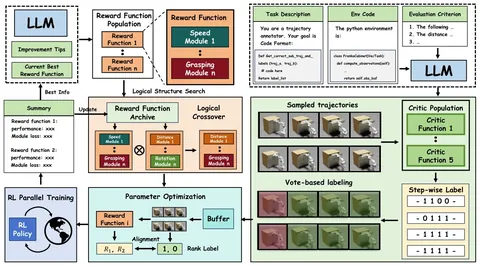
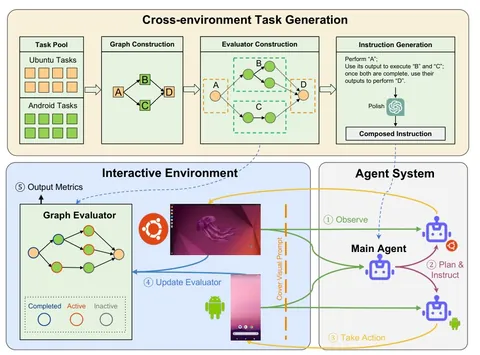
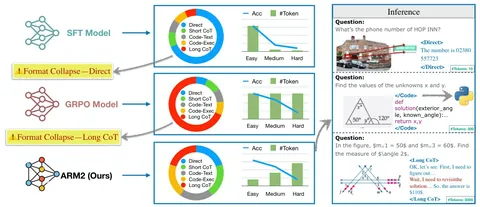
How safety papers draw attacks, defenses and alignment
- 1
Attacker and target as a fixed pair
Red teaming figures place an attacker model on the left and the target model on the right, joined by an attack arrow, and repeat that pair in every panel. When four methods share the pair, only the training signal between them changes, which is the point.
- 2
Requests color coded by intent
Requests sit in boxes tinted by intent, harmful, benign or disguised, with the model's reply on the right. A green to red bar between them marks where the model's internal signal falls for each request, so the mechanism and the outcome share one row.
- 3
Existing guardrail above, new one below
Defense papers draw the existing approach in one band and their own in a second band underneath, with the same input on the left and the same output on the right. Numbered components in the new band get short notes beneath them.
- 4
Lettered callouts around one diagram
Instead of a separate panel per step, one central diagram of the model carries lettered tags at its edges, a to d, each with a one-line note, plus a small legend for the layer types. The reader follows the letters without losing the model's structure.
- 5
Safe and unsafe regions in a 2D sketch
Mechanism figures sketch an embedding space with a green safe region, a pink unsafe region and a boundary line between them, then show how a point moves across it. Simple geometry makes a hidden effect easy to picture.
- 6
Training as a chain of model states
Alignment papers draw the model several times in a row, from pretrained to fine-tuned to aligned, with each training method acting on the arrows between copies. Readers see training as a path, and where the new method enters it, rather than a single box.
Questions about AI safety paper figures
How do I draw Figure 1 for a jailbreak or red teaming paper?
Show the roles first: who attacks, which model is the target, and what judges success. Place them in a fixed order and keep that order in every panel. Then show one request and the model's reply before and after your method, using short or redacted text. A safe or unsafe label on each reply tells the result faster than a score.
How should I show harmful examples in a figure?
Show only as much as the reader needs to follow the method. Several figures in this collection cut prompts short with an ellipsis or show a harm category instead of the full text. Keep any harmful output truncated, say in the caption that examples are shortened, and check your venue's rules on harmful content in submissions.
What should an alignment paper show in Figure 1?
Show the training signal and what it changes. Preference papers in this collection often draw chosen and rejected responses, the reward or comparison they produce, and the model being updated. Some value alignment papers add a picture of the space the method acts in, such as a steering direction from an unaligned state to an aligned one. Put your method next to a standard baseline so the difference is clear.
Can I reuse these safety figures?
Copyright stays with the authors. These papers are published under CC BY 4.0, which allows reuse, including commercial use, as long as you credit the authors, link to the paper and to the license, and note any changes you made. For your own paper it is usually better to borrow the layout idea and draw your own figure. If you plan to submit an AI drafted figure, check your venue's policy on AI-generated images first.
Where do these figures come from?
Each image is Figure 1 of a paper from ICLR 2025 to 2026, ICML 2024 to 2026, NeurIPS 2024 to 2025 or ACL 2023 to 2026, cropped and resized, and licensed CC BY 4.0: ACL papers through the ACL Anthology license statement, the others through each paper's OpenReview record. Papers join this topic through keyword rules on the title and abstract, such as jailbreak, red teaming, toxicity, model safety or alignment.
Draft your safety figure from a description
Describe the roles and steps in plain words: attacker, target, judge and defense, or the training signal and the model it updates. SciFigure's AI figure tools draft a first version. Check every label, and keep example prompts short.
Open the AI figure generatorData and license
Every figure here is Figure 1 of a paper released under CC BY 4.0, cropped and resized, and each one credits its title, authors, venue and year with links to the paper and the license. Listing a figure does not mean its authors endorse SciFigure. How the licenses were checked.