For Researchers
AHA Scientific Sessions Poster Guidelines: Board Size, Moderated Digital Posters and Abstract Deadlines
AHA Scientific Sessions poster rules: the 48 × 77 in board, moderated digital posters, ePoster upload, the 2,500-character abstract and the abstract deadline.
 SciFigure Editorial
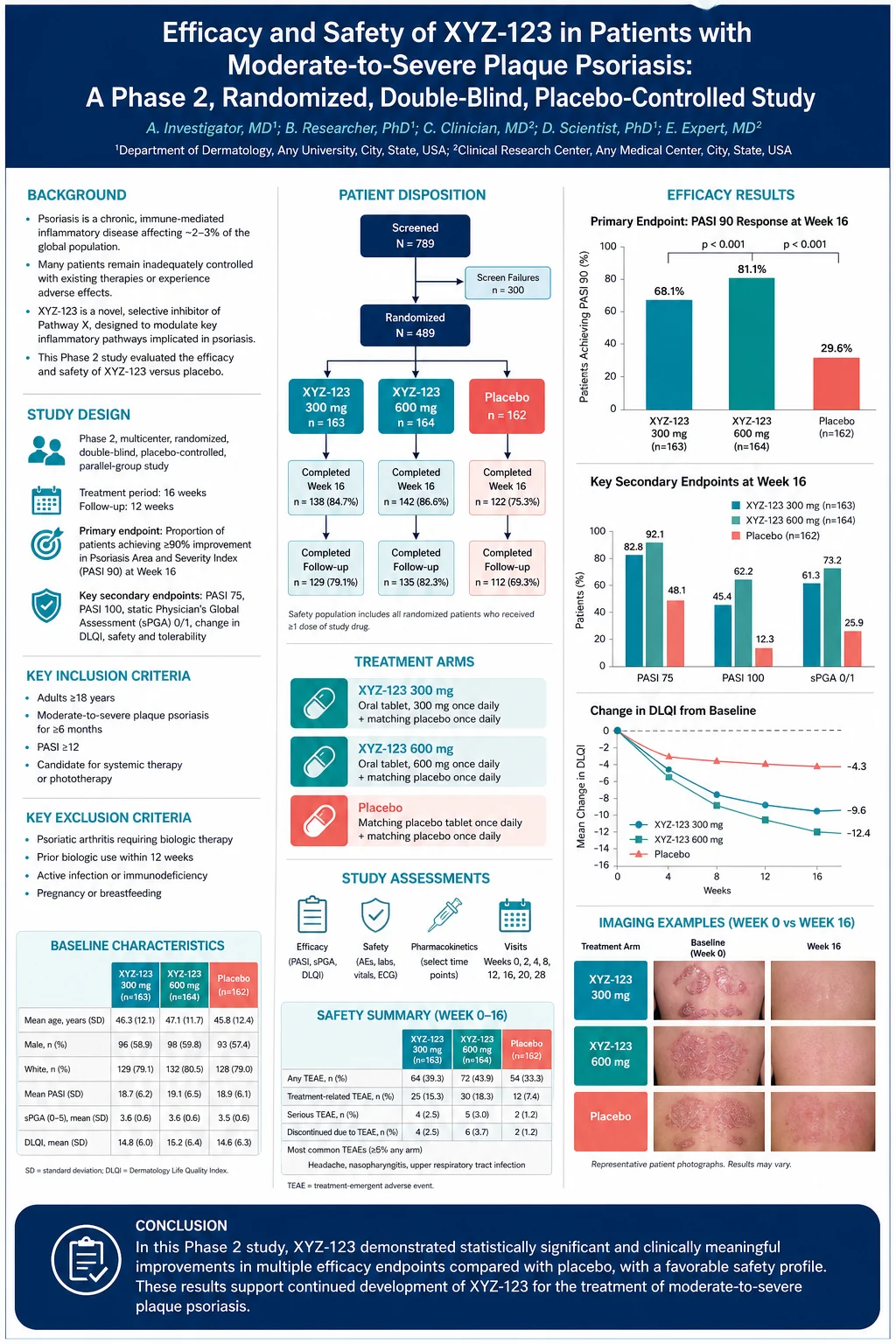
The American Heart Association's Scientific Sessions is where much of cardiovascular medicine presents its new trials and cohorts, and it has three ways to present an abstract: an oral talk, a moderated digital poster on a screen, or a printed poster on a board. Each has different files, deadlines and rules, and the program committee, not you, usually decides which one you get. Most first-time presenters find out what their format means a few weeks before the meeting, from a PDF in an email.
This guide collects the AHA's rules in one place (for general poster craft, see how to make a scientific poster): the abstract requirements, the board size, the ePoster that every poster presenter must upload, how moderated digital poster sessions work, and how to lay out cardiovascular results so they read from six feet. Scientific Sessions 2026 took place November 6–9, 2026, at McCormick Place in Chicago. Every fact below is from the AHA's 2026 documents on professional.heart.org and newsroom.heart.org, checked on November 17, 2026, and listed in Sources. The AHA has not yet published the 2027 abstract guidelines, so the 2026 rules are the latest official ones; we say where a 2027 detail is still unknown.
AHA poster and abstract rules at a glance
| Item | Scientific Sessions 2026 (latest published) | Source, checked Nov 17, 2026 |
|---|---|---|
| Dates and venue | November 6–9, 2026, McCormick Place, Chicago | AHA public newsroom |
| Presentation formats | Oral, moderated digital poster, or poster board | General abstract submission guidelines |
| Poster space on the board | 48 in high × 77 3/16 in wide (121.92 × 196.06 cm), landscape | Poster board presenter guidelines |
| Whole board with A-frame legs | 84 in high × 77 13/16 in wide (213.36 × 197.64 cm) | Poster board presenter guidelines |
| QR code card | 4.25 × 11 in card placed mid-level on the left of the board; do not cover it | Poster board presenter guidelines |
| Mounting | Pushpins provided; do not mount on thick poster board | Poster board presenter guidelines |
| Legibility | Lettering legible from about 6 ft (1.8 m); AHA's table says 30 pt for 6 ft | Poster board presenter guidelines |
| Required on the poster | Disclosures for all authors, a short introduction and a summary of conclusions | Poster board presenter guidelines |
| ePoster | Mandatory for every poster presenter; PDF or PowerPoint, one file, 16:9 preferred | Abstract presenter guidelines |
| ePoster deadline | November 1, 2026 | Abstract presenter guidelines |
| Moderated digital poster | ePoster only, no print; single page or up to 8 content slides plus title and disclosure slides | Abstract presenter guidelines |
| Abstract length | 2,500 characters (spaces not counted) | General abstract submission guidelines |
| Abstract fee | US$45 members, US$95 non-members; free for eligible lower-income countries | Abstract submission FAQ |
| Abstract deadline (2026) | June 8, 2026, 6 p.m. CT (extended deadline) | General abstract submission guidelines |
| Late-breaking science (2026) | June 22 – August 24, 2026, 6 p.m. CT | Late-breaking guidelines |
Six mistakes AHA presenters make
- Covering the QR code card. The AHA places a 4.25 × 11 in QR card on the left side of every board, linking to your ePoster. A poster printed to the full 77-inch width will sit over it.
- Forgetting disclosures. Every author's disclosure information must appear on the printed poster, clearly visible. Moderated digital posters have a disclosures slide.
- Printing a moderated digital poster. If you are assigned a moderated digital poster session, you present from a screen. The AHA's instruction is direct: do not print a poster.
- Missing the ePoster deadline. Every poster, printed or digital, needs an ePoster uploaded and approved by the deadline (November 1 in 2026), five days before the meeting opened.
- Using a results title on the abstract. The AHA's abstract guidelines ask you to avoid a title that reveals the results, and your poster carries the abstract title. Put the finding in a takeaway box instead.
- Leaving the board. Attendance for the whole assigned poster time is mandatory, and an unexplained absence can count against future abstracts.
AHA abstract deadlines: 2026 and what to expect for 2027
The AHA had not published Scientific Sessions 2027 abstract dates on the pages we could load on November 17, 2026. The 2026 cycle is the best guide to timing:
| Date (2026) | What happened |
|---|---|
| June 8, 6 p.m. CT | General abstract deadline (extended); no edits or author changes afterwards |
| June 22 – August 24, 6 p.m. CT | Late-breaking science and late-breaking basic science submission |
| Mid-August | Acceptance or non-acceptance emails to the presenting author |
| Late September | ePoster and printing instructions emailed from Digital Acumen (upload@scientificposters.com) |
| October 9 | Last day to withdraw a general abstract and avoid journal publication |
| November 1 | ePoster upload and approval deadline |
| November 2, 5 a.m. ET | Embargo on general abstracts lifted |
| November 6–9 | Scientific Sessions 2026 in Chicago; ePosters online from November 6 |
| December 7 | Online ePoster viewing closes; the site is then archived |
If the 2027 cycle follows this pattern, general abstracts will close in early summer 2027 and late-breaking science will run through August. Watch the AHA's Scientific Sessions submission page for the exact dates.
AHA abstract submission guidelines (2026)
These are the rules your abstract had to meet, and they shape the poster, because the poster must present the accepted abstract.
- Length: 2,500 characters, about 360–630 words. Text and punctuation in the body count; the title, author names, graphics, tables, their captions and spaces do not.
- Structure: the AHA recommends Introduction/Background, Research Questions/Hypothesis, Methods/Approach, Results/Data (with descriptive and inferential statistics) and Conclusion(s).
- Title: short and specific, with no abbreviations, and it should not reveal the results.
- Figures and tables are allowed in the abstract: BMP, GIF, JPG or PNG, 72–300 dpi, at most 440 pixels wide, grayscale for black-and-white images and RGB for colour, each with a brief description. Accepted abstracts appear in an online supplement to Circulation, with images after the text.
- Drug names: generic only. No references, credits or grant support, and no patient names or personal information.
- Originality: the work must not have been presented at a national or international meeting before. Splitting one study into several abstracts is penalised, and near-duplicate abstracts are disqualified.
- Fee: US$45 for members and US$95 for non-members per abstract, nonrefundable; free for authors from World Bank lower- and middle-income countries on the AHA's list.
- Format preference: "Any Format" lets the committee place you in an oral, moderated digital poster or poster board session; "Poster Only" limits you to a poster board.
- Language: all presentations, including questions, are in English.
- AI: assistive writing tools are allowed if their use is documented and the authors take responsibility. An AI-generated abstract with little human revision, or AI-generated ideas, claims, data or conclusions, are not acceptable. You indicate AI use when you submit.
AHA poster board size and orientation
| Measurement | Inches | Centimetres |
|---|---|---|
| Poster space (height) | 48 | 121.92 |
| Poster space (width) | 77 3/16 | 196.06 |
| Whole board with A-frame legs | 84 × 77 13/16 | 213.36 × 197.64 |
| QR code card | 4.25 × 11 | 10.8 × 27.9 |
| Our recommended print size | 42 × 72, landscape | 106.7 × 182.9 |
The fabric area is about 4 ft high by 6.4 ft wide. We suggest printing at 42 × 72 in: that leaves about 5 inches of width for the QR card on the left and 3 inches top and bottom. A 48 × 72 in print also fits, but only exactly in height. Whatever size you choose, keep the left edge clear at mid-height so the card stays visible.
The AHA's own readability table gives the type size needed for each viewing distance:
| To be legible from | Use this point size |
|---|---|
| 6 ft | 30 pt |
| 10 ft | 48 pt |
| 12 ft | 60 pt |
| 14 ft | 72 pt |
So body text of at least 30 pt, section headings of about 48–60 pt and a title of 72 pt or more; our guide to fonts for scientific figures and posters lists typefaces that stay clear at that size. The AHA also asks for illustrations readable from 4 to 6 ft, and medium or bold type weights. Its list of high-contrast combinations starts with black on white, and it includes white on blue and white on black.
Moderated digital poster vs poster board
| Moderated digital poster | Poster board | |
|---|---|---|
| Where | A screen in a moderated session | A numbered board in the Science and Technology Hall (South Hall, Level 3 in 2026) |
| Print a poster? | No: ePoster only | Yes, plus an ePoster |
| File | One PDF or PowerPoint: a single page, or up to 8 content slides plus a title slide and a disclosures slide | One PDF or PowerPoint ePoster for online viewing |
| How you present | Live, in person, with a moderator leading questions | One-on-one questions at the board; no formal talk |
| Audio | Optional narration for online viewers (5 min max); not used in the room | Optional narration for online viewers (5 min max) |
| Deadline | ePoster uploaded and approved by November 1 (2026) | ePoster by November 1; poster hung on the morning of your day |
The AHA did not publish how many minutes each moderated digital poster presenter gets; your session's moderators set the running order and timing, so ask them. A sensible plan is a three-to-five-minute walk through your slides, which leaves the rest for questions. At the usual pace of one slide per minute, that is the title, disclosures and three to five content slides, not all eight.
The ePoster every AHA presenter must upload
- Platform: Digital Acumen's APPRISOR, at submit.scientificposters.com/aha. Login details come from upload@scientificposters.com in late September; check spam if nothing arrives by September 30. The email goes to the presenting author only.
- Files: PDF or PowerPoint, one file, 16:9 preferred (4:3 supported). A single-page poster or a multi-slide deck of no more than 8 slides, not counting the title and disclosures slides.
- What does not work: animations, transitions, hyperlinks and embedded audio or video in PowerPoint.
- What you can add after upload: narration of up to five minutes, recorded online or uploaded, with slide advances; and a content video that expands on the research. A video that is simply a recorded presentation of the poster is not allowed and will be disabled.
- Viewing: from the meeting's opening day on aha.apprisor.org for registered attendees, with an "Ask the Author" forum that emails you questions; open until December 7 in 2026, then archived. The viewer is designed to stop downloads.
- Printing: if you are a poster board presenter, the same site gives access to a poster printing service.
On the day: poster board sessions
From the 2026 poster board guidelines:
- Hall hours: Saturday and Sunday, 9 a.m. to 4:30 p.m. CT; Monday, 9 a.m. to 3 p.m. CT. You cannot get in earlier.
- Hang it that morning when the hall opens, only on your scheduled day. Your board number is your presentation number.
- Stay for your session: being at the poster for the whole assigned time is mandatory. Visitors ask questions one-on-one.
- Two posters at once? Name a coauthor to present the second and email AHAScientificAbstracts@heart.org, copying them.
- Take it down at least 15 minutes before the hall closes, or it may be discarded. An unattended storage area is available, but the AHA is not responsible for what you leave there.
- No photos without permission: the AHA prohibits unauthorised photography and recording of presentations, including posters.
- Embargo: general abstracts were embargoed until 5 a.m. ET on Monday, November 2, 2026.
Designing a cardiovascular poster for AHA
Put the finding in a takeaway box. Because the AHA title should not state the result, add a shaded box directly under the title band with one sentence: what you found, in whom, and how big the effect was.
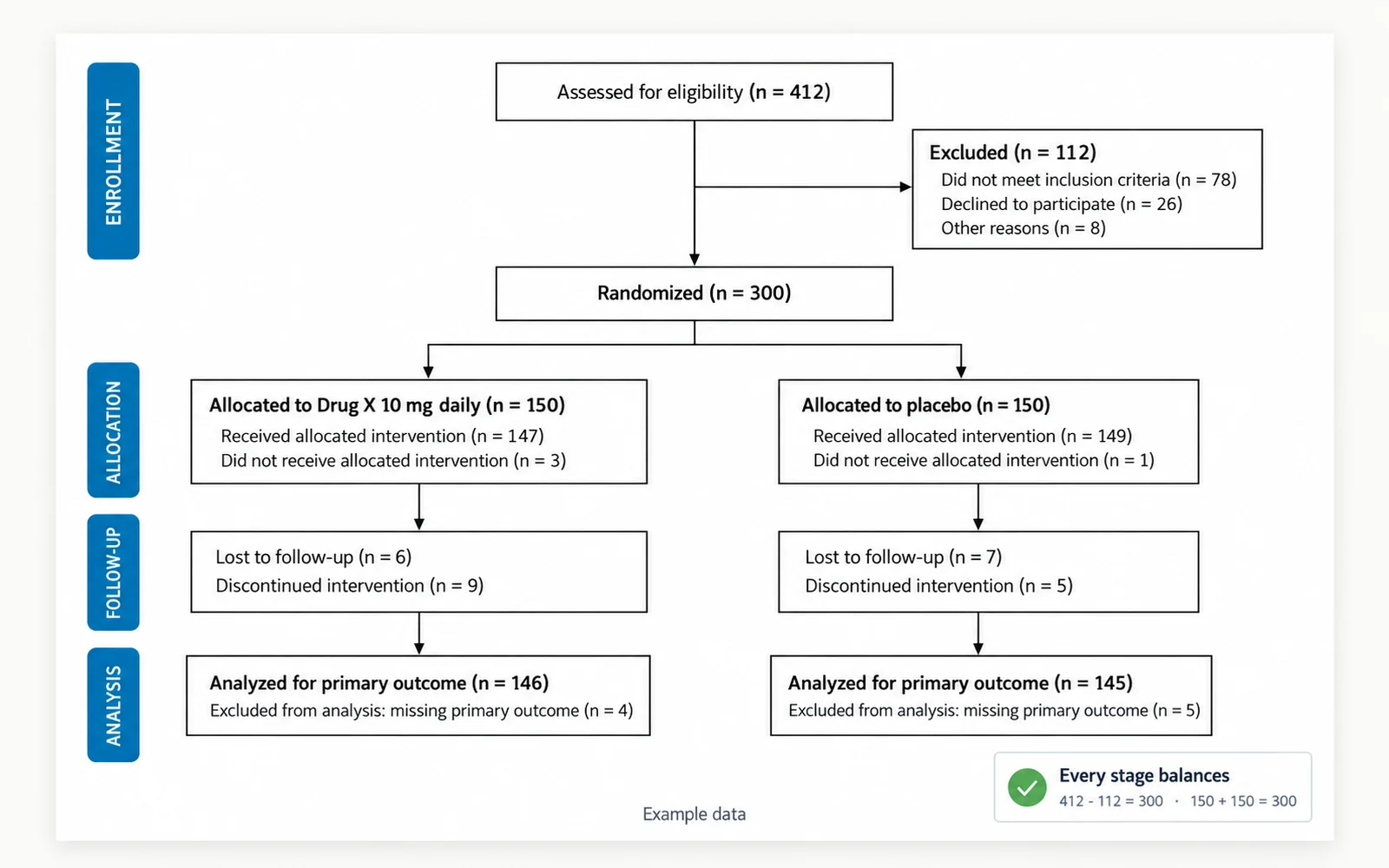
Show patient flow first. For a trial, a CONSORT diagram is the first thing reviewers look for; for a registry or cohort, a flow chart of inclusions and exclusions does the same job. Our CONSORT diagram generator builds it from your counts and checks that each stage balances.
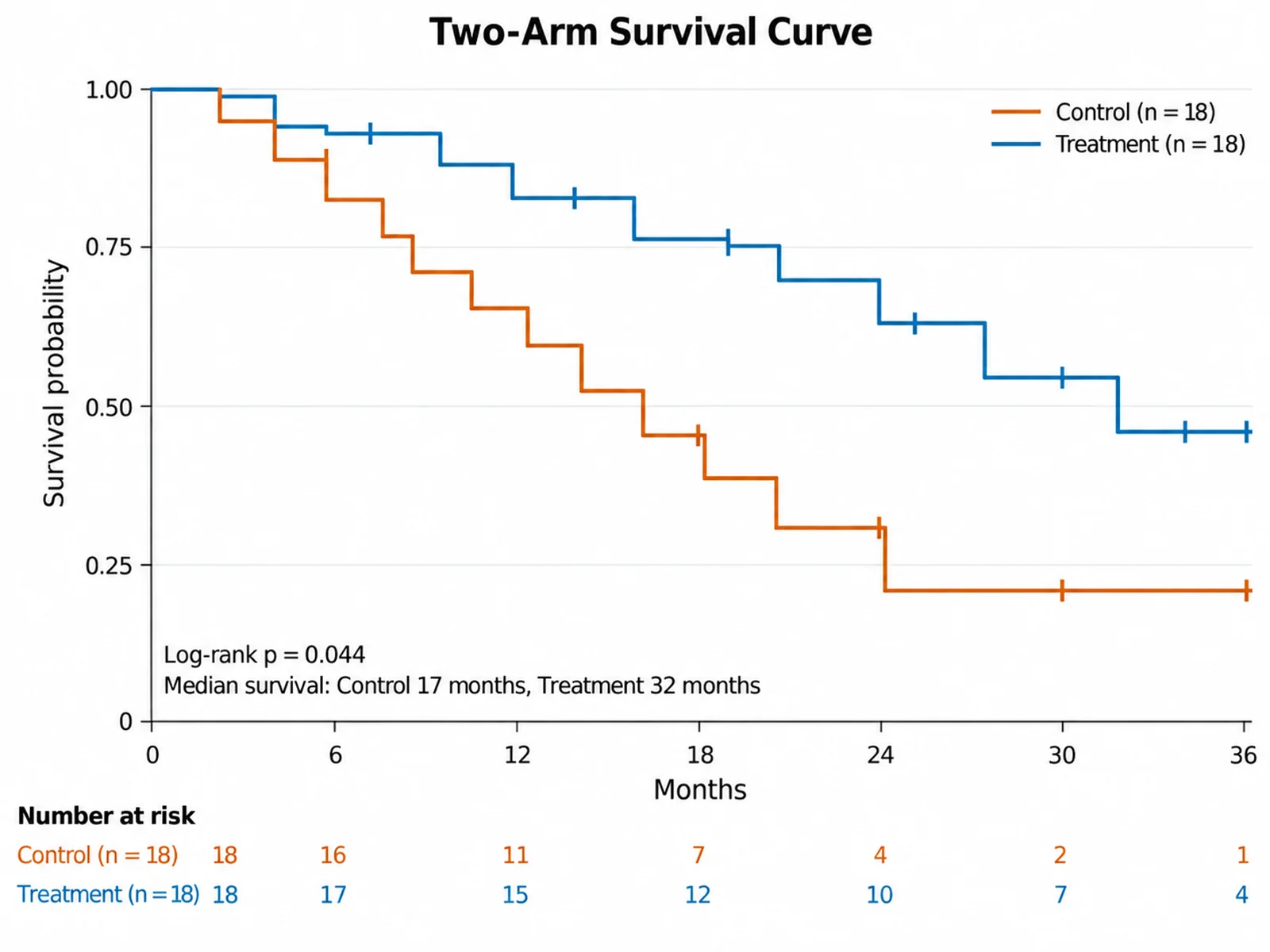
Time-to-event outcomes. MACE, heart failure hospitalisation and death are usually shown as Kaplan–Meier or cumulative-incidence curves. Include the number at risk, the hazard ratio with its 95% CI, and the follow-up time. Plot all-cause death and cause-specific events on the same time axis so readers can compare them. The Kaplan–Meier plot generator builds the curve and risk table together.
Subgroups as a forest plot. Age, sex, diabetes, ejection fraction category and baseline therapy go in one forest plot with the interaction p-values. Our forest plot guide covers the layout.
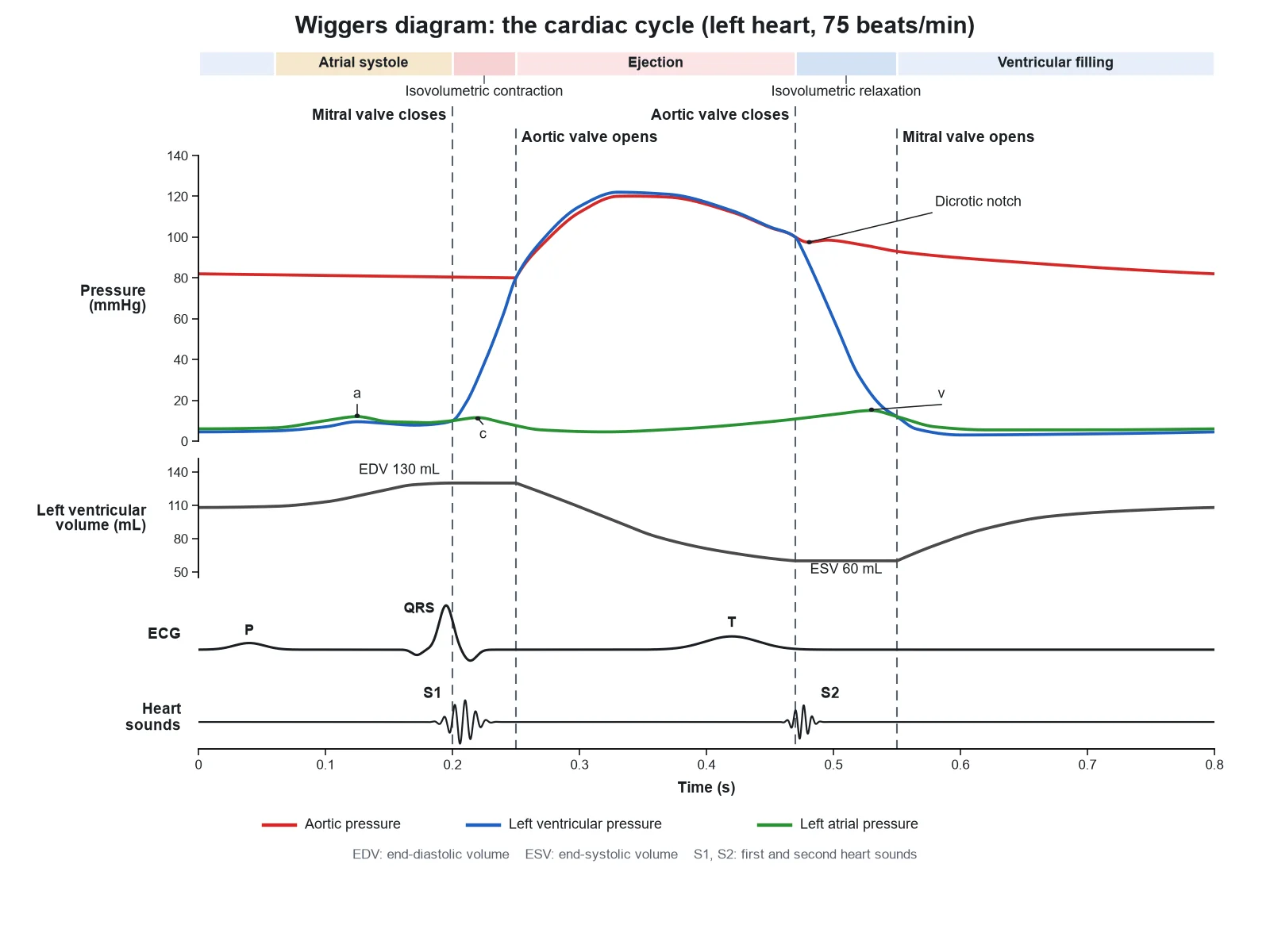
ECG and haemodynamic traces. Label the leads, keep the standard grid and state paper speed and gain (usually 25 mm/s and 10 mm/mV). For pressure or volume traces, label phases and valve events so non-specialists can follow. A clean reference like the one below, from our Wiggers diagram page, shows how much labelling a trace needs before it reads from six feet.
Diagnostic and device studies. A new test or algorithm, such as an ECG-based classifier, is usually shown as a ROC curve with the AUC and its 95% CI; agreement between a device and a reference method (cuff versus intra-arterial pressure, for example) as a Bland–Altman plot with the bias and limits of agreement drawn in. Biomarker distributions by group read well as a box and whisker plot with the points overlaid.
Imaging. Echocardiography, CMR and angiography stills need the view or sequence named, a scale where relevant, and arrows to the finding. Check each image at print size with the image DPI checker.
Units and lab values. State units on every axis and in every table (mmHg, mL/m², mg/dL or mmol/L), and use one system throughout.
Colour. One colour per arm across all plots, from a colour-blind-safe set such as the colorblind-friendly palette; avoid pairing red and green to separate arms. Preview the whole poster in the colorblind simulator.
A layout template for the AHA board
For a 42 × 72 in landscape print:
| Zone | Inches | Centimetres | What goes there |
|---|---|---|---|
| Outer margin | 1 | 2.5 | Clear on every side |
| Title band | 70 × 6 | 177.8 × 15.2 | Abstract title, authors, affiliations, logos |
| Takeaway box | 70 × 3 | 177.8 × 7.6 | One-sentence finding with the effect size |
| Left column | 20 wide | 50.8 wide | Background, hypothesis, methods, CONSORT diagram, baseline table |
| Centre column | 28 wide | 71.1 wide | Primary outcome (KM curve), key secondary outcomes |
| Right column | 20 wide | 50.8 wide | Subgroup forest plot, safety, conclusions |
| Gutters | 1 | 2.5 | Between columns and bands |
| Footer | 70 × 2 | 177.8 × 5.1 | Disclosures for all authors, funding, references, contact |
Width: 1 + 20 + 1 + 28 + 1 + 20 + 1 = 72 in. Height: 1 + 6 + 1 + 3 + 1 + 26 (body) + 1 + 2 + 1 = 42 in. The scientific poster layout checklist covers reading order and white space in more detail.
How to build your AHA poster step by step
1. Confirm your format
Check the acceptance email: oral, moderated digital poster or poster board. Only poster board presenters print.
2. Set the page size
Use 42 × 72 in landscape for a print poster, or a 16:9 page for a moderated digital poster.
3. Copy the abstract title exactly
Keep the accepted title, then write the takeaway sentence for the box under it.
4. Build the figures from your data at print size
CONSORT diagram, primary outcome curve, subgroup forest plot, and a baseline characteristics table. Axis labels at 24 pt or more.
5. Add disclosures and keep the left edge clear
Disclosures for all authors in the footer, and nothing important behind the QR card position.
6. Make the ePoster
Export the poster as one PDF (or build the slide version), upload it to APPRISOR, record up to five minutes of narration if you want, and approve it before the deadline.
7. Print, then proof from six feet
Print a section at 100% on letter paper and check it at six feet. Matte paper or fabric avoids glare under hall lighting.
A prompt you can adapt for a first draft
The AHA's AI policy covers the abstract: tools are allowed with documentation, but not AI-generated ideas, data or conclusions. If you draft a poster layout with an AI tool, treat it as a layout only and rebuild every chart from your data.
Landscape scientific poster, 72 × 42 inches, for AHA Scientific Sessions.
Title band with the abstract title "Effect of Drug X on heart failure events in
patients with reduced ejection fraction", authors, affiliations; shaded takeaway
box under the title. Left 5 inches clear at mid-height for a QR card.
Left column: background, methods, CONSORT diagram (n = 300 randomised),
baseline characteristics table. Centre: large Kaplan–Meier curve for the primary
outcome with number at risk and HR (95% CI). Right: subgroup forest plot,
adverse events table, conclusions. Footer: disclosures for all authors, funding.
Sans-serif, body 30 pt, white background, blue and orange for the two arms.
Paste it into the scientific poster maker for a starting layout, then replace the charts with ones made in the Kaplan–Meier plot generator and forest plot generator, and write the legends with the figure legend generator.
AHA poster checklist
- Format confirmed: printed poster only if you have a poster board session.
- Landscape, no larger than 48 × 77 in; we suggest 42 × 72 in with the left edge clear for the QR card.
- Accepted abstract title, plus a takeaway box with the finding.
- Disclosures for all authors visible on the poster.
- Short introduction and a summary of conclusions.
- Body text 30 pt or larger; illustrations readable from 4–6 ft.
- CONSORT or cohort flow, primary outcome with number at risk and HR (95% CI), subgroup forest plot.
- ECG traces with leads, speed and gain; images with views and scale.
- Colour-blind-safe colours, one per arm.
- ePoster uploaded and approved by the deadline (November 1 in 2026).
- At the board for the whole session; poster down 15 minutes before the hall closes.
Frequently asked questions
When was the AHA 2026 abstract deadline?
The extended deadline for general abstracts to Scientific Sessions 2026 was June 8, 2026, at 6 p.m. CT. Late-breaking science and late-breaking basic science were accepted from June 22 to August 24, 2026, at 6 p.m. CT.
When is the American Heart Association abstract deadline for 2027?
The AHA had not published it when we checked on November 17, 2026. In 2026, general abstracts closed in early June and late-breaking abstracts in late August, so plan for a similar window.
How long can an AHA abstract be?
2,500 characters, which the AHA estimates at about 360–630 words. Spaces, the title, author names, figures, tables and captions do not count.
Can I include figures in an AHA abstract?
Yes. Figures and tables go in as BMP, GIF, JPG or PNG images at 72–300 dpi and at most 440 pixels wide, each with a brief description.
What size is the AHA poster board?
The poster space is 48 in high by 77 3/16 in wide (121.92 × 196.06 cm). The whole board, including its A-frame legs, is 84 in high by 77 13/16 in wide. A 4.25 × 11 in QR card is placed on the left side.
What is a moderated digital poster session at AHA?
It is an in-person session where you present your ePoster on a screen and a moderator leads questions. You do not print a poster; you upload one file, either a single-page poster or up to 8 content slides plus title and disclosure slides.
Do I need an ePoster if I have a printed poster?
Yes. Every AHA poster presenter, printed or digital, must upload an ePoster through Digital Acumen's APPRISOR site. In 2026 the deadline was November 1.
Can I add audio to my AHA ePoster?
Yes, up to five minutes of narration, recorded on the upload site or uploaded as a file. It is for online viewers and does not replace presenting in person.
What must an AHA poster include?
Disclosure information for all authors, a short introduction and a summary of conclusions. Hypothesis, methods and results sections are suggested but not mandatory.
Can people photograph my poster at AHA?
Not without authorisation. The AHA prohibits unauthorised photography and recording of presentations and posters at Scientific Sessions.
Related guides
- AACR Annual Meeting poster guidelines: the 69 × 45 in board and the companion e-poster.
- SOHO annual meeting poster guidelines: the 350-word abstract and Houston poster session.
- ASH annual meeting poster guidelines and the RSNA education exhibit and poster guide.
- ASHG and AGU poster guides.
- How to make a scientific poster, the scientific poster layout checklist and scientific color palettes.
Sources
All pages checked on November 17, 2026.
- American Heart Association, Scientific Sessions 2026 Public Newsroom (dates and venue)
- American Heart Association, Scientific Sessions 2026 Poster Board Presenter Guidelines (PDF) (board size, QR card, hall hours, setup, attendance, disclosures, readability table)
- American Heart Association, Scientific Sessions 2026 Abstract and Clinical Case Presenter Guidelines (PDF) (moderated digital posters, ePoster rules and deadline, viewing dates)
- American Heart Association, Scientific Sessions 2026 General Abstract Submission Guidelines (PDF) (deadline, character limit, graphics, title rule, formats, embargo, recording policy, AI policy)
- American Heart Association, Scientific Sessions 2026 Abstract Submission FAQ (PDF) (fees, prior presentation, acceptance timing)
- American Heart Association, Scientific Sessions 2026 Late-Breaking Science Submission Guidelines (PDF) and Late-Breaking Basic Science Guidelines (PDF) (submission window)
- American Heart Association, Scientific Sessions 2026 Participant Guidelines and Information (PDF) (slide upload, one slide per minute)