For Researchers
ASH 2026 Annual Meeting Poster Guidelines: Board Size, Print Deadline and the Rules on AI
ASH 2026 poster rules for New Orleans: the 4 × 6 ft board, the November upload that gets your poster printed, session times, abstract deadlines and the AI ban.
 SciFigure Editorial
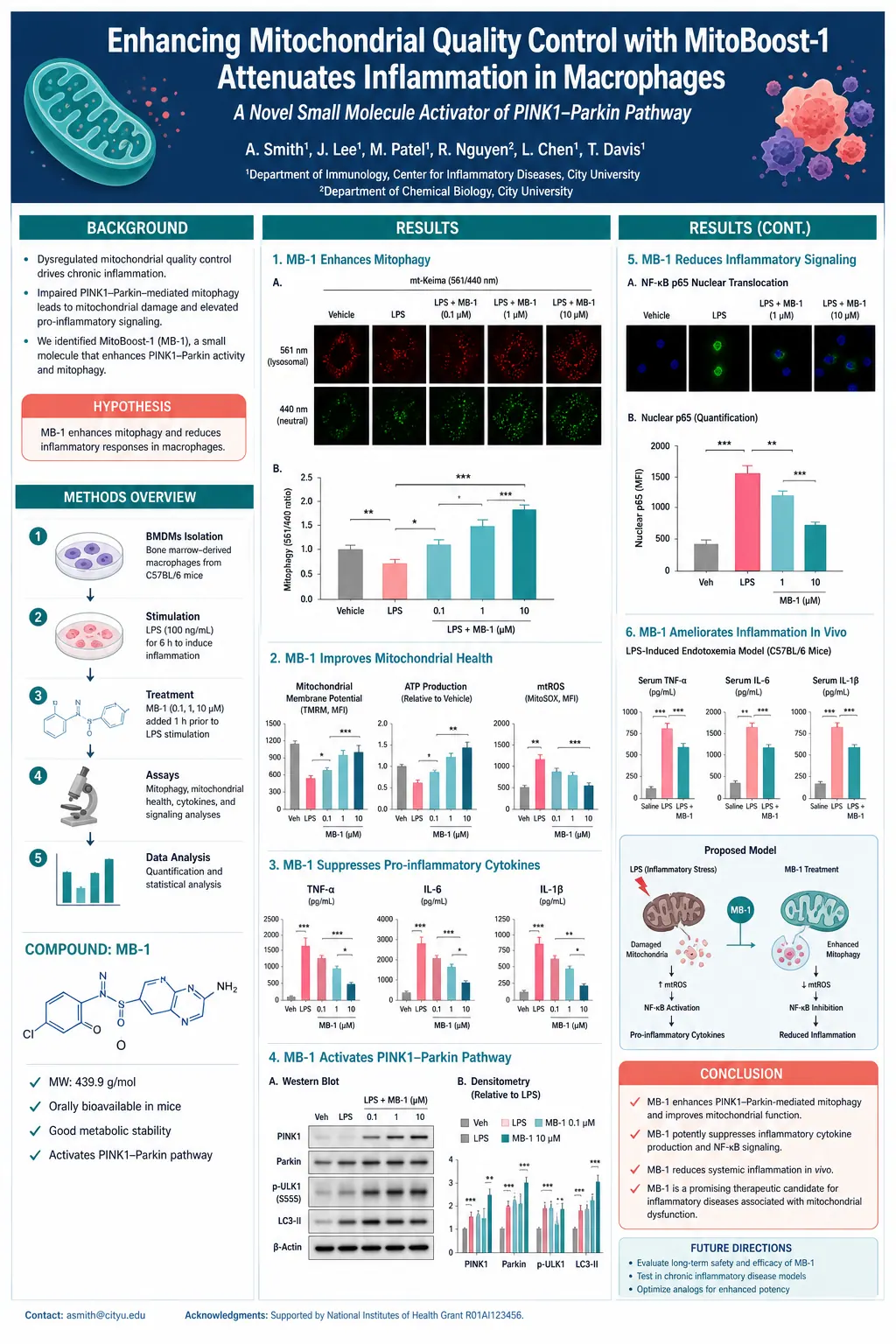
The 68th American Society of Hematology Annual Meeting and Exposition — ASH 2026 — runs December 12–15, 2026, at the Ernest N. Morial Convention Center in New Orleans, with a virtual option for attendees. Poster presenters, though, must be there in person, and ASH runs its posters differently from most meetings: you upload your poster and a short narrated summary in November, and ASH prints the poster and hangs it on your board for you — provided the upload arrives on time.
This guide sets out what ASH asks of poster presenters: the board size, the upload deadlines (including a discrepancy between two ASH pages that you should plan around), the session schedule, the abstract rules, the embargo, and ASH's unusually strict policy on AI. Every date, size and rule is as published on hematology.org when we checked it on November 8, 2026, with the official pages listed in Sources. Where ASH does not publish something, we say so.
ASH 2026 poster rules at a glance
| Item | ASH 2026 |
|---|---|
| Dates and venue | December 12–15, 2026, Ernest N. Morial Convention Center, New Orleans |
| Poster board | About 4 ft tall × 6 ft wide (about 122 × 183 cm), landscape, with a printed board number |
| What you upload | A static image of your poster, plus a narrated PowerPoint summary of about 3–5 minutes |
| Upload system | Orchestrate, ASH's presentation management system (instructions emailed in October) |
| Printing | ASH prints and hangs posters uploaded on time; miss the cut-off and you print and bring your own |
| Upload deadline | November 16 — but upload by November 10 to be sure ASH prints it (see below) |
| Official template | Optional Abstract Poster Template, PowerPoint, 140 × 90 cm landscape |
| At the board | One or two authors present for the whole presentation period |
| AI | Generating original text, slides or posters with AI tools is prohibited |
| Poster sessions | Saturday December 12, Sunday December 13, Monday December 14 (evening presentation periods) |
The upload deadline: November 10 or November 16?
ASH publishes two versions of the print cut-off, and the difference matters.
- ASH's Presenter Resources page says all posters uploaded by the November 16 deadline will be printed and hung on the presenter's behalf.
- ASH's Call for Abstracts says posters and pre-recorded presentations are due by November 16, 2026, but that posters not uploaded by November 10 will be marked "unavailable" on the virtual platform and will not be printed or hung by ASH — leaving the presenting author to print and bring the poster.
Treat November 10 as your real deadline for the poster image, and November 16 as the deadline for the narrated presentation. If you are reading this after November 10 and your poster is not uploaded, upload it anyway (so it appears for virtual attendees), contact ASHabstracts@hematology.org, and plan to print your own copy.
ASH 2026 dates and deadlines
From ASH's Key Dates list, Call for Abstracts and Presenter Resources:
| Date (2026 unless noted) | What happens |
|---|---|
| June 2 | Abstract submission opens |
| July 22, 11 a.m. ET | Registration and housing open for ASH members |
| August 4, 11:59 p.m. PT | Abstract submission deadline (abstracts cannot be changed after this) |
| August 12, 11 a.m. ET | Registration and housing open for non-members |
| September 16 | Last day to withdraw an abstract |
| Early October | Acceptance or rejection emails to presenting authors |
| October 14 | Late-breaking abstract submission opens |
| October 21, 11:59 p.m. PT | Advance registration discount ends |
| October 28, 11:59 p.m. PT | Late-breaking abstract deadline |
| November 4, 9 a.m. ET | Abstracts published online; embargo on abstract content lifts |
| November 4, 11:59 p.m. PT | Registration cancellation deadline |
| November 10 | Poster image upload needed for ASH to print and hang your poster (Call for Abstracts) |
| November 11, 5 p.m. ET | Hotel reservation deadline |
| November 16 | Deadline for the narrated presentation (and, per Presenter Resources, the poster) |
| December 7, 9 a.m. ET | Late-breaking abstracts published online |
| December 9, 9 a.m. ET | Virtual platform opens to all attendees |
| December 11 | Scientific workshops, ASH-a-Palooza and Friday satellite symposia |
| December 12–15 | Annual meeting: oral and poster abstracts, invited program |
| December 16–17 | On-demand viewing and virtual poster walks |
| January 1 – March 1, 2027 | Virtual access ends, depending on registration tier |
ASH poster board size and orientation
ASH's Presenter Resources page provides one poster board, approximately 4 feet tall and 6 feet wide, and a printed number identifying your board.
| Measurement | Feet / inches | Centimetres |
|---|---|---|
| Board height | about 4 ft (48 in) | about 122 cm |
| Board width | about 6 ft (72 in) | about 183 cm |
| Orientation | Landscape | Landscape |
| ASH's optional poster template | 55.1 × 35.4 in | 140 × 90 cm |
ASH does not state the size at which it prints uploaded posters. Its optional Abstract Poster Template (PowerPoint) is set up as a 140 × 90 cm landscape page, which sits comfortably on the board; if you design your own, keep to a landscape page no larger than the board. The template's own instructions ask for body text no smaller than 20 points at that size, left-aligned rather than justified, headings of more than six words in upper and lower case rather than capitals, and bold rather than underlining or capitals for emphasis.
If you print your own poster (because you missed the upload cut-off), ASH asks that:
- title lettering be no less than 1.5 inches (3.8 cm) high — note that this is the height of the letters, not the point size. Capitals are roughly 70% of the point size in most sans-serif fonts, so 1.5-inch capitals need type of about 150 pt;
- the title be part of the poster itself, not a separate strip of paper;
- charts and illustrations be drawn more heavily than you would for slides, and kept simple;
- everything be legible from 3 to 5 feet (about 0.9–1.5 m);
- illustrations not be mounted on heavy board, which is hard to keep in place;
- you avoid "typewriter-size" type of 10–12 pt.
How ASH poster sessions work
ASH's 2026 poster schedule (all times Central):
| Session | Date | Viewing | Presentation (authors at the board) | Dismantling |
|---|---|---|---|---|
| I | Saturday, December 12 | 8 a.m.–7:30 p.m. | 5:30–7:30 p.m. | 7:30–7:45 p.m. |
| II | Sunday, December 13 | 8 a.m.–8 p.m. | 6–8 p.m. | 8–8:15 p.m. |
| III | Monday, December 14 | 8 a.m.–8 p.m. | 6–8 p.m. | 8–8:15 p.m. |
- Be at the board for the whole presentation period. ASH asks that one or two authors be present at each poster throughout, and that you not let one visitor monopolise you.
- Take it down on time. Remove your materials immediately after the session; anything left on the board is discarded.
- Handouts: only exact copies of your poster or business cards are allowed. No other handouts.
- No commercial posters. A poster judged to be a commercial advertisement will be removed.
- Conflict of interest: ASH staff post a COI statement on your board for you.
- Presenting authors must attend in person. If you cannot, a co-author who can attend may replace you (tell ASHabstracts@hematology.org). If no one can present after the September 16 withdrawal deadline, ask ASH to cancel the presentation; a "canceled" sign is hung on the board, and the abstract stays published.
- Poster walks. ASH runs seven poster walks: five in person in the Blood Journals Studio during the meeting and two virtual ones on the Wednesday after it. Each features up to five posters chosen by the walk's chairs, with a brief summary from each poster's author followed by audience Q&A.
The narrated presentation
Every poster presenter uploads, to Orchestrate:
- a static image of the poster, and
- a narrated PowerPoint summary of the poster, recorded as video. ASH's pages describe it as a five-minute narration (Presenter Resources) and as a 3-to-5-minute narrated presentation (Call for Abstracts), so keep it under five minutes.
Presentations not uploaded by November 16 are marked "unavailable" on the virtual platform. ASH's general slide advice applies: 16:9 slides, sans-serif fonts at around 18 pt or larger, dark text on a light background, and left-aligned text. Five minutes is roughly 650–750 spoken words — enough for the question, the design, two or three results and the conclusion, not for every panel on the poster.
ASH's rules on AI: what is and is not allowed
ASH's policy, published in both the Call for Abstracts and Presenter Resources, is the strictest of any major meeting we cover:
- AI tools cannot be authors.
- "Generation of original text, slides, and posters using AI tools is prohibited." Prompting an AI system to generate text is prohibited even if the author reviews it afterwards.
- AI use in developing original text and presentations is limited to spelling and grammar checks using a closed AI system. AI may also be used to revise existing text with human author oversight.
- AI-generated material cannot be cited as a primary source.
In practice, that rules out AI poster generators — including our own scientific poster maker — and AI-drawn charts, schematics and illustrations for your ASH poster and narrated slides. Build the ASH poster yourself, from figures you made from your data. The AI poster maker remains useful for meetings that allow it, such as drafting a poster for a local or institutional meeting; it is not for ASH.
Tools that do not use AI are fine, and several of ours run entirely in your browser on numbers you type in:
- the CONSORT diagram generator draws a trial flow diagram from your own counts and flags counts that do not add up;
- the box and whisker plot maker computes quartiles from your raw values and exports SVG or PDF;
- the figure legend generator assembles a legend from the details you enter, in the order reviewers expect;
- the colorblind-friendly palette gives checked HEX values, and the colorblind simulator previews your finished figures;
- the image DPI checker tells you whether each image will print sharply at its size on the poster.
Abstract rules for ASH (and what they mean for the poster)
- Length: the abstract body may not exceed 4,500 characters including spaces; the title, authors and affiliations are not counted.
- No figures or tables in abstracts (new for 2026). Figures and tables are allowed — and expected — in the poster and oral presentations.
- Fee: $95 per abstract; $150 for a late-breaking abstract. Both are nonrefundable and separate from registration.
- Late-breaking abstracts: submitted October 14–28, 2026. Only six are accepted, for the Late-Breaking Abstracts session on Tuesday, December 15. Case reports and interim trial results are not appropriate.
- Poster-only option: at submission you could choose poster-only, for example if the presenter cannot give an oral presentation in English.
- Publication: all accepted abstracts are published in an online-only issue of Blood. ASH may accept some abstracts as publication-only, without a presentation.
- Drug names: use non-proprietary (generic) names in lower case; a proprietary name may follow in parentheses after the first mention. ASH's disclosure attestation also commits presenters to keeping content free of healthcare-company logos.
- Stick to the abstract. The presentation must match the abstract's title, authors and scientific content, although updated results may be included.
- Clinical trial demographics. ASH asks that posters reporting clinical trials include relevant demographic information about participants — such as sex, race, ethnicity, age and disability — or explain why it was not collected.
The ASH embargo and reusing your poster
- Abstract content was embargoed until the abstracts went online on November 4, 2026, at 9 a.m. ET (late-breaking abstracts: December 7, 9 a.m. ET).
- Anything beyond the abstract — additional analysis, updated data, your poster and slides — stays embargoed until the poster session containing your poster opens for viewing that day, or the start of an ASH press briefing on the research, whichever is first. ASH's example: a poster in the Saturday, December 12 session is embargoed until the poster hall opens at 9 a.m. ET (8 a.m. Central).
- Do not post the poster on social media or a preprint server before then. If the work is accepted by a journal for publication before the meeting, ASH asks you to notify it and request a delay.
- Copyright. By presenting, you grant ASH an exclusive licence to the presented materials, including posters. You keep the right to reuse your own poster in specific ways — on your personal or departmental website, in teaching, in a thesis, and its figures in later work — with the acknowledgement "American Society of Hematology Annual Meeting (2026)".
Designing a hematology poster for ASH
Write the title as the result. ASH's template tip is to simplify titles; a declarative title tells a passing hematologist what you found.
Survival plots done properly. Kaplan–Meier curves need censoring marks, a number-at-risk table under the x-axis, the median follow-up, and hazard ratios with 95% confidence intervals and the test used. Put the number at risk in type as large as the axis labels — it is the first thing clinicians look for.
Show subgroups as a forest plot, with the number of patients and events per subgroup and a vertical line at no effect.
Report the trial the way readers expect: a CONSORT flow diagram, the baseline demographics table ASH asks for, response by the named criteria you used, and adverse events by grade with the grading system and version stated.
Label lab data unambiguously. Give units on every axis and in every table (for example ×10⁹/L for counts, g/dL for hemoglobin), and keep the same unit system throughout.
Label images like figures. Marrow and smear images need the stain, magnification and a scale bar; flow cytometry plots need marker names on both axes and the gating path; imaging needs modality and timepoint.
Keep colour meaningful and safe. One colour per arm across every plot, chosen from a colour-blind-safe palette, with arms also distinguished by line style or marker.
A layout template for the ASH board
This grid uses ASH's own 140 × 90 cm template page; scale it up proportionally if you design to fill more of the 6 × 4 ft board.
| Zone | Centimetres | Inches | What goes there |
|---|---|---|---|
| Outer margin | 2 | 0.8 | Clear on every side |
| Title band | 136 × 13 | 53.5 × 5.1 | Results-style title, authors, affiliations |
| Left column | 38 wide | 15.0 wide | Background, objectives, methods, CONSORT diagram |
| Centre column | 57 wide | 22.4 wide | Primary endpoint (survival curve or response), key secondary results |
| Right column | 38 wide | 15.0 wide | Demographics, safety by grade, conclusions |
| Gutters | 1.5 | 0.6 | Between columns |
| Footer strip | 136 × 4 | 53.5 × 1.6 | References, acknowledgements, disclosures, contact |
Columns: 2 + 38 + 1.5 + 57 + 1.5 + 38 + 2 = 140 cm. Height: 2 + 13 + 1.5 + 66 (body) + 1.5 + 4 + 2 = 90 cm.
At 140 × 90 cm, ASH's template asks for body text of at least 20 pt; for reading at the 3–5 ft ASH describes, we would use 24–28 pt body text, 44–54 pt section headings and a title of 90 pt or more. Our font guide for figures and posters covers which typefaces stay readable at that distance.
ASH poster checklist
- Poster designed by you and your co-authors — no AI-generated text, figures or layout.
- Landscape page that fits the 4 × 6 ft board (ASH's template: 140 × 90 cm).
- Title as the finding; content matches the abstract.
- Generic drug names in lower case; no healthcare-company logos.
- Clinical trial posters include participant demographics, or say why they are missing.
- Kaplan–Meier curves with number at risk, censoring marks and HR with 95% CI.
- Units on every axis and in every table; stain, magnification and scale bar on every image.
- Colour-blind-safe colours, consistent per arm.
- Each image checked at its printed size with the DPI checker.
- Poster image uploaded to Orchestrate by November 10; narrated summary (under five minutes) by November 16.
- Nothing posted publicly before your poster session opens.
- In New Orleans: at the board for the whole presentation period, poster copies or business cards only, board cleared by the end of dismantling.
Frequently asked questions
When and where is ASH 2026?
The 68th ASH Annual Meeting and Exposition is December 12–15, 2026, at the Ernest N. Morial Convention Center in New Orleans, Louisiana, with a virtual option for attendees.
What size is the ASH poster board?
About 4 feet tall and 6 feet wide (about 122 × 183 cm), landscape. ASH's optional poster template is a 140 × 90 cm landscape page.
Does ASH print my poster?
Yes, if you upload it on time. ASH prints and hangs posters uploaded to its presentation system. Its Call for Abstracts says posters not uploaded by November 10 will not be printed, while its Presenter Resources page gives November 16 — upload by November 10 to be safe.
What do ASH poster presenters have to upload?
A static image of the poster and a narrated PowerPoint summary of about 3–5 minutes, recorded as video, through the Orchestrate presentation system.
What was the ASH 2026 abstract deadline?
August 4, 2026, at 11:59 p.m. Pacific time. Late-breaking abstracts were accepted October 14–28, 2026.
What is the ASH abstract character limit?
4,500 characters including spaces, not counting the title, authors and affiliations. Figures and tables are not allowed in 2026 abstracts.
Can I use AI to make my ASH poster?
No. ASH prohibits generating original text, slides and posters with AI tools. AI may be used only for spelling and grammar checks with a closed AI system, or to revise existing text under author oversight.
When are the ASH 2026 poster sessions?
Saturday, December 12 (presentation 5:30–7:30 p.m.), Sunday, December 13 (6–8 p.m.) and Monday, December 14 (6–8 p.m.), all Central time. Posters can be viewed from 8 a.m. on each day.
Do I have to be at my poster the whole time?
During the presentation period, yes: ASH asks that one or two authors be at each poster for the entire presentation.
When does the ASH embargo lift for my poster?
Abstract content was released on November 4, 2026. Anything beyond the abstract, including the poster itself, is embargoed until your poster session opens for viewing that day, or an earlier ASH press briefing on the work.
Can I hand out copies of my poster?
Yes — exact copies of your poster and business cards are the only handouts allowed in the poster hall.
Can I put my ASH poster on my website afterwards?
Yes. ASH's reuse policy lets authors post their presentation materials on a personal or non-commercial departmental website, with the acknowledgement "American Society of Hematology Annual Meeting (2026)".
More conference poster guides
- SfN Neuroscience 2026 poster guide — the 6 × 4 ft board, abstract deadlines and virtual posters.
- NeurIPS 2026 poster size and template — three venues, two sizes and print deadlines.
- RSNA 2026 education exhibit and poster guide — slide limits, upload deadlines and AI disclosure.
- How to make a scientific poster and the scientific poster layout checklist.
Sources
All pages checked on November 8, 2026.
- American Society of Hematology, ASH Annual Meeting (dates, venue, key dates)
- American Society of Hematology, Presenter Resources (poster guidelines, schedule, AI policy, templates)
- American Society of Hematology, Call for Abstracts (abstract rules, late-breaking abstracts, upload and print deadlines)
- American Society of Hematology, Annual Meeting Embargo Policy
- American Society of Hematology, Copyright and Reuse Policy
- American Society of Hematology, Poster Walk Guidelines
- American Society of Hematology, Abstract Poster Template (PowerPoint)