For Researchers
NeurIPS 2026 Poster Guide: Size, Venue Rules for Sydney, Atlanta and Paris, and a Template
NeurIPS 2026 posters are 140 × 90 cm landscape; workshop posters 61 × 85 cm portrait. Hanging rules and print deadlines for Sydney, Atlanta and Paris.
 SciFigure Editorial
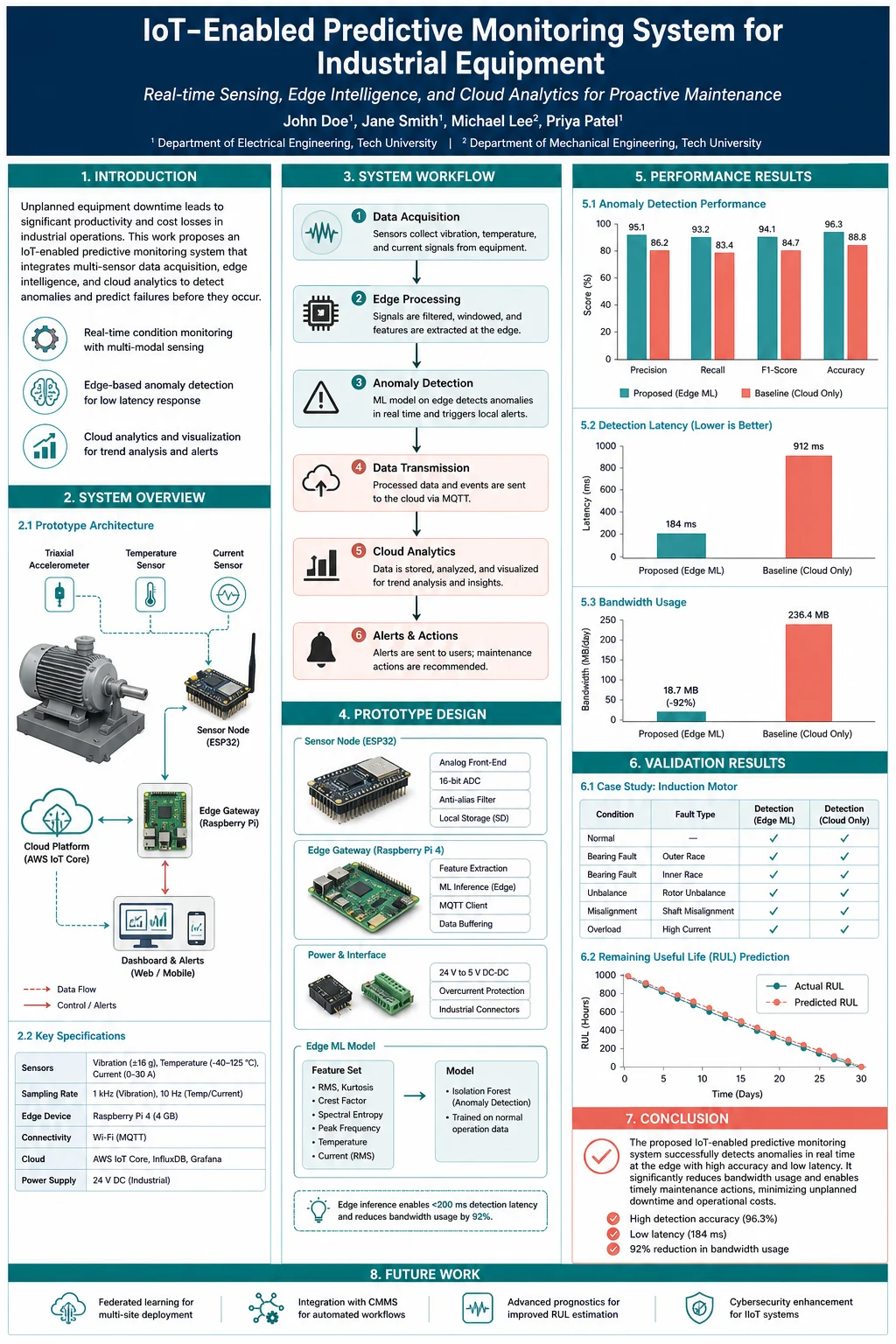
NeurIPS 2026, the Fortieth Annual Conference on Neural Information Processing Systems, is split across three cities: Sydney is the main site, with satellite meetings in Atlanta and Paris. Every accepted paper is presented as a poster at one of the three. The size is the same everywhere, but how you hang the poster, where you order a print, and when the print order closes all depend on the city you were assigned.
This guide collects the rules from neurips.cc in one place: the main-conference and workshop poster sizes in centimetres and inches, the dates for each site, the per-city printing deadlines and pick-up points, the paper deadlines people search for alongside them, and a poster layout sized for the 140 × 90 cm format. Every date and rule below is as published on neurips.cc when we checked it on November 8, 2026; the official pages are listed in Sources. Where NeurIPS does not publish something, we say so.
NeurIPS 2026 poster rules at a glance
| Item | NeurIPS 2026 |
|---|---|
| Sites | Sydney (main), Atlanta and Paris (satellites) |
| Main conference poster | 140 cm wide × 90 cm high, landscape (55.1 × 35.4 in) |
| Workshop poster | 61 cm wide × 85 cm high, portrait (24.0 × 33.5 in) |
| Larger prints | Not allowed — "Do not print your poster larger than what is listed" |
| Hanging | Sydney: command strips; Atlanta: pins; Paris: adhesive strips — one per corner, supplied at the session |
| When to hang | No more than half an hour before your session; take it down straight after |
| Your location | Assigned on October 6; it cannot be changed. Your session within that site can |
| Poster topics | Deadline November 15, 2026 (AoE) |
| Virtual poster | Upload any time; NeurIPS recommends at least a week before the conference |
| Pre-recorded video | Optional but strongly recommended; due November 13 |
| Official template | None published; the poster page points to the Main Track Handbook, which covers the paper style files |
NeurIPS 2026 dates and venues
NeurIPS lists separate programmes for each site.
| Site | Dates (2026) | Programme |
|---|---|---|
| Sydney (main) | December 6 | Expo Day |
| December 7 | Tutorial Day | |
| December 7–10 | Exhibit hall open | |
| December 8–10 | Main conference | |
| December 11–12 | Workshops and competitions | |
| Atlanta (satellite) | December 9 | Main conference and tutorials |
| December 9–12 | Exhibit hall open | |
| December 10–11 | Main conference | |
| December 12–13 | Workshops | |
| Paris (satellite) | December 9–11 | Main conference and tutorials |
| December 9–11 | Exhibit hall open | |
| December 12–13 | Workshops |
In Paris, NeurIPS names the venues: the main conference is at the Paris Congress Center, 2 Place de la Porte Maillot, and workshops are split between the Paris Congress Center and Sorbonne University's Jussieu campus. For Sydney and Atlanta the official pages give directions by hall rather than naming the building — poster pick-up in Sydney is at the Exhibition Centre, Level 2, and Atlanta's workshop posters hang in Hall C1.
Deadlines that affect your poster
| Date (2026) | Deadline |
|---|---|
| September 24 (AoE) | Paper author notifications |
| September 30 (AoE) | Presentation site preference form |
| October 6, 5 p.m. UTC | Location assignment notifications |
| October 30 (AoE) | Early registration ends |
| November 4 (AoE) | Last chance for a registration refund |
| November 4, 11 p.m. AEST | Sydney advance print-order deadline |
| November 6 (AoE) | Camera-ready deadline (main track and datasets & benchmarks) |
| November 13 | Pre-recorded video due (recommended, not required) |
| November 15 (AoE) | Poster topics deadline, and last chance to move your session without breaking up poster groupings |
| November 16, 1 p.m. AEST | Sydney regular print-order deadline |
| November 25, 11 p.m. PDT | Atlanta print-order deadline |
| November 30, 11 p.m. CET | Paris print-order deadline |
| December 2, 12 p.m. AEDT | Schedules final |
The poster topics deadline is easy to miss: NeurIPS uses the topic you choose to group posters, so pick the topic area that best fits your paper on your MyStuff page before November 15.
NeurIPS 2026 poster size
The NeurIPS poster instructions give one set of printed sizes for all three cities:
| Poster | Centimetres | Inches | Orientation |
|---|---|---|---|
| Main conference | 140 (W) × 90 (H) | 55.1 × 35.4 | Landscape |
| Workshops | 61 (W) × 85 (H) | 24.0 × 33.5 | Portrait |
Two things follow from those numbers.
These are maximums, not suggestions. NeurIPS says not to print larger than the listed size. A poster made for another machine-learning venue at a different size will usually need re-flowing, not just scaling: 140 × 90 cm is a 1.56:1 page, wider than A0 landscape (1.41:1) and narrower than 16:9 (1.78:1).
The workshop poster is a different document. At 61 × 85 cm portrait it has about 41% of the main poster's area — 0.52 m² against 1.26 m². If your paper is in both the main track and a workshop, make a second poster with fewer words and one main result, rather than shrinking the main one.
Older advice is out of date. NeurIPS 2025 gave main-conference presenters an 8 ft × 4 ft board and allowed any poster that fitted on it, with 24 × 36 in portrait posters for workshops. The 2026 sizes above replace both, so ignore templates and guides written for earlier years.
Hanging your poster: the rules for each city
Main conference
- Sydney: use only the venue-approved command strips, picked up at the poster session, one strip per corner.
- Atlanta: use the pins provided at the poster session, one pin per corner.
- Paris (Paris Congress Center): use the adhesive poster strips provided at the session, one per corner.
At all three sites: do not put your poster up more than half an hour before your session — NeurIPS warns that posters put up hours early risk being thrown away — take it down after your session, and clear away food and drink containers.
Workshops
- Sydney: you may not hang posters on venue walls, including inside the workshop room. Allocated poster boards are near each workshop room, with command strips in the room.
- Atlanta: no posters on walls. All workshops hang posters on boards in Hall C1 during their session; workshop organisers tell authors which board numbers are theirs. Pins are provided.
- Paris Congress Center: posters go in a dedicated area; organisers assign board numbers; adhesive strips are provided.
- Sorbonne University (Jussieu): four poster areas, each with a help desk and the tools to hang posters; organisers assign board numbers.
Workshop posters come down straight after the session because many workshops run several sessions in one day.
Because the fastening is a strip or pin at each corner, a heavy or rigid poster will not stay up. Print on paper or light fabric, not foam board.
Printing at NeurIPS: order deadlines and pick-up by city
NeurIPS links an official print-ordering service for each site and each poster type from its poster instructions page. Printing is optional — you can bring your own print — but if you order, the deadlines are firm.
| Site | Order deadline | Pick-up |
|---|---|---|
| Sydney | Advance: November 4, 11 p.m. AEST. Regular: November 16, 1 p.m. AEST | Exhibition Centre, Level 2, Registration Desk 3. Mon 8 a.m.–5 p.m.; Tue–Thu 8 a.m.–8 p.m.; Fri and Sat 7 a.m.–3:30 p.m. |
| Atlanta | November 25, 11 p.m. PDT | Foyer of Hall C2, next to the registration desk. Wed–Fri 8 a.m.–6:30 p.m.; Sat and Sun 7 a.m.–3:30 p.m. |
| Paris | November 30, 11 p.m. CET | Main conference posters: Paris Congress Center, level 1, Hall Passy (December 9–10, 10 a.m.–5 p.m.; December 11, 9:30 a.m.–2:30 p.m.). Workshop posters: Sorbonne University atrium, or Paris Congress Center level 2, Hall Ternes (December 12–13, 9 a.m.–5 p.m.) |
The order form asks for your poster ID: the last six digits of your poster's URL on neurips.cc. For example, a poster at neurips.cc/virtual/2026/loc/paris/poster/138957 has the ID 138957.
Sessions, location and presenting
- Presenting is in person. Each accepted poster must be presented at Sydney, Atlanta or Paris. If none of the authors can attend, find someone who can present the paper for you.
- Registration. At least one author of each accepted paper must register for the main conference; a virtual-only pass is not enough. A student author needs only a student registration, and one registration covers an author with several papers.
- Location is fixed. Authors stated a site preference by September 30 and were notified of their location on October 6. NeurIPS says you cannot change your poster's location.
- Session can move. You can change your poster session within your site using NeurIPS's self-service poster session selection, described on its wiki — but only to resolve a clash with another event, volunteering or travel. Move before November 15 so the change does not break up topic groupings.
- Spotlights are an honour tag on selected posters. Spotlight posters are presented in a poster session the same way as any other.
- Virtual poster and thumbnail. Upload them from your MyStuff page. There is no deadline, but NeurIPS strongly recommends uploading at least a week before the conference so attendees can see it. Workshop posters appear only after the workshop organisers add the paper to their schedule.
- Pre-recorded video. Recording a SlidesLive video is strongly recommended but not required; the deadline is November 13.
- Camera-ready is closed. NeurIPS says there will be a short window after the conference for updates, and authors will be notified when it opens.
What NeurIPS asks of your poster's design
NeurIPS publishes no poster template and no required layout. Its handbook does have accessibility guidance, written for talks, and the poster section says to apply the same guidance to posters:
- minimal text, large fonts, bold for emphasis, and no special text effects such as shadows;
- high-contrast colours — NeurIPS suggests dark text on a cream background works best;
- colour palettes that work for colour-blind viewers, and never relying on colour alone to carry a message;
- examples a diverse, international audience can follow.
The handbook's policy on using AI tools also applies to posters in spirit: authors are responsible for all content, including figures, and NeurIPS specifically warns that high-level instructions to a tool can produce hallucinated content when generating plots. Every number on the poster should come from your experiments.
The logo. NeurIPS states on its site that the NeurIPS logo may be used on presentations; it is a vector graphic you can download from the site and scale to any size.
Designing a machine-learning poster that works at NeurIPS
NeurIPS poster sessions are crowded and fast. Visitors walk a row and stop for the posters whose point they get from a metre away. A few habits make that happen:
Add a one-line takeaway under the title. Paper titles at NeurIPS are often clever rather than descriptive. A single plain sentence under the title ("We cut fine-tuning memory 4× with no accuracy loss on …") does more work than the abstract.
Lead with one teaser figure. Put the image that shows what your method does — a before/after, a qualitative example, or the headline plot — at the top of the centre column. People photograph this panel.
Draw the method, don't typeset it. One schematic of the pipeline or architecture, with the novel part highlighted, beats a column of equations. Keep at most one key equation, and define every symbol beside it. The neural network diagram generator and workflow diagram generator give you a starting schematic from a description; check every layer name, tensor shape and arrow against your code before it goes on the poster.
Make the results table honest at a glance. Use the same benchmarks and metrics as the paper, report mean ± standard deviation and the number of seeds, highlight your row rather than bolding every column winner, and include the strongest baseline even when it is close. A compact ablation (three to five rows) answers the question every reviewer-turned-visitor will ask.
Keep one colour per method. Your method should be the same colour in every plot on the poster, and baselines should be muted. Pick colours from the colorblind-friendly palette so the grouping survives for colour-blind readers, as the NeurIPS guidance asks.
Export plots at printed size. Matplotlib's default figure size and 10 pt labels shrink to nothing on a 140 cm poster. Set the figure size to the printed size in inches and the font size to 20 pt or more, export as PDF or SVG, and check any raster images with the image DPI checker using a custom width in centimetres.
Say what it does not do. A short limitations box matches the NeurIPS paper checklist and earns trust in conversation.
Link out. A QR code in the title band to the paper, code and project page lets people leave with everything. Test it from a metre away before you print.
A layout template for the 140 × 90 cm NeurIPS poster
This grid fills the full main-conference size. The centre column is widest, because results and the teaser figure go there.
| Zone | Centimetres | Inches | What goes there |
|---|---|---|---|
| Outer margin | 2 | 0.8 | Clear on every side |
| Title band | 136 × 13 | 53.5 × 5.1 | Title, one-line takeaway, authors and affiliations, venue logos, QR code |
| Left column | 38 wide | 15.0 wide | Problem and motivation, setting, method schematic |
| Gutters | 1.5 | 0.6 | Between columns |
| Centre column | 57 wide | 22.4 wide | Teaser figure, main results table or plot, key qualitative examples |
| Right column | 38 wide | 15.0 wide | Ablations, analysis, limitations, takeaways |
| Footer strip | 136 × 4 | 53.5 × 1.6 | References, acknowledgements, links |
Columns: 2 + 38 + 1.5 + 57 + 1.5 + 38 + 2 = 140 cm. Height: 2 + 13 + 1.5 + 66 (body) + 1.5 + 4 + 2 = 90 cm.
Workshop poster, 61 × 85 cm portrait: use 1.5 cm margins, an 11 cm title band, and two 28.25 cm columns with a 1.5 cm gutter. Put the takeaway and teaser figure across both columns directly under the title, then method on the left and results on the right.
Type sizes (our recommendation for reading from 1–1.5 m):
| Element | Main poster (140 × 90 cm) | Workshop poster (61 × 85 cm) |
|---|---|---|
| Title | 90–110 pt | 60–72 pt |
| Takeaway line | 48–60 pt | 36–44 pt |
| Section headings | 48–60 pt | 36–44 pt |
| Body text | 26–32 pt | 22–26 pt |
| Axis labels and table text | at least 20 pt | at least 18 pt |
| References | 16–20 pt | 14–16 pt |
Tools. Both NeurIPS sizes fit inside PowerPoint's 56-inch slide limit, so you can set a custom slide size of 140 × 90 cm (or 61 × 85 cm) and design at full scale. In LaTeX, beamerposter accepts a custom size directly:
\documentclass[final]{beamer}
\usepackage[size=custom,width=140,height=90,scale=1.2]{beamerposter}
Our font guide for figures and posters covers typefaces that hold up at this distance.
Drafting faster. The scientific poster maker turns your abstract into a complete poster draft, which is a quick way to compare arrangements before you build the final file. For the main poster, ask for a landscape three-column layout with a wide centre results column and choose the 16:9 or 4:3 preset (the 140 × 90 cm page sits between them); for a workshop poster, use the 3:4 portrait preset. Use the draft to settle the structure and to draw explanatory graphics such as a method overview, then place your own result plots and tables in the final file so every number comes straight from your experiments.
NeurIPS paper deadlines and formatting (for next year's submission)
Many people looking for the poster rules are also checking the paper rules. As published for NeurIPS 2026:
- Abstract deadline: May 4, 2026 (AoE). Full paper deadline, including supplementary material: May 6, 2026 (AoE). All authors need an OpenReview profile. Position papers used the same abstract and paper dates.
- Page limit: nine content pages including figures and tables. References, optional technical appendices and the mandatory paper checklist do not count. Accepted papers get one extra content page for the camera-ready version. Maximum file size is 50 MB; supplementary material can be a separate ZIP of up to 100 MB.
- Template: submissions must use that year's LaTeX style file — the Microsoft Word template has been discontinued. The 2026 author kit, Formatting_Instructions_For_NeurIPS_2026.zip, contains
neurips_2026.sty,neurips_2026.texandchecklist.tex, and includes a "preprint" option for non-anonymous preprints. Shrinking margins or fonts can get a paper desk-rejected. - Workshops set their own submission rules and templates. NeurIPS's suggested submission date for workshop contributions was August 29, with accept/reject notifications due by September 29, 2026.
NeurIPS poster checklist
- Main poster exactly 140 × 90 cm landscape or smaller; workshop poster 61 × 85 cm portrait or smaller.
- One-line takeaway under the title; QR code to paper and code, tested.
- Teaser figure at the top of the centre column.
- One method schematic; at most one equation, with symbols defined.
- Results with the paper's benchmarks, mean ± std and seed count; strongest baseline included.
- One colour per method across all plots; colour-blind safe; never colour alone.
- Plots exported at printed size with labels of 20 pt or more.
- Limitations stated.
- Poster topic set on MyStuff by November 15.
- Print ordered before your city's deadline, or printed yourself on paper or fabric (not board).
- Virtual poster and thumbnail uploaded a week ahead; optional video by November 13.
- At the venue: hang no earlier than 30 minutes before your session, with one strip or pin per corner, and take it down afterwards.
Frequently asked questions
What is the NeurIPS 2026 poster size?
Main conference posters are 140 cm wide by 90 cm high (55.1 × 35.4 in), landscape. Workshop posters are 61 cm wide by 85 cm high (24.0 × 33.5 in), portrait. NeurIPS asks you not to print larger.
Is the NeurIPS poster landscape or portrait?
Main conference posters are landscape. Workshop posters are portrait.
Where is NeurIPS 2026?
In three cities: Sydney (the main site, December 6–12), and satellite meetings in Atlanta and Paris (December 9–13). The Paris main conference is at the Paris Congress Center, with workshops there and at Sorbonne University's Jussieu campus.
Can I choose which city I present my poster in?
Authors gave a site preference by September 30, and NeurIPS sent location assignments on October 6. The poster's location cannot be changed afterwards, though you can move to a different session within your site.
When is the NeurIPS 2026 poster printing deadline?
It depends on the site: Sydney's advance deadline was November 4 and the regular deadline is November 16 (1 p.m. AEST); Atlanta's is November 25 (11 p.m. PDT); Paris's is November 30 (11 p.m. CET).
Is there an official NeurIPS 2026 poster template?
No. The poster instructions point to the Main Track Handbook, which covers the paper's LaTeX style files, not a poster file. Any tool is fine as long as the poster is no larger than the published size; the layout above is a starting point.
How do I hang my poster at NeurIPS?
With one command strip (Sydney), pin (Atlanta) or adhesive strip (Paris) per corner, all supplied at the session. Put it up no more than half an hour before your session and take it down afterwards.
Can I use the NeurIPS logo on my poster?
NeurIPS states that the logo on its website may be used on presentations. It is a vector graphic you can download and scale.
What was the NeurIPS 2026 submission deadline?
Abstracts were due May 4, 2026 and full papers May 6, 2026, both Anywhere on Earth.
What is the NeurIPS 2026 page limit?
Nine content pages including figures and tables, plus one extra page for the camera-ready version. References, appendices and the checklist do not count toward the limit.
Where is the NeurIPS 2026 LaTeX template?
The author kit is linked from the NeurIPS 2026 call for papers as Formatting_Instructions_For_NeurIPS_2026.zip. It contains neurips_2026.sty, the example neurips_2026.tex, and checklist.tex.
Do I need to register if my paper is accepted?
Yes. At least one author must register for the main conference, and a virtual-only pass does not count. Each accepted poster must be presented in person at one of the three sites.
What is a spotlight poster at NeurIPS?
Spotlight is an honour given to selected papers. Spotlight posters are presented in a regular poster session like every other poster.
More conference poster guides
- SfN Neuroscience 2026 poster guide — the 6 × 4 ft board, abstract deadlines and virtual posters.
- RSNA 2026 education exhibit and poster guide — slide limits, upload deadlines and the hardcopy board.
- ASH 2026 poster guidelines — print-upload deadlines and ASH's rules on AI.
- How to make a scientific poster and the scientific poster layout checklist.
- Graphical abstract maker for the visual summary that goes with the paper.
Sources
All pages checked on November 8, 2026.
- NeurIPS, NeurIPS 2026 Poster Instructions
- NeurIPS, NeurIPS 2026 Dates and Deadlines
- NeurIPS, Main Track Handbook 2026
- NeurIPS, Call for Papers 2026 and the 2026 author kit (ZIP)
- NeurIPS, Hotels and venues (Paris venues)
- NeurIPS, conference home page (site dates and logo use)
- NeurIPS, 2025 Poster Information (previous year's sizes, for comparison)