Publishing & Journals
TOC Graphic Requirements by Journal: Sizes, Resolution and Rules
Table of contents graphic sizes for ACS, RSC, Angewandte, Elsevier, Cell Press and MDPI in cm, inches and pixels, with DPI, file types, text limits and rules.
 SciFigure Editorial
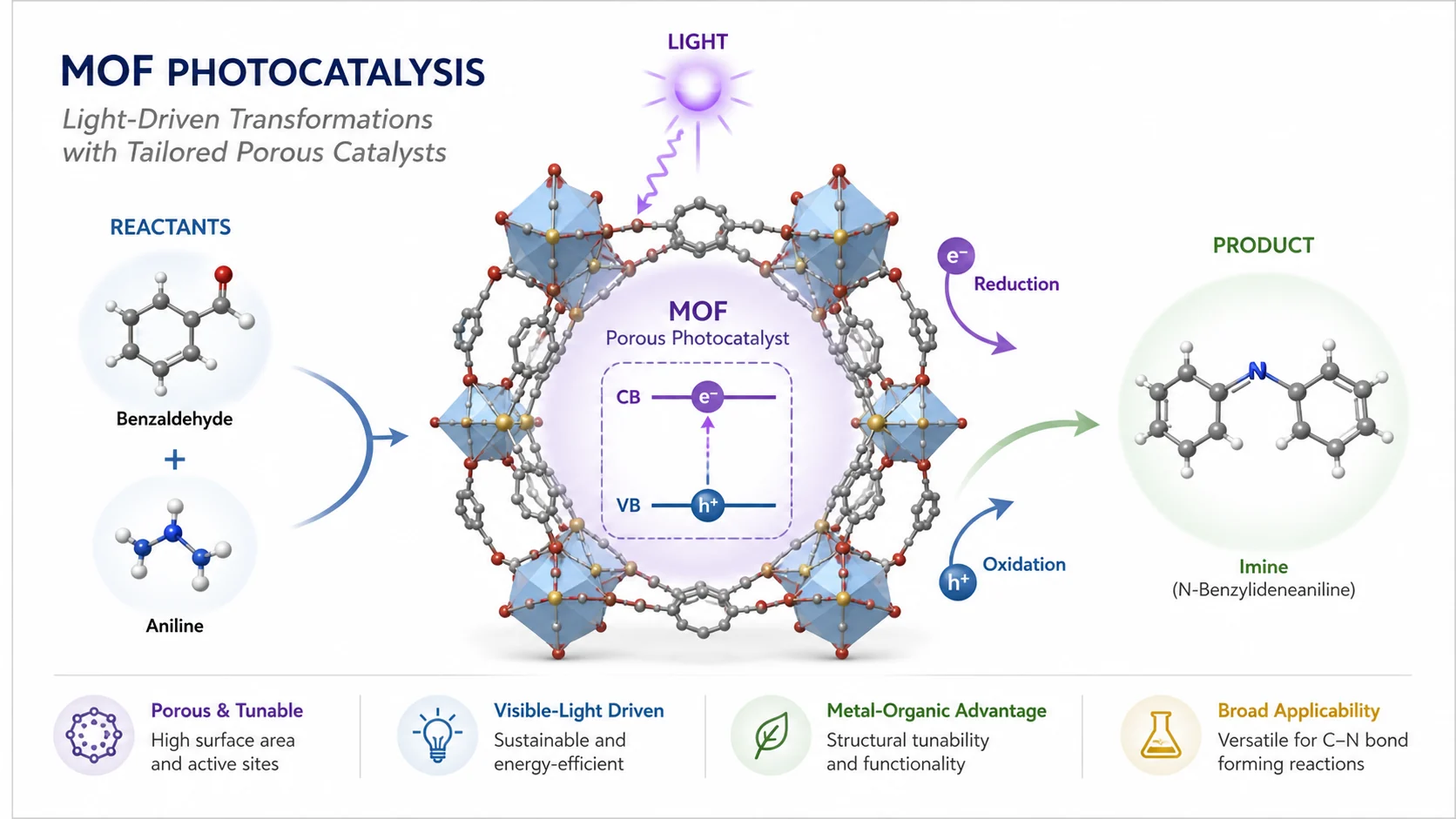
A table of contents (TOC) graphic is the small picture that sits next to your title in a journal's issue listing, its RSS feed and its search results. Chemists call it TOC art or the TOC picture; ACS calls it the TOC/Abstract graphic, RSC the table of contents entry, Wiley-VCH the Table of Contents graphical abstract, and Elsevier and Cell Press the graphical abstract. Whatever the name, it is often the only part of your paper a browsing reader sees, and every publisher sets its own box for it.
This guide puts those boxes side by side: the maximum size in centimetres, inches and pixels, the resolution, the file types, how much text is allowed and the content rules, for six publishers. Every number comes from the publisher's own author guidance, and each one is listed under Sources with the date we checked it (17 November 2026) and, where the live page would not load, the date of the copy we read.
TOC graphic size by journal: the summary table
| Publisher / journal | Maximum size (width × height) | Resolution | File types | Accompanying text |
|---|---|---|---|---|
| ACS journals (general TOC guidelines, checked via JACS) | 3.25 × 1.75 in (about 8.25 × 4.45 cm), at actual size | TIF at 300 dpi (colour) or 1,200 dpi (black and white) | TIF or EPS | Labels only; no long phrases |
| RSC journals (general guidelines) | 8 × 4 cm | 600 dpi or more | TIFF | 1–2 sentences, 250 characters maximum |
| Angewandte Chemie (Wiley-VCH) | 5.5 × 5.0 cm, or 11.5 × 2.5 cm | 300 dpi for images embedded in the manuscript | Embedded in the manuscript (JPEG, TIF, PNG or similar) | Up to 50 words (450 characters with spaces) plus up to 5 keywords |
| Elsevier journals that ask for one | At least 1,328 × 531 px, ratio 5:2 | 300 dpi minimum | TIFF, EPS, PDF or MS Office | None outside the image |
| Cell Press journals | 1,200 × 1,200 px, square | 300 dpi | TIFF, PDF or JPG (no PowerPoint) | None in the image beyond simple labels |
| MDPI journals | At least 1,100 × 560 px | Not stated | PNG, JPEG or TIFF | No large blocks of text |
Two things stand out. The landscape boxes of ACS, RSC, Elsevier and MDPI are all roughly twice as wide as they are tall, so one design can be adapted between them; Cell Press's square and Angewandte's near-square box need a separate layout. And the sizes are maximums, set for the final printed or displayed size: ACS asks you to submit the graphic at the actual size it will be used.
The same boxes in pixels
Most people draw TOC graphics in software that thinks in pixels. These are the canvas sizes that meet each publisher's limits at the resolution it asks for, calculated from the official dimensions:
| Publisher | Official size | Resolution used | Canvas in pixels | Aspect ratio |
|---|---|---|---|---|
| ACS | 3.25 × 1.75 in | 300 dpi (colour) | 975 × 525 | about 1.86 : 1 |
| ACS | 3.25 × 1.75 in | 1,200 dpi (black and white) | 3,900 × 2,100 | about 1.86 : 1 |
| RSC | 8 × 4 cm | 600 dpi | 1,890 × 945 | 2 : 1 |
| Angewandte Chemie | 5.5 × 5.0 cm | 300 dpi | 650 × 591 | 1.1 : 1 |
| Angewandte Chemie | 11.5 × 2.5 cm | 300 dpi | 1,358 × 295 | 4.6 : 1 |
| Elsevier | 1,328 × 531 px minimum | 300 dpi | 1,328 × 531 (about 11.2 × 4.5 cm) | 5 : 2 |
| Cell Press | 1,200 px square | 300 dpi | 1,200 × 1,200 (about 10.2 × 10.2 cm) | 1 : 1 |
| MDPI | 1,100 × 560 px minimum | not stated | 1,100 × 560 or larger | about 1.96 : 1 |
A pixel count only means something together with the physical size. A 975 × 525 pixel file meets ACS at 300 dpi only if it is set to print at 3.25 × 1.75 inches; the same pixels set to 6.5 inches wide are 150 dpi. Check both numbers in the image DPI checker before you upload.
ACS: the TOC/Abstract graphic
ACS publishes one general set of Guidelines for Table of Contents/Abstract Graphics (updated 28 February 2024), which the journals' author guidelines link to; we checked it through JACS, where Communications and Articles must contain both an abstract and a TOC graphic in the manuscript file. Individual ACS journals can add their own requirements, so read your journal's guidelines too.
- Size: submit it at actual size, fitting an area no larger than 3.25 × 1.75 inches (about 8.25 × 4.45 cm).
- Files: TIF at 300 dpi for colour and 1,200 dpi for black and white, or EPS in RGB colour mode with every font converted to outlines or embedded.
- Type: a sans-serif font such as Helvetica, preferably 8 pt and never below 6 pt.
- Where it goes: on the last page of the manuscript, labelled "For Table of Contents Only". You can also upload it as "Graphics for manuscript" in addition.
- What it can be: a structure, graph, drawing, photograph or scheme, or a combination. Text should be limited to labels for compounds, reaction arrows and diagrams.
- What it cannot be: it must be original, unpublished artwork created by one of the co-authors. No photograph, drawing or caricature of any person, living or dead; no postage stamps or currency; no trademarked items such as logos or products. Avoid a graphic that already appears in the manuscript.
- Its job: together with the title, give a quick impression of the paper's essence without giving specific results. ACS suggests treating it as a single slide that tells the story, and testing it on someone who has not read the paper.
On colour, JACS's guidance for all graphics asks authors not to rely on colour alone and points to the WCAG contrast ratios of 4.5:1 for text and 3:1 for other elements, which matter even more at TOC size.
RSC: the table of contents entry
RSC journals call it the table of contents entry (graphical abstract). It is required, but it is submitted at the revision stage, not with the first submission. The entry has two parts: a graphic and one or two sentences of text. It appears in the table of contents and in feeds such as RSS.
- Graphic size: maximum 8 cm wide × 4 cm high, and RSC recommends using the full space.
- Files: TIFF at 600 dpi or greater.
- Text: 1–2 sentences, 250 characters maximum, focused on the key findings and their importance. It should not repeat or paraphrase the title or abstract.
- Content: simple but informative, with colour encouraged. A structure, scheme, graph, drawing, photograph or combination; complex schematics and spectra should be avoided. Text in the image is limited to labels. No logos, trademarks or brand names, and nothing offensive.
- Originality: original, unpublished artwork by a co-author, preferably not reused inside the article.
- AI tools: if an AI tool helped create the graphic, the authors must confirm that the tool was trained on fully licensed datasets and that its licence allows commercial reuse of the output.
Angewandte Chemie: the ToC graphical abstract
Angewandte Chemie's Notice to Authors asks for a short Table of Contents graphical abstract on the last page of the manuscript, with three parts:
- Text of up to 50 words (450 characters with spaces). It should highlight the key findings and appeal of the work, not repeat the title or the experimental details.
- An image of at most 5.5 × 5.0 cm (width × height) or 11.5 × 2.5 cm, with a minimum font size of 6–7 points.
- Up to five keywords in alphabetical order and American English, at least two of them from the journal's Keyword Catalogue.
Everything, including the ToC text and image, goes into a single manuscript file, with images embedded at high resolution (the notice asks for 300 dpi images, and for Word's image compression to be turned off). ToC graphics, like cover pictures and frontispieces, must follow Wiley-VCH's separate Graphics Guidelines on legal and ethical content and must not infringe anyone's copyright.
Other Wiley-VCH journals set their own ToC sizes and word counts, so do not assume Angewandte's box applies to a sister journal: check that journal's author guidelines.
Elsevier: the graphical abstract
Elsevier uses the graphical abstract in place of a TOC graphic. Whether it is required, optional or not used depends on the journal, so check its Guide for Authors first. Where one is used, Elsevier's general instructions are:
- Size: at least 1,328 × 531 pixels (width × height) at a minimum of 300 dpi. A larger image must keep the same 5:2 ratio, because it is scaled to fit a 500 × 200 pixel window on ScienceDirect.
- Fonts: Times, Arial, Courier or Symbol, large enough to survive the reduction to a contents-list window 200 pixels high.
- Files: TIFF, EPS, PDF or MS Office files, uploaded as a separate file in the submission system.
- Text: no extra text, outline or synopsis outside the image. Labels must be part of the image file, with no unnecessary white space and no "graphical abstract" heading inside it.
- Layout: a clear start and end, reading top to bottom or left to right.
- Where it shows: in online search results, the online contents list and the article on ScienceDirect, but usually not in the PDF or print.
- Permissions and AI: third-party material needs permission, and any use of generative AI must follow Elsevier's generative AI policies for journals.
Cell Press: the square graphical abstract
Cell Press journals ask for a graphical abstract with a fixed square format. The figures below come from Cell Press's own guidance on its Crosstalk blog (updated September 2018). The current figure guidelines on cell.com were behind a browser check when we tried them, so confirm the details in your journal's information for authors before submitting.
- Size: one panel, 1,200 pixels square at 300 dpi. Images that do not match may have their canvas extended to fit.
- Font: Arial, 12–16 pt; smaller type will not be legible online.
- Files: TIFF, PDF or JPG. PowerPoint files are not accepted.
- Layout: read from top to bottom or from left to right, with simple labels and text used sparingly.
- Leave out: data items of any kind (everything should be graphical), jargon, crowded shapes, caricatures (especially of animals), the eTOC blurb and highlights, and material that only repeats earlier literature.
- The most common mistake, according to Cell Press staff: a white border or too much white space inside the image.
MDPI: the graphical abstract
MDPI journals show a graphical abstract beneath the text abstract on the article web page; it is usually absent from the PDF and print version. MDPI's instructions for authors set these criteria:
- Size: at least 1,100 × 560 pixels (width × height).
- Files: PNG, JPEG or TIFF.
- Fonts: clear, easy-to-read type such as Times, Arial, Courier, Helvetica, Ubuntu or Calibri, with symbols used correctly and decimal points, not commas, in numbers.
- Content: original and unpublished, with no copyrighted material, postage stamps, currency or trademarked items. It should not be identical to a figure in the paper, a simple stack of several subfigures, or the text abstract pasted next to a picture.
- Layout: no large blocks of text or large blank spaces, and no "Graphical Abstract" heading in the image.
TOC graphic rules almost every journal shares
Read across the six publishers and the same rules come back:
| Rule | Who states it |
|---|---|
| Original, unpublished artwork | ACS and RSC (made by a co-author), MDPI |
| No logos, trademarks or brand names | ACS, RSC, MDPI |
| Don't reuse a figure from the paper as it is | ACS, RSC (preferably), MDPI |
| Text limited to labels; no sentences in the image | ACS, RSC, Cell Press (text used sparingly), MDPI (no large blocks of text) |
| A minimum type size | ACS (6 pt, 8 pt preferred), Angewandte (6–7 pt), Cell Press (12–16 pt at 1,200 px) |
| A clear reading direction | Elsevier, Cell Press |
| No heading such as "Graphical abstract" in the image | Elsevier, MDPI |
| No wasted white space or white border | Elsevier, Cell Press, MDPI |
| AI-assisted images must meet the journal's AI policy | RSC (licensed training data, commercial-reuse licence), Elsevier (generative AI policy), JACS (disclose AI use in the Acknowledgments) |
How to design a TOC graphic that survives the thumbnail
- Start from the box. Set the canvas to the journal's size and resolution from the tables above before you draw anything. A graphic designed large and squeezed down later loses its labels.
- Pick one message. The reader should understand what changed, what you made or what you found in about three seconds: the material, the reaction, the mechanism or the before-and-after. Leave the data for the paper (ACS asks for no specific results, Cell Press for no data items).
- Draw left to right. Put the starting point on the left and the outcome on the right, joined by one arrow if a process is involved. That reading direction is what Elsevier and Cell Press ask for, and it suits the wide boxes of ACS, RSC and MDPI.
- Keep the text to labels. Name the compounds, the catalyst or the cell type, and nothing more. The sentence about why it matters belongs in the RSC or Angewandte ToC text, not in the picture.
- Check the type at final size. Zoom to 100% of the printed size, or print it. ACS's floor is 6 pt and its preferred size is 8 pt; Angewandte's is 6–7 pt. If a label is unreadable, remove it rather than shrink it.
- Use colour with care. Colour is encouraged, but do not let it carry the meaning alone; check the graphic in a colorblind simulator.
- Crop the white space. Fill the box. A thin white border wastes the few pixels you have.
- Export to the right format. TIF or EPS for ACS, TIFF at 600 dpi for RSC, TIFF/EPS/PDF for Elsevier, TIFF/PDF/JPG for Cell Press, PNG/JPEG/TIFF for MDPI. Keep a layered source file so you can rebuild it for another journal.
Making one design work for several journals. If you may resubmit elsewhere, design at about 2:1. It fits RSC exactly, ACS and MDPI with a slight crop, and Elsevier by extending the width to 5:2. A Cell Press or Angewandte resubmission needs a re-layout into a square, so keep the elements on separate layers.
Making a TOC graphic with our tools
Our TOC graphics generator drafts compact, framed TOC compositions from a description of your paper, and the graphical abstract maker produces wider one-image summaries in the Elsevier and Cell Press style. Before you submit either kind of draft, check two things. First, the journal's AI policy: ACS requires the TOC graphic to be original artwork by a co-author and asks for AI use to be disclosed, RSC requires a licensed training set and a commercial-reuse licence, and Elsevier points to its generative AI policy. Second, the science: redraw any structure, label or mechanism the draft gets wrong. For the figure rules inside the paper itself, see our journal figure requirements by publisher.
Frequently asked questions
What is a TOC graphic?
A small image shown with your article's title in the journal's table of contents, feeds and search results. It gives a quick visual impression of the paper. ACS calls it the TOC/Abstract graphic; Elsevier and Cell Press call their versions a graphical abstract.
Is a TOC graphic the same as a graphical abstract?
They do the same job, and the terms overlap: RSC calls its table of contents entry a graphical abstract, and Angewandte asks for a "Table of Contents graphical abstract". The formats differ, though. Chemistry TOC graphics are small (8 × 4 cm at RSC, 3.25 × 1.75 in at ACS), while Elsevier's and Cell Press's graphical abstracts are larger pixel images (1,328 × 531 px and 1,200 × 1,200 px).
What size is an ACS TOC graphic?
No larger than 3.25 × 1.75 inches (about 8.25 × 4.45 cm), submitted at that actual size. At 300 dpi that is 975 × 525 pixels; a black-and-white graphic at 1,200 dpi is 3,900 × 2,100 pixels.
What size is the RSC table of contents graphic?
A maximum of 8 cm wide by 4 cm high, as a TIFF at 600 dpi or more, which is 1,890 × 945 pixels. It comes with 1–2 sentences of text of up to 250 characters, submitted at the revision stage.
What is the Elsevier graphical abstract size?
At least 1,328 × 531 pixels (width × height) at 300 dpi or more. Larger images must keep the same 5:2 ratio, because ScienceDirect scales them into a 500 × 200 pixel window.
What size is a Cell Press graphical abstract?
A single square panel of 1,200 × 1,200 pixels at 300 dpi, with Arial at 12–16 pt, supplied as TIFF, PDF or JPG.
Can I reuse a figure from my paper as the TOC graphic?
ACS asks you to avoid a graphic that already appears in the manuscript, RSC would rather you did not reuse one, and MDPI says the graphical abstract should not be exactly the same as a figure in the paper. Redraw a simplified version that focuses on the one message instead.
How much text can a TOC graphic contain?
Inside the image, only labels: ACS and RSC limit text to labelling compounds, arrows and diagrams, Cell Press asks you to add text sparingly, and Elsevier wants any text to be part of the image with no synopsis beside it. The separate ToC text is 1–2 sentences of up to 250 characters at RSC and up to 50 words (450 characters) at Angewandte.
What resolution does a TOC graphic need?
300 dpi for colour at ACS (1,200 dpi for black and white), 600 dpi at RSC, at least 300 dpi at Elsevier and Cell Press. Measure it at the final physical size, not at whatever size the file opens.
Can I use an AI-generated image as a TOC graphic?
Only within the journal's AI policy. RSC requires confirmation that the tool was trained on fully licensed data and that the output may be reused commercially; Elsevier's graphical abstracts must follow its generative AI policy; ACS requires original artwork created by a co-author and asks for AI use to be disclosed. Ask the editorial office if you are unsure.
Sources
ACS, Elsevier, Cell Press and MDPI pages were checked on 17 November 2026. The live RSC and Wiley Online Library pages showed a browser verification check on that date, so their figures come from the most recent copies of the official pages in the Internet Archive, dated as shown.
- ACS: Guidelines for Table of Contents/Abstract Graphics (updated 28 February 2024; linked from every ACS journal's author guidelines)
- ACS: JACS author guidelines (TOC graphic required for Communications and Articles; Appendix 2, Preparing Graphics; AI disclosure)
- Royal Society of Chemistry: figures, graphics, images and cover artwork guidelines (table of contents entry; archived copy of 3 June 2025)
- Angewandte Chemie: Notice to Authors (version 07/25; archived copy of 22 July 2025)
- Elsevier: graphical abstract
- Cell Press Crosstalk: attract readers at a glance with your graphical abstract (published April 2018, updated September 2018)
- MDPI: instructions for authors (Molecules) (graphical abstract criteria)