Publishing & Journals
eLife Impact Factor, Reviewed Preprints and Submission Requirements
Does eLife have an impact factor? Its indexing status explained, plus the Reviewed Preprint model, the $3,750 fee, article types, figure rules and a checklist.
 SciFigure Editorial
eLife has been a fully open-access venue for research in the life sciences and medicine since it was founded in 2012. Since 31 January 2023 it has worked differently from almost every other journal: it no longer accepts or rejects papers after peer review. Every paper it sends for review is published as a Reviewed Preprint, together with the reviewers' public reviews and an eLife Assessment of the work's significance and the strength of its evidence.
That model is why the most common question about eLife, "what is its impact factor?", has an unusual answer. This guide explains where eLife stands with Web of Science and Scopus and how its review process works, then covers article types, the publication fee, figure requirements and a checklist. Everything comes from eLife's own pages and author guide, plus Clarivate's published indexing policy, all checked on 8 November 2026 and listed under Sources.
Does eLife have an impact factor?
No. eLife does not currently have a Journal Impact Factor, and is not eligible for one under Clarivate's rules. This is how it happened, in eLife's own reports:
- 23 October 2024: Web of Science paused indexing eLife's Versions of Record in the Science Citation Index Expanded (SCIE).
- 12 November 2024: Web of Science told eLife it would no longer list the journal in SCIE. eLife would instead be partially indexed in the Emerging Sources Citation Index (ESCI), and would not receive an impact factor when the metric was updated in June 2025.
- 10 December 2024: eLife confirmed the details. The partial feed covers Versions of Record whose eLife Assessment rates the evidence as "solid" or better, which eLife estimated at 93% of its papers, so most eLife papers are still indexed. As a partially indexed journal, though, eLife is not eligible for a Journal Impact Factor. In Scopus, eLife moved from the Journals Collection to the Preprints Collection.
- September 2025: eLife's annual report confirmed that it did not receive an impact factor in the 2025 release.
Clarivate's editorial policy states the general rule: journals and platforms that are partially indexed in ESCI are not eligible for a Journal Impact Factor or any other journal-level citation metric. Clarivate's Master Journal List still shows eLife in ESCI. Neither Clarivate nor eLife has issued a separate statement about the June 2026 release, but under that policy eLife was not eligible for one in it.
That is a position eLife chose. It describes itself as a co-founder of the Declaration on Research Assessment (DORA), and its author guide states plainly that it does not track, support or promote the impact factor. In its own words in October 2024, it "never supported the Impact Factor and never wanted one". eLife does not publish its last impact factor on its own pages, and because it now sits in the Scopus Preprints Collection, we found no current CiteScore either. Treat any number quoted elsewhere as a figure from before the change.
What this means for you. If your institution or funder requires journals with an impact factor, check its rules before submitting, since eLife has none. If it assesses papers on their own merits, an eLife paper comes with a public assessment of its significance and evidence that evaluators can read for themselves.
How eLife's review model works
- Submission and editorial assessment. Editors decide whether to send the paper for review. For papers not selected, the median time to a decision in 2025 was eight days.
- Peer review. The paper receives public reviews and an eLife Assessment, which rates significance on a scale from "landmark" down to "useful", and strength of evidence from "exceptional" down to "inadequate".
- Reviewed Preprint. The paper is published with the assessment and public reviews, which are posted two weeks after they are sent to the authors. In 2025 the median time from submission to this stage was 96 days.
- Revision (optional). Authors can publish a revised version.
- Version of Record. When the authors are ready, they request the final, typeset Version of Record. This should be done within 12 months.
There is no accept/reject decision after review. The real selection happens at the first step: in 2025 eLife received 2,853 submissions (down from 6,396 in 2024) and sent 1,013 for review, so 35% were selected, up from 27% the year before.
Scope and subject areas
eLife publishes across the life sciences and medicine in 19 subject areas: Biochemistry and Chemical Biology; Cancer Biology; Cell Biology; Chromosomes and Gene Expression; Computational and Systems Biology; Developmental Biology; Ecology; Epidemiology and Global Health; Evolutionary Biology; Genetics and Genomics; Immunology and Inflammation; Medicine; Microbiology and Infectious Disease; Neuroscience; Physics of Living Systems; Physiology; Plant Biology; Stem Cells and Regenerative Medicine; Structural Biology and Molecular Biophysics.
Articles are published under CC BY 4.0, or CC0, and are free to read immediately.
Article types and length
eLife sets few hard limits, and gives guidance instead.
| Article type | Length guidance | Display items |
|---|---|---|
| Research Article | No maximum; try not to exceed 5,000 words of main text, excluding methods, references and legends | No limit |
| Short Report | Usually no more than 1,500 words | Three or four main display items |
| Tools and Resources | Research Article or Short Report format; code must meet the Open Source Definition | As for those formats |
| Research Advance | Any length | Any number |
| Replication Study | Titled "Replication Study: " plus the original article's title | — |
| Review Article | Short perspectives of about 2,000–3,000 words, or reviews up to 10,000 words | Up to 8 figures for long reviews; usually five authors at most |
| Scientific Correspondence | Usually no more than 1,500 words | No more than four |
| Feature Article | Under 2,000 words, 20 references | Two |
Front matter: eLife suggests a title of up to 120 characters and an abstract of 150–200 words; medical papers use a structured abstract of about 250 words. You also write a one-sentence impact statement of typically 15–30 words.
How to submit to eLife
- Skip the presubmission inquiry. eLife does not advise on suitability from an abstract; it asks you to submit the paper.
- Sort out the preprint. eLife only reviews work that is available as a preprint. You do not have to post one first: for initial evaluation, eLife can deposit the paper on bioRxiv or medRxiv for you. It supports any recognized preprint server that handles versions. You can also transfer files straight from bioRxiv or medRxiv, or come through Review Commons.
- Prepare the files. Send a DOCX (or DOC or RTF) file, or LaTeX with a clean compiled PDF.
- Prepare the required statements. You need a Data Availability Statement and the MDAR checklist, which eLife publishes with the paper.
- Submit through eLife's main submission system. Feature Articles and Scientific Correspondence use the legacy system instead.
eLife's author guide does not set out general cover-letter requirements. It asks for a cover letter only for particular cases, such as Review Articles (explaining why you are the right authors and how the review moves the field forward), Replication Studies and exceptions to data sharing.
The eLife publication fee
For papers submitted from 1 July 2026, the publication fee is $3,750.
- When it is charged: once, when the preprint is sent for peer review, not on publication. If the review process stops, fees already paid are refunded.
- VAT: 20% is added if the fee is invoiced to an individual rather than a business.
- Which papers pay: the fee covers Research Articles, Short Reports, Tools and Resources, Research Advances, Replication Studies and Review Articles. There is no fee for Feature Articles or Scientific Correspondence.
- Waivers: authors who cannot afford the fee can ask for a full waiver. There are no strict criteria, and editors do not know about waiver requests.
eLife figure requirements
eLife's figure rules are brief, and every one of them is checked:
| Requirement | eLife specification |
|---|---|
| Formats | TIFF (8-bit), JPG, EPS, AI or PDF; PDFs saved as vector images |
| Resolution | At least 300 dpi for every figure |
| Minimum width | 10 cm (at least 1,181 pixels at 300 dpi) |
| Full-page-width figures | At least 20 cm wide at 300 dpi (at least 2,362 pixels) |
| Colour | RGB |
| Multi-page figures | Not supported |
| Layers | Turn off any hidden layers before export |
| Fonts | Not specified |
These are minimum sizes for the uploaded file rather than column widths: build each figure at 10 cm or more, or at 20 cm or more if it should span the full page, and keep it at 300 dpi or above at that size. Check the pixel counts with the image DPI checker, and compare eLife with other publishers in journal figure requirements by publisher.
eLife also recommends Colour Universal Design colour schemes, so that figures work for readers with colour-vision deficiencies. The colorblind simulator shows what your figure looks like to them, and our guide to colorblind-safe palettes suggests replacements.
Figure supplements, source data and video
- Figure supplements: there is no limit on their number. Upload each one separately and name it after its parent figure, for example "Figure 1—figure supplement 1".
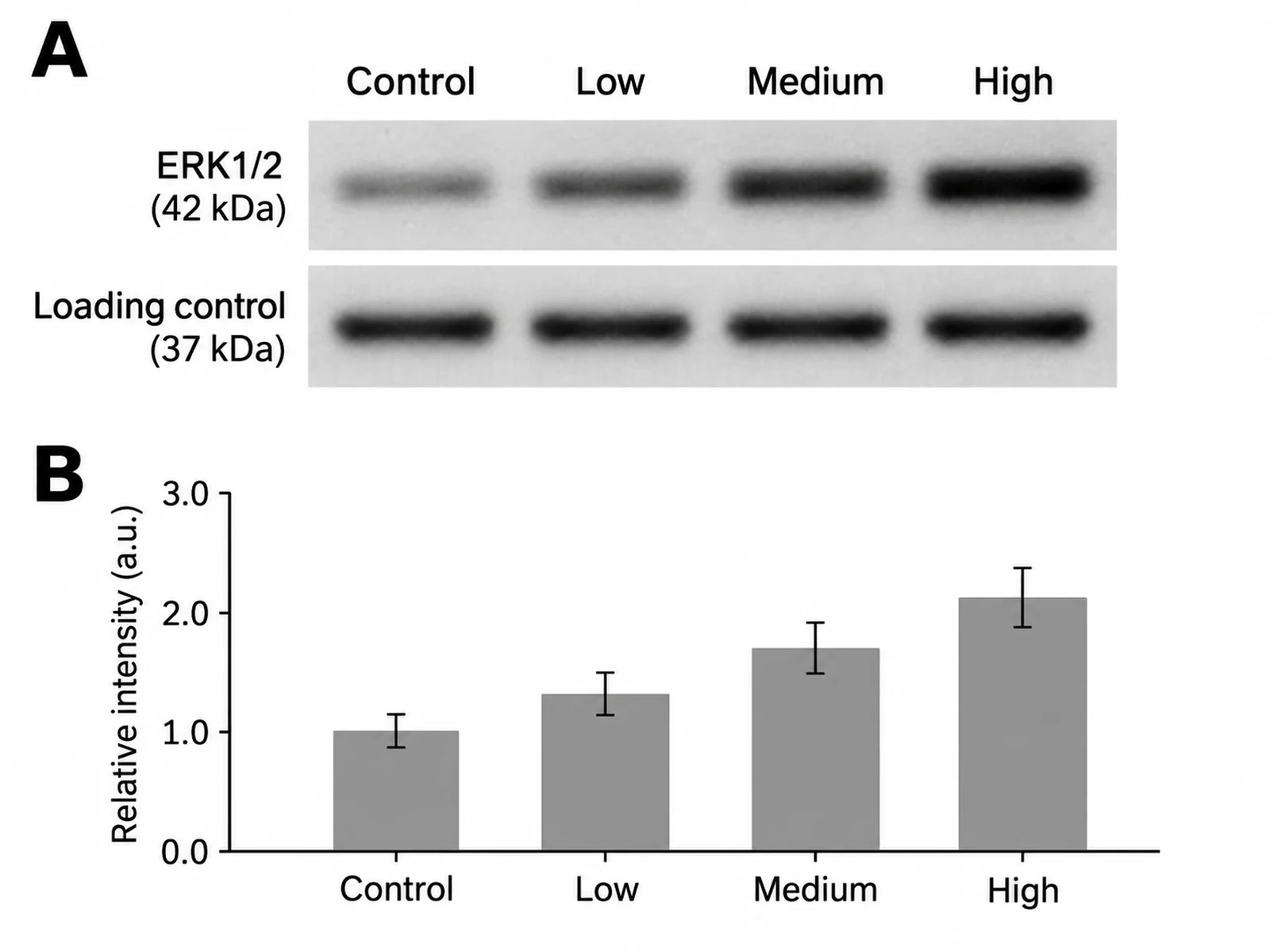
- Source data: files should be under 100 MB each. For gels and blots, supply both the original, full, raw, unedited files and figures showing the uncropped gels or blots.
- Video: accepted as AVI, WMV, MOV, MP4 or H264; animated GIFs go in as Rich Media. A Reviewed Preprint cannot show videos in line with the text; the Version of Record can.
- Striking image: if you supply one, it must be at least 1800 × 900 pixels, and eLife cannot include images generated by artificial intelligence.
Image integrity
- Images must not be manipulated or adjusted in any way that could mislead about the original data.
- Minimal processing is appropriate only when it is applied equally across the whole image and equally to the controls.
- Processing that emphasizes one region at the expense of others is not permitted.
- Images may be screened.
References and style
eLife accepts any reference style at submission and formats references during production. With a reference manager, it suggests APA style. Put any footnotes in parentheses in the main text instead.
Data, code and AI policies
- Data Availability Statement: required for every paper. "Data will be made available upon request" is not acceptable.
- Code: provide the code, algorithms and scripts needed for an informed researcher to reproduce every published result. New software should follow PLOS's software guidelines and the Open Source Definition.
- Reporting: eLife expects CONSORT, PRISMA, STROBE or STARD as appropriate, and ARRIVE for animal work, and it endorses the SAGER guidelines on sex and gender.
- AI: generative AI tools cannot be authors, and any use must be described in the Materials and Methods.
Pre-submission checklist for eLife
- Your evaluators accept a journal without an impact factor, or assess papers on their own merits.
- Paper fits one of the 19 subject areas.
- Preprint posted on a versioning server, or you have asked eLife to deposit it on bioRxiv or medRxiv.
- Research Article main text kept near 5,000 words, or the guidance for your article type followed.
- Title of 120 characters or fewer, an abstract of 150–200 words (about 250 if structured) and a 15–30-word impact statement.
- Files as DOCX or LaTeX with a compiled PDF.
- Data Availability Statement written, without "available upon request", and the MDAR checklist completed.
- Code deposited so that every result can be reproduced.
- Each figure at least 10 cm wide (20 cm for full width) at 300 dpi or more, in RGB.
- Figures as TIFF (8-bit), JPG, EPS, AI or vector PDF, with no multi-page files and no hidden layers.
- Figure supplements uploaded separately and named after their parent figure.
- Raw, uncropped gel and blot files ready, each source data file under 100 MB.
- Colours checked for colour-blind readers.
- Only whole-image processing, applied equally to controls.
- Any AI use described in the Methods, and no AI imagery in figures or the striking image.
- Fee of $3,750 budgeted, or a waiver request ready.
Related guides and tools
Consistent legends matter more at eLife than usual, because figure supplements multiply the number of captions. The figure legend generator helps you keep them in one format. Our journal submission figure checklist covers the checks every journal shares.
For journals that do report an impact factor, see our guides to Nature, Nature Communications, Science Advances and PNAS; for clinical work, see the JAMA guide.
eLife cannot use AI-generated images, including for the striking image. The graphical abstract maker and journal cover maker are for talks, posters and social posts, not for anything you send to eLife.
Sources
Checked 8 November 2026.
- eLife author guide (impact factor position, model, article types, front matter, submission, preprints, fee, figures, source data, video, image integrity, references, data and AI policies; reviewer.elifesciences.org/author-guide redirects here)
- eLife: Update on eLife's indexing status at Web of Science (24 October 2024)
- eLife: The eLife Model, an update following changes in Web of Science indexing status (20 November 2024)
- eLife: Changes to eLife's indexing status in Web of Science and Scopus (10 December 2024)
- eLife: Annual report, 2024 in review (11 September 2025)
- eLife: The eLife Model, three-year update (17 March 2026) (2025 submissions, selection rate, median times)
- eLife: Peer review (stages and assessment terms)
- eLife: Aims and scope (subject areas) and About
- eLife: Submit your research (submission systems)
- eLife ends accept/reject decisions following peer review (model start date)
- Clarivate: Web of Science editorial policies, category changes and appeals (partially indexed journals not eligible for a JIF)
- Clarivate Master Journal List: eLife (ESCI listing)