Turn the idea behind your paper into portrait cover art for a journal issue cover, back cover, or supplementary cover. Describe one visual metaphor, keep the top of the canvas clear for the masthead, and generate a concept you can refine before you talk to the editorial office.
Portrait 3:4 canvasSpace for the mastheadOne clear visual metaphor
AI Journal Cover Maker
Describe the science, the metaphor, and the mood you want on the cover.
Costs 5 credits444 / 2000 characters
Generate a portrait PNG concept you can refine and download.
Preview
Journal Cover Art Example Previews
Target aspect ratio: 3:4
Sample previews. Describe your paper to generate your own cover concept.
Journal Cover Art Examples
Six portrait concepts across materials, neuroscience, climate, genome editing, energy, and immunology. Each one keeps the top band clear for a masthead and carries no journal branding.
Prompt
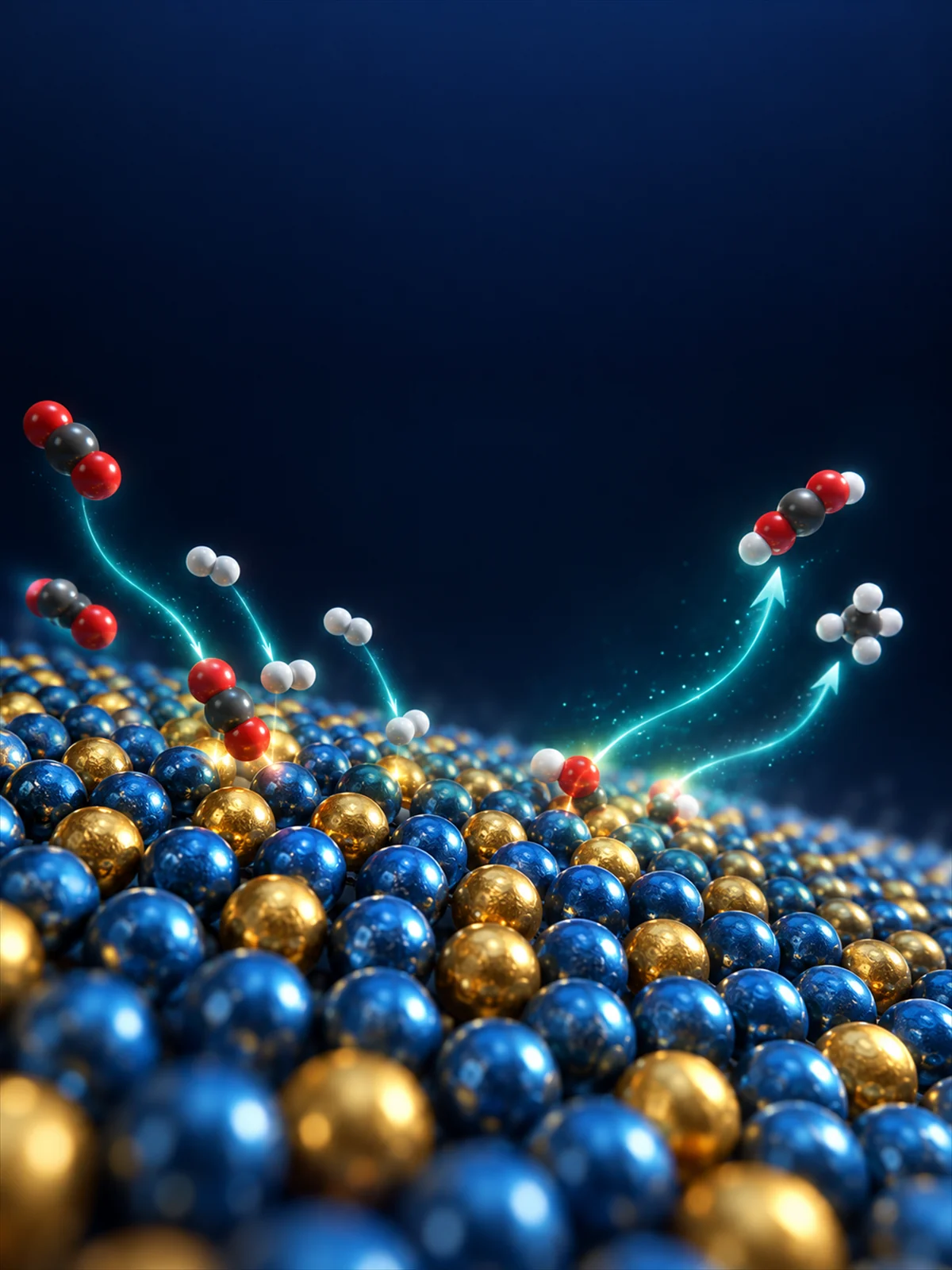
Create a portrait scientific journal cover illustration about nanomaterial catalysis. Show a crystalline nanostructured catalyst surface in the lower two thirds, rendered as an ordered lattice of metallic blue and gold atoms on a dark navy background. Small gas molecules drift toward the surface and leave as transformed molecules along glowing teal reaction paths. Add a soft rim light along the lattice edge and a shallow depth of field. Keep the upper third a calm dark gradient with no detail. No text, no logos, no journal title.
Nanomaterials Catalysis Cover
Prompt
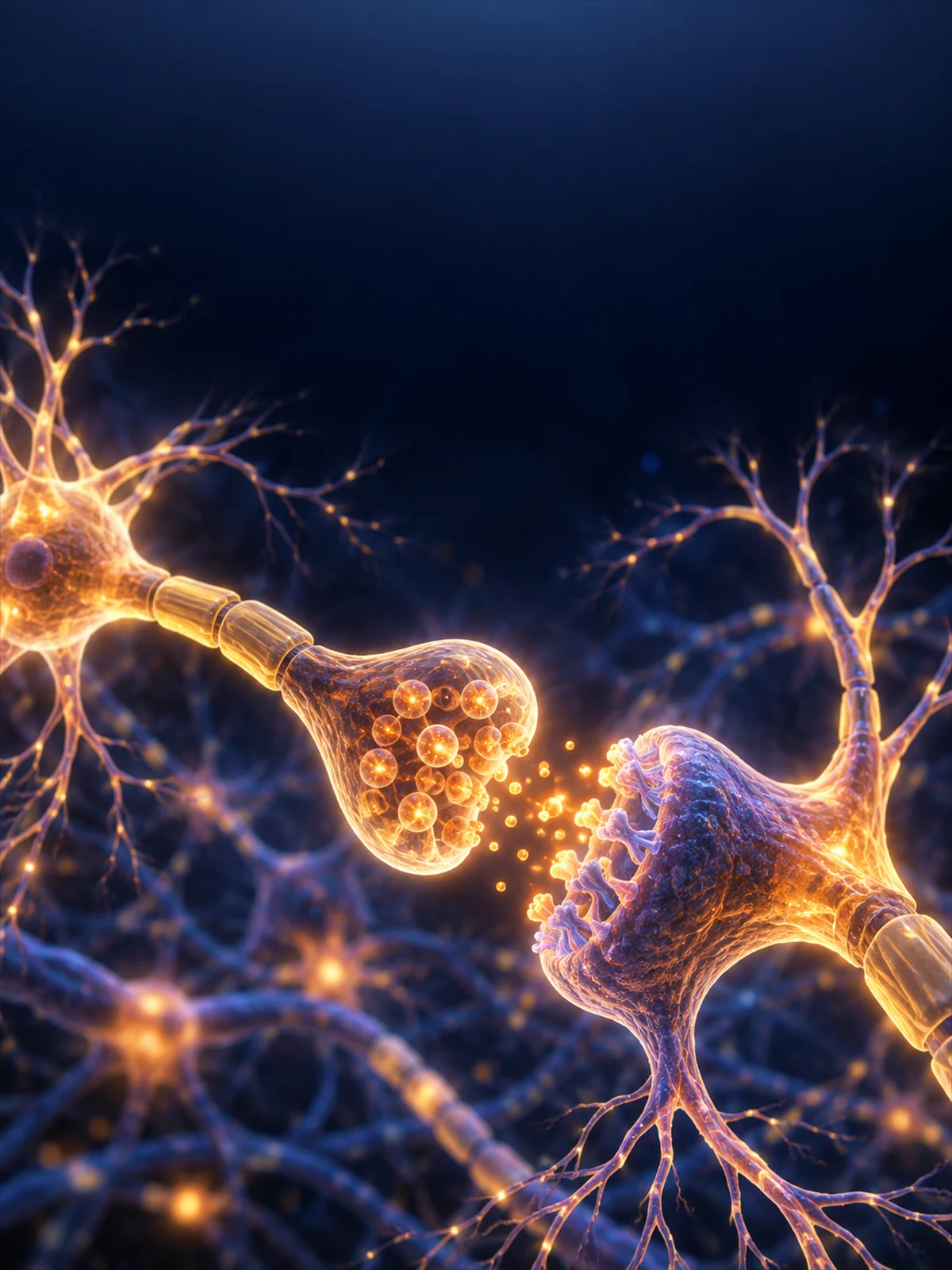
Create a portrait scientific journal cover illustration about synaptic transmission. Show two luminous neurons reaching across the lower two thirds of the canvas, with branching dendrites and a myelinated axon rendered in warm amber against a deep indigo background. At the center, magnify one synaptic cleft where round neurotransmitter vesicles release glowing particles toward receptor proteins on the postsynaptic membrane. Use soft bokeh for background neural fibers. Keep the top third dark and uncluttered. No text, no logos, no journal title.
Neurons and Synapses Cover
Prompt
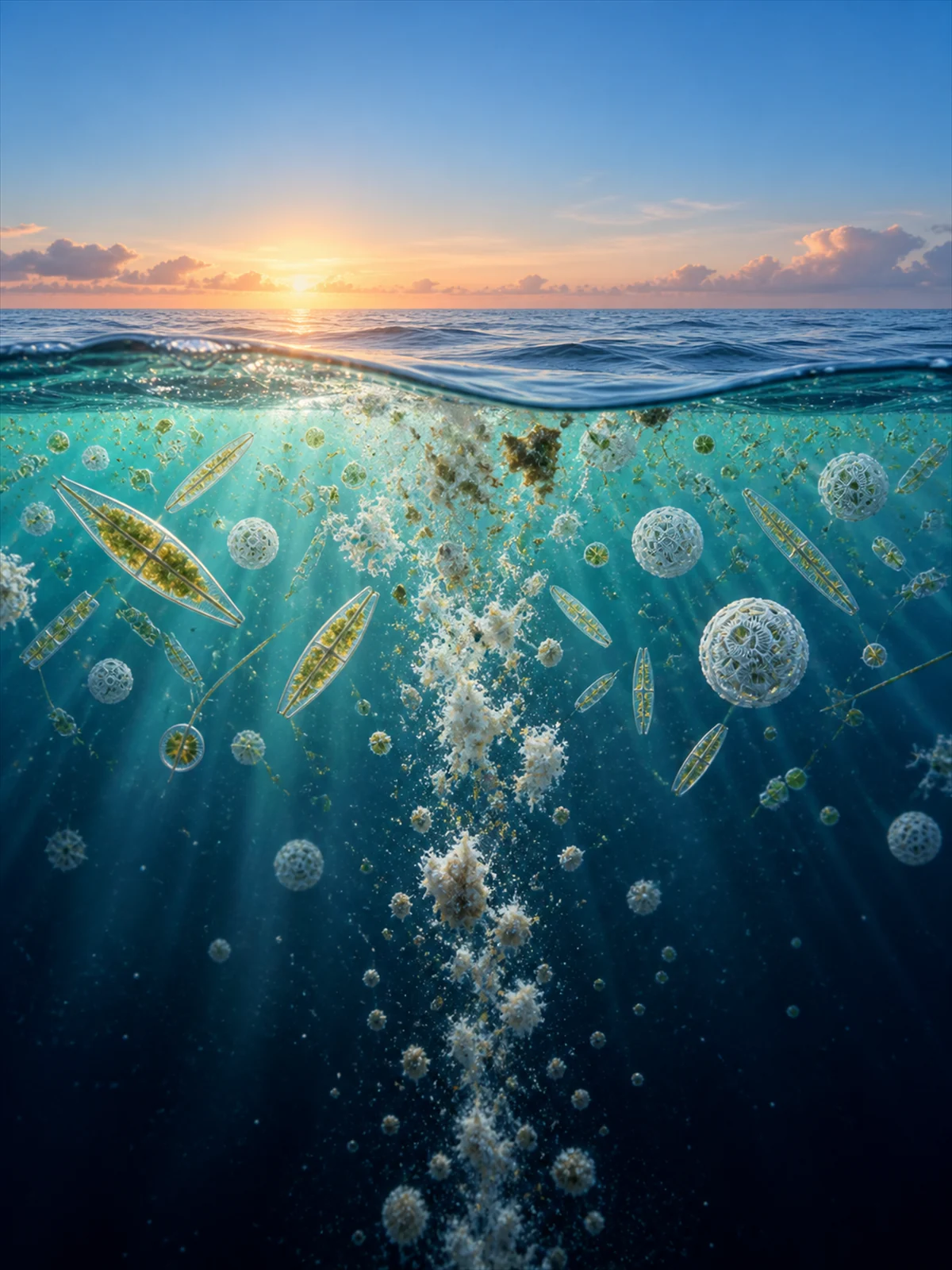
Create a portrait scientific journal cover illustration about ocean carbon uptake. Show a cross-section of the sea surface in the lower two thirds, with a turquoise-to-deep-blue water column, drifting diatom and coccolithophore plankton rendered in fine detail, and pale carbon particles sinking as a marine snow column into the dark abyss. Above the waterline show a calm horizon with soft cloud light. Keep the top third an open, uncluttered sky gradient. Photorealistic scientific illustration style. No text, no logos, no journal title.
Ocean Carbon Cover
Prompt
Create a portrait scientific journal cover illustration about CRISPR genome editing. Show a DNA double helix rising through the lower two thirds of the canvas in cool blue, with a large translucent Cas9 protein rendered as a smooth teal molecular surface clamped around one strand. A guide RNA threads through the protein in magenta, and a precise glowing break appears in the helix at the cut site with small light particles dispersing. Dark charcoal background, dramatic rim lighting, shallow depth of field. Keep the top third clear. No text, no logos, no journal title.
CRISPR Gene Editing Cover
Prompt
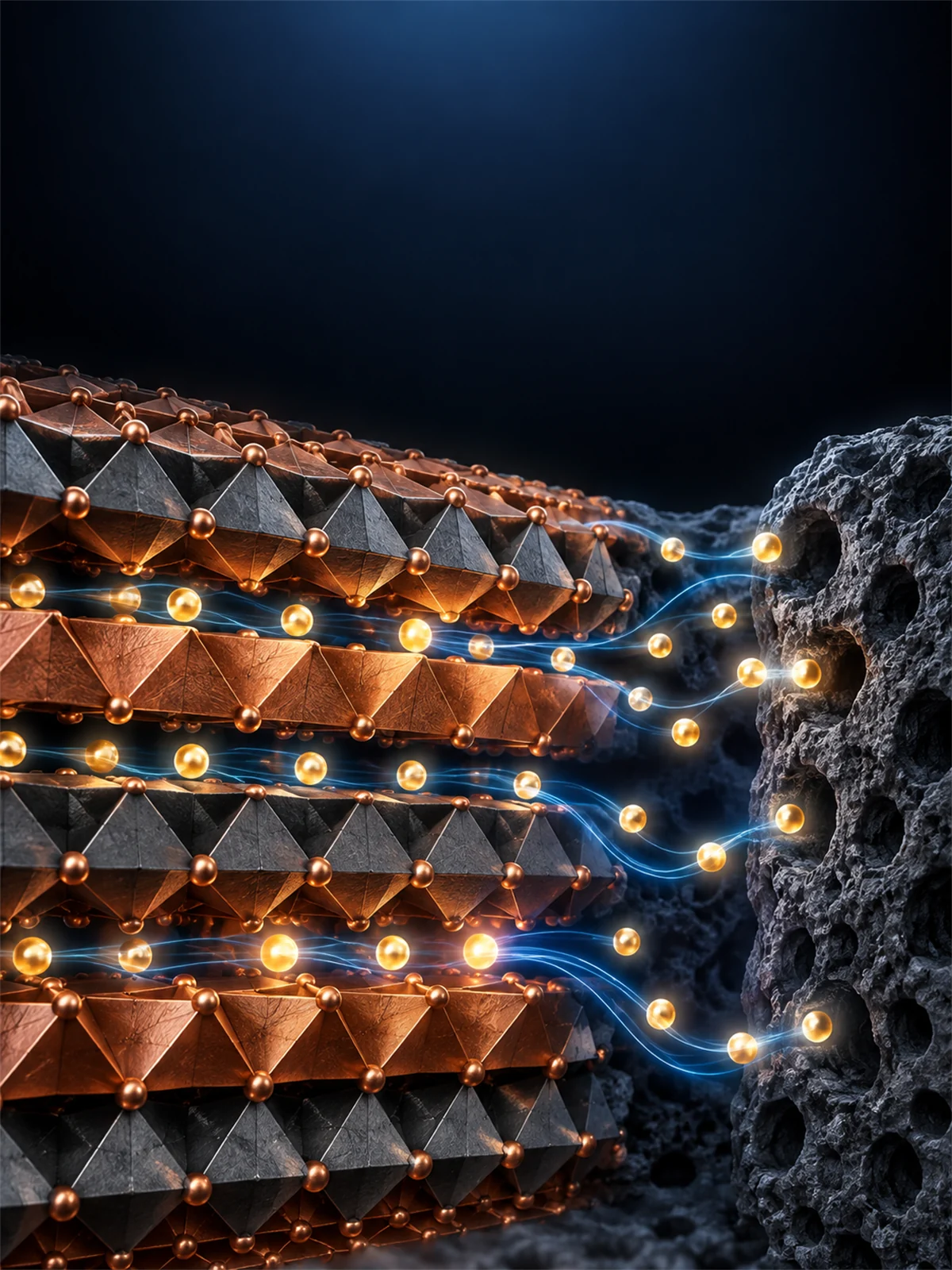
Create a portrait scientific journal cover illustration about battery electrode materials. Show a magnified cross-section of a layered cathode in the lower two thirds, with stacked crystalline sheets in copper and slate gray, and bright lithium ions rendered as small glowing spheres travelling along channels between the layers toward a porous anode. Add faint electric-blue field lines tracing the ion paths and a soft glow where ions intercalate. Dark background, strong contrast, clean industrial lighting. Keep the top third calm. No text, no logos, no journal title.
Battery Materials Cover
Prompt
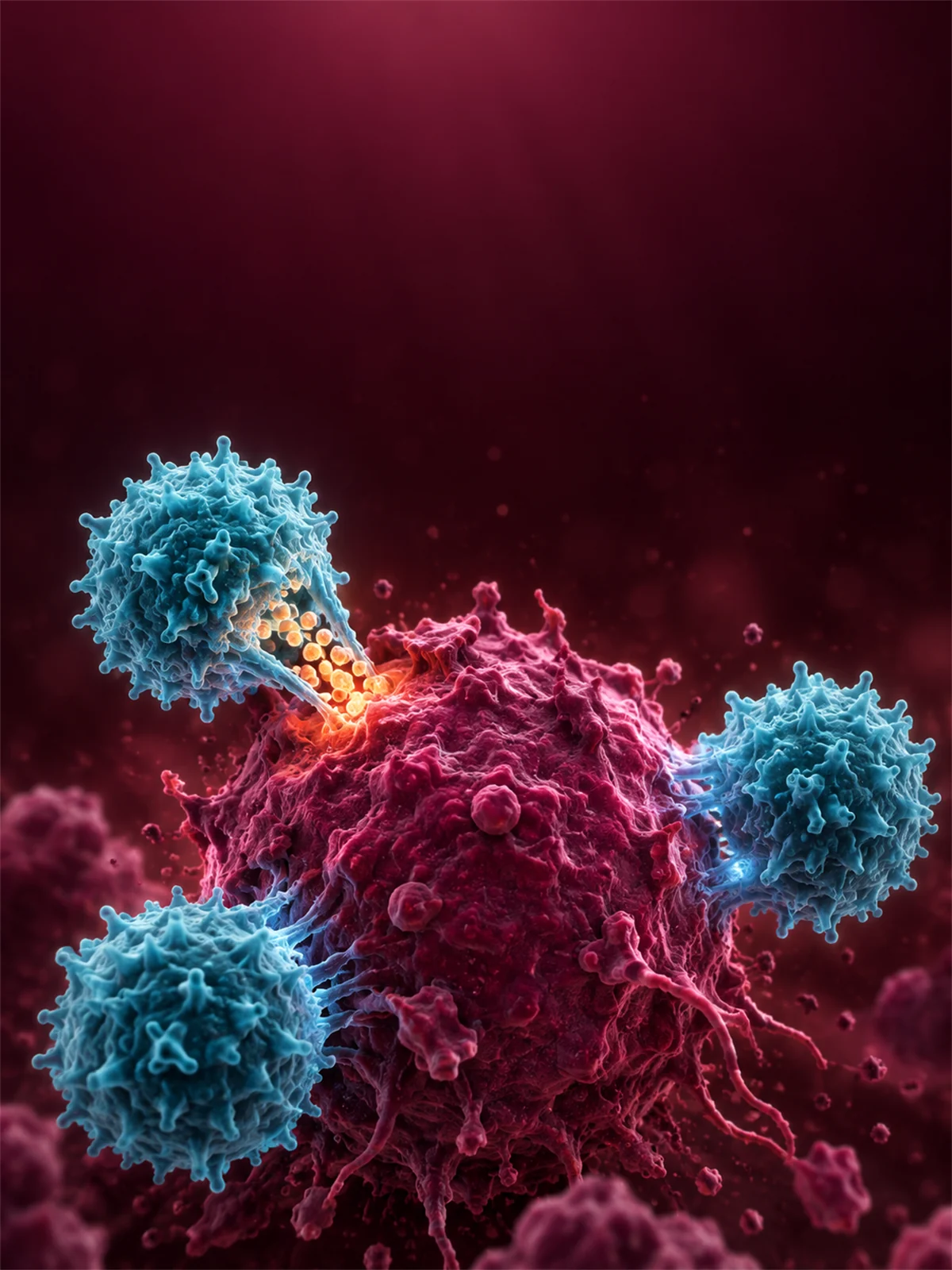
Create a portrait scientific journal cover illustration about cytotoxic T cell killing. Show a large rounded tumor cell with a textured, irregular membrane in the lower center, surrounded by three smaller T lymphocytes with ruffled surfaces docking against it. Render the T cells in luminous cyan and the tumor cell in deep magenta, with glowing granules passing across one immune synapse. Use a dark maroon background, soft volumetric light, and shallow depth of field. Keep the top third uncluttered. No text, no logos, no journal title.
T Cell Immunology Cover
How to make journal cover art
1
Pick one metaphor
Choose the single idea a reader should grasp in two seconds, such as a catalyst surface, a synapse, or a sinking carbon column. Covers fail when they try to show the whole paper.
2
Describe subject, palette, and empty space
Name the focal subject, the color mood, the lighting, and where the calm area sits. Set the canvas to 3:4 portrait and ask for the top third to stay free of critical detail.
3
Generate, then verify
Review the science, the proportions, and any accidental text, refine the prompt, and check the journal cover guide and AI policy before you submit anything.
What journals ask for in cover submissions
Cover specifications are set per journal and per publisher, so the target journal guide is always the authority. Two published examples show the shape of the requirements.
The ACS supplementary cover guidelines (last updated May 7, 2026) ask for images saved at a resolution of at least 300 dpi, accept TIFF, JPEG, PNG, and PDF, and recommend keeping the layered native design file because it may be requested if your design is selected. The sizing table lists many ACS journals at 8.19 x 10.00 inches (20.80 x 25.40 cm), and notes for each title how much of the artwork the journal title covers, commonly the top 2 to 3.5 inches. The guide also asks authors not to add the journal title, prohibits trademarked items and logos, discourages cartoon images, and advises against placing important parts of the image within half an inch (1.25 cm) of the edges.
The Wiley cover and frontispiece FAQ for Laser & Photonics Reviews asks that the image have a size that allows for the journal title and issue information at the top of the page. Final artwork is supplied as TIFF or PSD at a resolution high enough to stay clear and sharp at A4 or US Letter size, submitted with a short 50 to 60 word description. It advises avoiding graphs and plots of data and avoiding text where possible, and it notes that authors are asked to contribute to the publication costs of a cover.
Last checked: September 15, 2026. Sources: https://pubsapp.acs.org/paragonplus/submission/supplementary-cover-image-guidelines.pdf and https://onlinelibrary.wiley.com/pb-assets/assets/18638899/LPR_Guide_for_Cover_Artwork_Submission-1510014602000.pdf . For Cell Press titles, see the official cover submission guide for your journal, for example https://www.cell.com/cell/information-for-authors/cover-submission .
Design principles that survive the masthead
One metaphor. A cover is read at thumbnail size on a phone, so a single subject beats a montage of every figure in the paper.
Room for text. Keep the top band calm. The masthead, volume, and issue information will be printed over it, and some journals also reserve a strip down one side.
High contrast. Give the focal subject a clear edge against the background so it survives CMYK printing and small reproduction.
Restrained palette. Two or three hues plus a light accent read better than a rainbow, and avoiding red with green together helps colorblind readers.
Safe margins. Keep essential content away from the trim edges, since covers are cropped to the journal page size.
No lettering. Do not render a journal name or caption into the artwork; publishers add their own and generated text is often malformed.
Rights, disclosure, and publisher AI policies
You are responsible for following the rules of your journal, publisher, and institution on AI-generated imagery, and those rules differ sharply between publishers. Some restrict AI images, some require disclosure and prior permission, and some prohibit them for particular uses.
Elsevier states that the use of AI tools in the creation of journal cover art may in some cases be permitted, and that authors must obtain prior permission from the journal editor and publisher before submitting AI-generated cover art. The same policy states that general-purpose generative AI image tools must not be used to create graphical abstracts, and that AI tools must not be used to create or alter images representing primary observed or experimental data.
Treat that as the baseline habit: read your journal cover guide, read its AI policy, ask the editorial office before you submit, and disclose the tool you used when disclosure is requested. Last checked: September 15, 2026. Source: https://www.elsevier.com/about/policies-and-standards/generative-ai-policies-for-journals
Use the result as a concept, not a finished cover
The honest use of a generated cover is as a concept or draft. It is a fast way to test a metaphor, agree on a direction with your co-authors, and give an illustrator or the editorial office something concrete to react to.
Before the image goes anywhere near a submission, verify the science in it. Image models routinely distort molecular geometry, cell morphology, anatomy, instrument detail, and anything resembling text. Check the target journal guide for the exact canvas size and masthead allowance, confirm what the publisher permits, and be ready to commission a designer for final production artwork.
Journal Cover Maker FAQ
It is a tool that turns a short description of your paper into portrait cover art. You describe the central metaphor, the subject matter, and the mood, then generate a concept image you can refine and hand to a designer or submit where the publisher allows it.