SciFigure AI logoSciFigure AI

AI Concept Map Maker

Concept Map Generator

Turn a topic, lecture notes, or a reading list into a labeled concept map. List the concepts and the linking phrases between them, and get a clear map for teaching, revision, and literature reviews.

Labeled linking phrasesConcept maps for students and teachersResearch literature maps

AI Concept Map Generator

List your concepts and the phrases that link them.

Costs 5 credits475 / 2000 characters

Generates a PNG concept map from your description.

Preview

Concept Map Examples

Target aspect ratio: 4:3

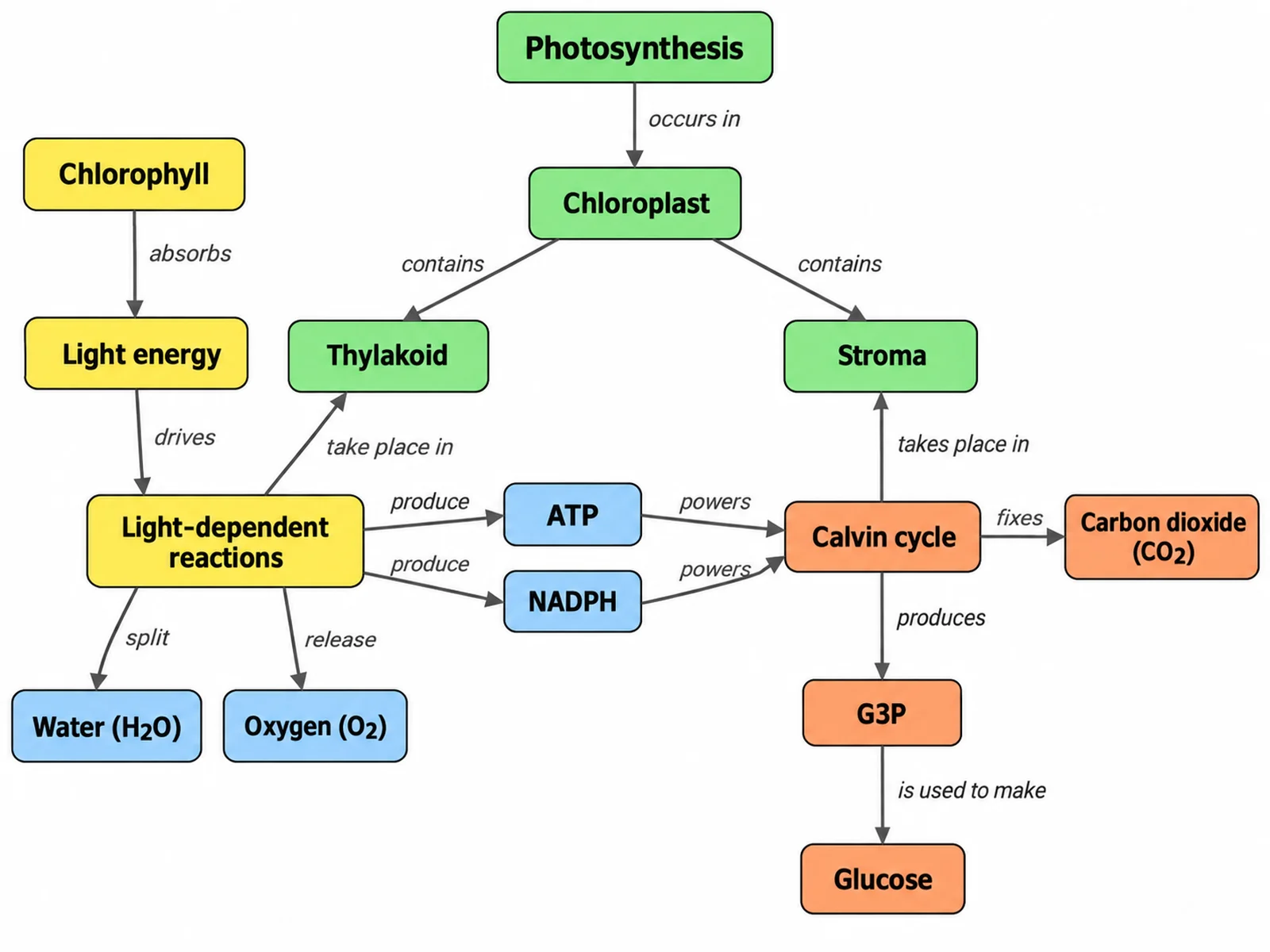
Photosynthesis concept map linking the thylakoid light-dependent reactions and the stroma Calvin cycle through ATP and NADPH
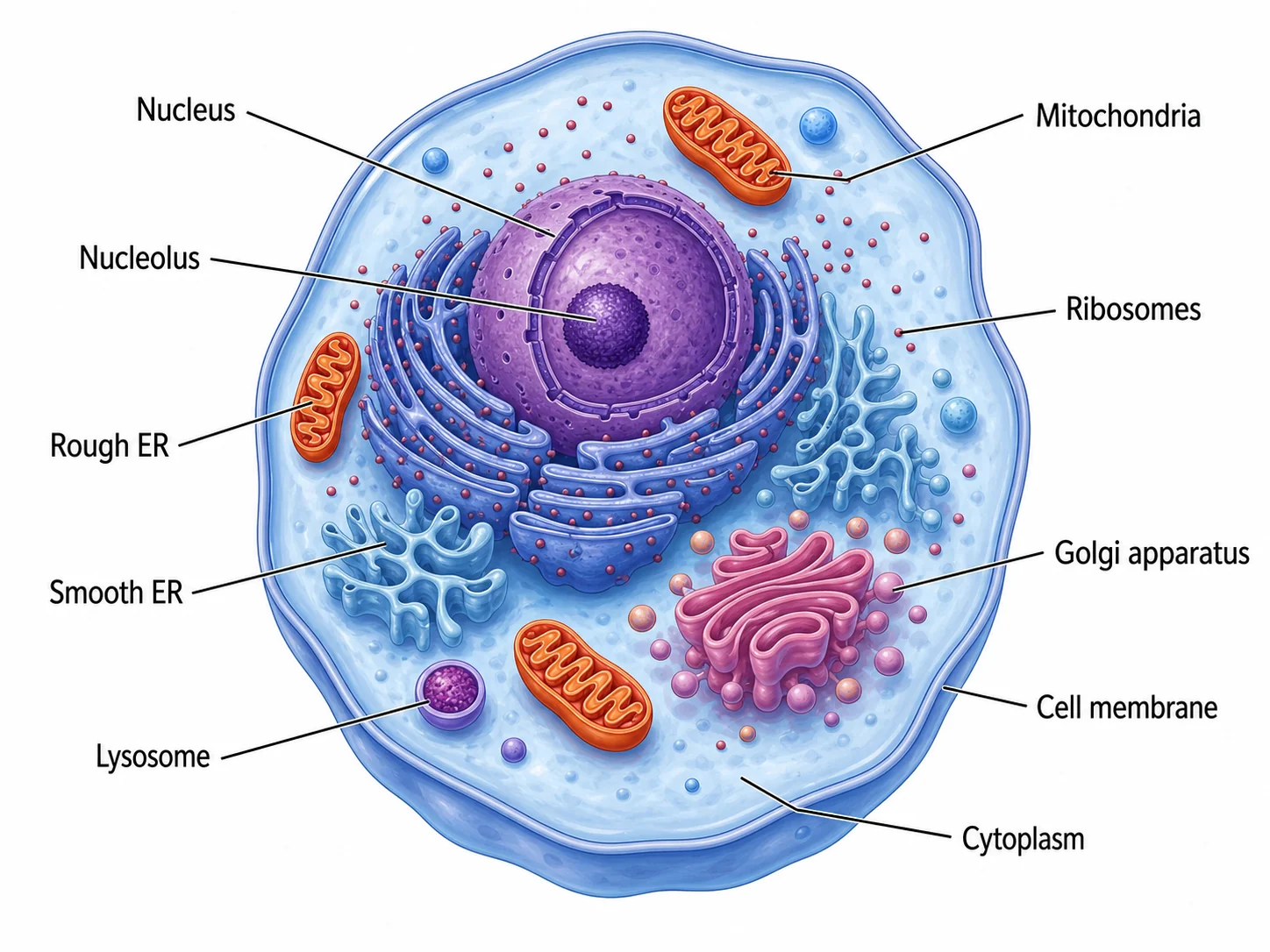
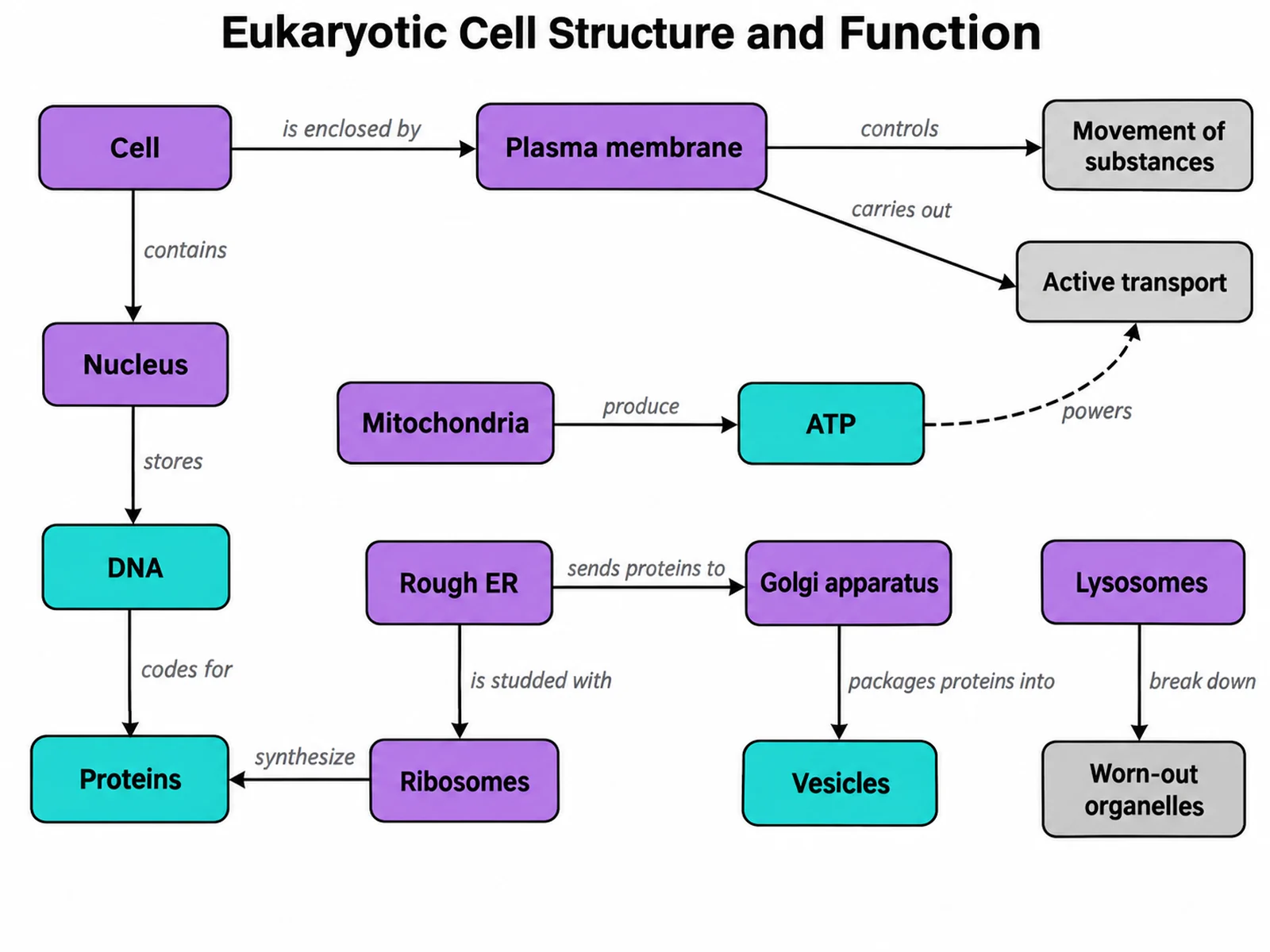
Concept map of eukaryotic cell organelles linking nucleus, ribosomes, rough ER, Golgi apparatus, mitochondria, lysosomes, and plasma membrane to their functions
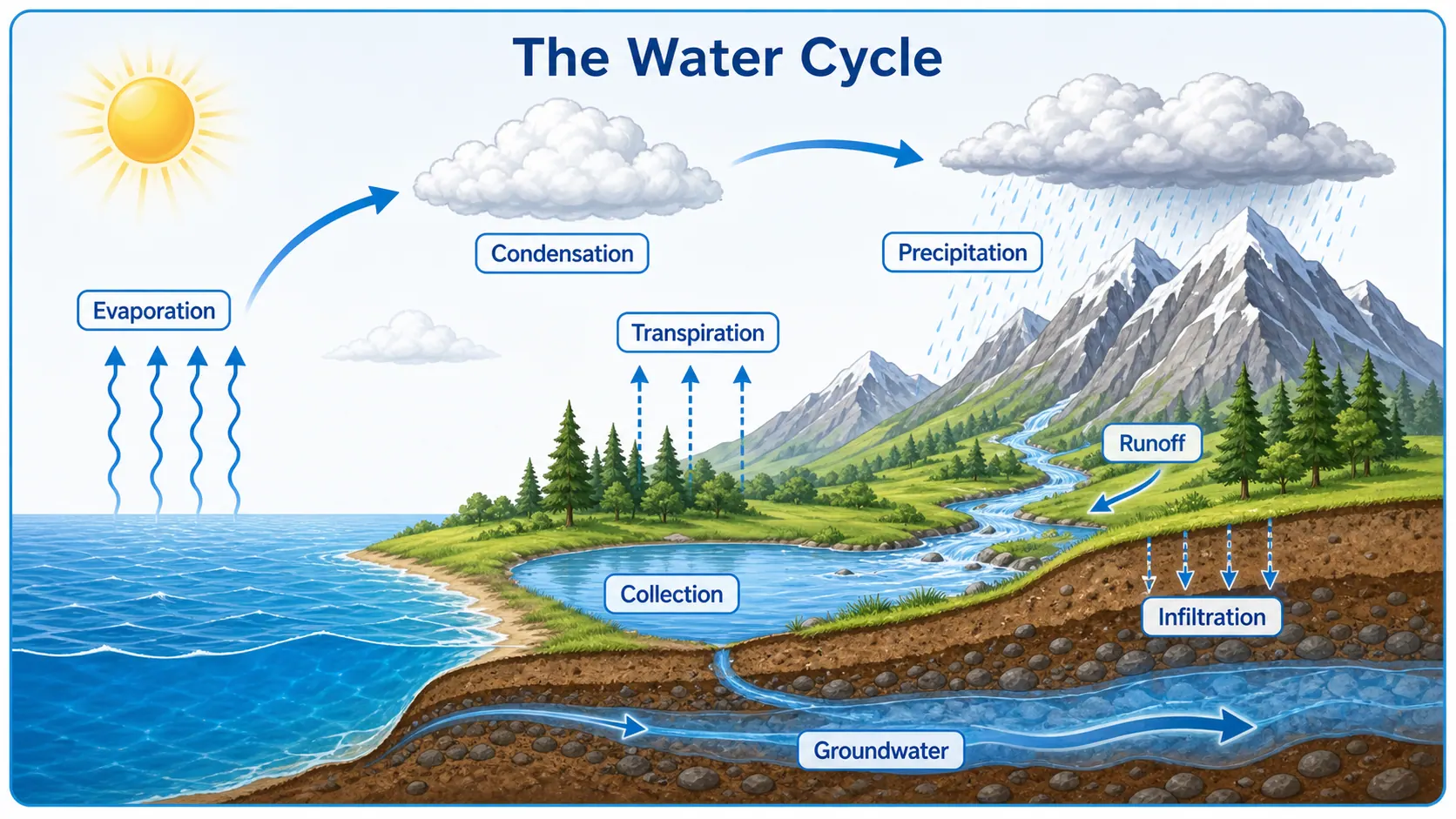
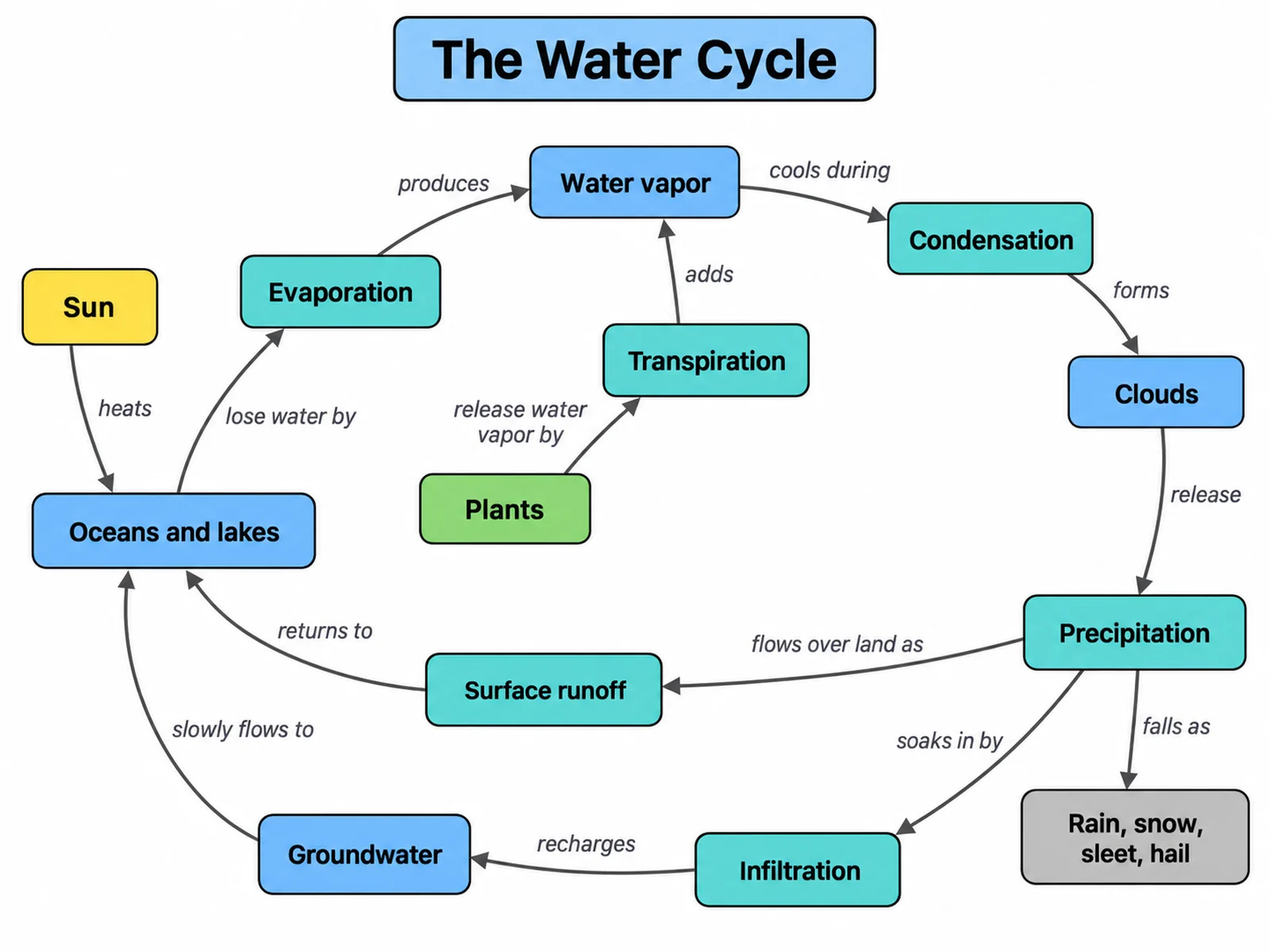
Water cycle concept map linking evaporation, transpiration, condensation, precipitation, runoff, infiltration, and groundwater

Sample previews. Describe your topic to generate your own map.

Concept Map Examples

Hover a card to copy its prompt. Every example lists the exact node text and the linking phrase on each arrow.

Photosynthesis concept map linking the thylakoid light-dependent reactions and the stroma Calvin cycle through ATP and NADPH

Prompt

Create a concept map titled "Photosynthesis". Links: "Photosynthesis" —occurs in→ "Chloroplast"; "Chloroplast" —contains→ "Thylakoid" and "Stroma"; "Chlorophyll" —absorbs→ "Light energy"; "Light energy" —drives→ "Light-dependent reactions"; "Light-dependent reactions" —take place in→ "Thylakoid"; "Light-dependent reactions" —split→ "Water (H2O)"; "Light-dependent reactions" —release→ "Oxygen (O2)"; "Light-dependent reactions" —produce→ "ATP" and "NADPH"; "ATP" and "NADPH" —power→ "Calvin cycle"; "Calvin cycle" —takes place in→ "Stroma"; "Calvin cycle" —fixes→ "Carbon dioxide (CO2)"; "Calvin cycle" —produces→ "G3P"; "G3P" —is used to make→ "Glucose".
Photosynthesis Concept Map

Concept map of eukaryotic cell organelles linking nucleus, ribosomes, rough ER, Golgi apparatus, mitochondria, lysosomes, and plasma membrane to their functions

Prompt

Create a concept map titled "Eukaryotic Cell Structure and Function". Links: "Cell" —is enclosed by→ "Plasma membrane"; "Plasma membrane" —controls→ "Movement of substances"; "Cell" —contains→ "Nucleus"; "Nucleus" —stores→ "DNA"; "DNA" —codes for→ "Proteins"; "Ribosomes" —synthesize→ "Proteins"; "Rough ER" —is studded with→ "Ribosomes"; "Rough ER" —sends proteins to→ "Golgi apparatus"; "Golgi apparatus" —packages proteins into→ "Vesicles"; "Mitochondria" —produce→ "ATP"; "Lysosomes" —break down→ "Worn-out organelles"; cross-link "ATP" —powers→ "Active transport", with "Active transport" linked from "Plasma membrane" by "carries out".

Cell Structure and Function

Water cycle concept map linking evaporation, transpiration, condensation, precipitation, runoff, infiltration, and groundwater

Prompt

Create a concept map titled "The Water Cycle". Links: "Sun" —heats→ "Oceans and lakes"; "Oceans and lakes" —lose water by→ "Evaporation"; "Evaporation" —produces→ "Water vapor"; "Plants" —release water vapor by→ "Transpiration"; "Transpiration" —adds→ "Water vapor"; "Water vapor" —cools during→ "Condensation"; "Condensation" —forms→ "Clouds"; "Clouds" —release→ "Precipitation"; "Precipitation" —falls as→ "Rain, snow, sleet, hail"; "Precipitation" —flows over land as→ "Surface runoff"; "Surface runoff" —returns to→ "Oceans and lakes"; "Precipitation" —soaks in by→ "Infiltration"; "Infiltration" —recharges→ "Groundwater"; "Groundwater" —slowly flows to→ "Oceans and lakes".

Water Cycle Concept Map

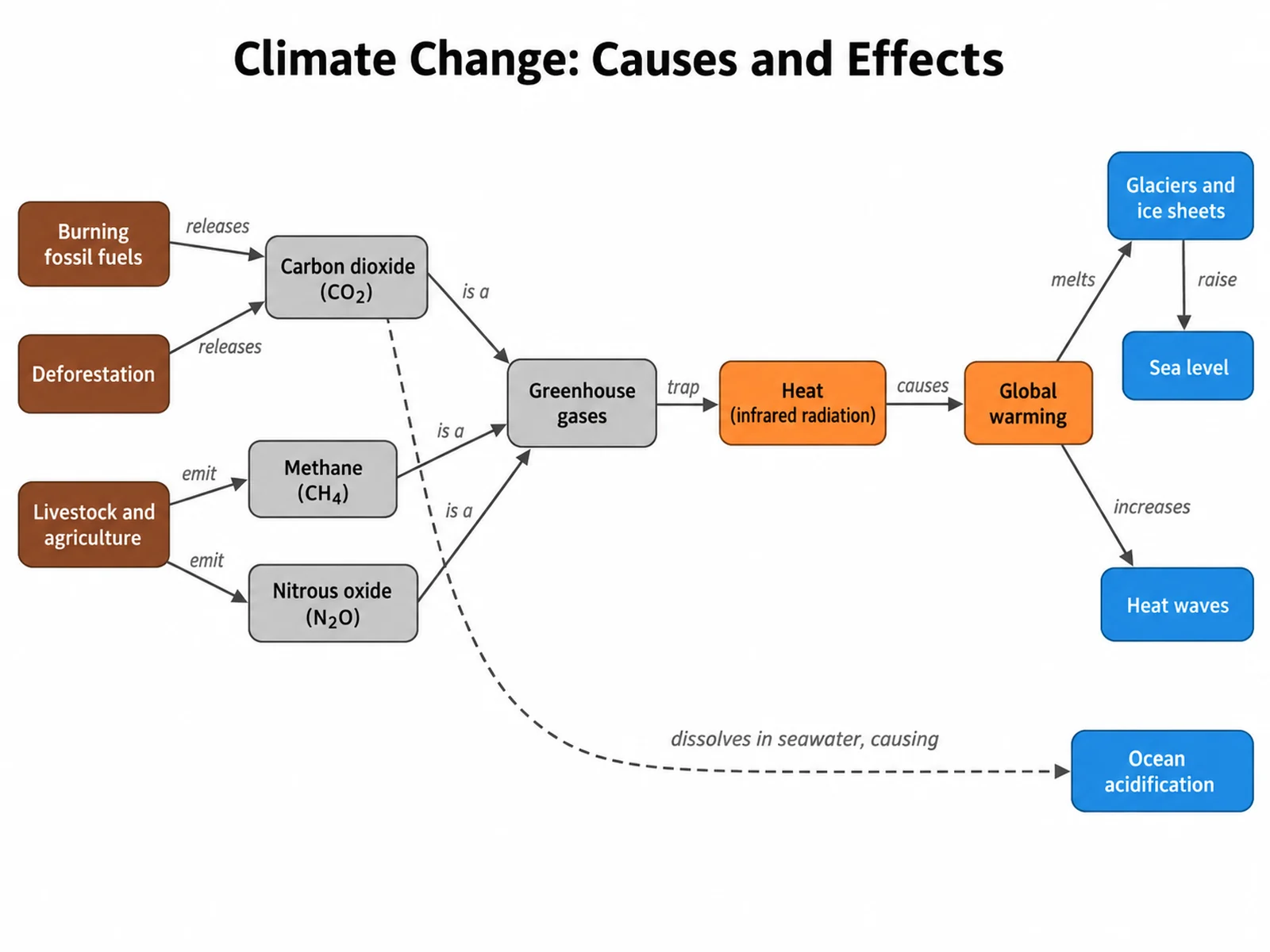
Concept map of climate change causes, greenhouse gases, global warming, and effects including sea level rise and ocean acidification

Prompt

Create a concept map titled "Climate Change: Causes and Effects", causes on the left, effects on the right. Links: "Burning fossil fuels" —releases→ "Carbon dioxide (CO2)"; "Deforestation" —releases→ "Carbon dioxide (CO2)"; "Livestock and agriculture" —emit→ "Methane (CH4)" and "Nitrous oxide (N2O)"; these three gases —are→ "Greenhouse gases"; "Greenhouse gases" —trap→ "Heat (infrared radiation)"; "Heat (infrared radiation)" —causes→ "Global warming"; "Global warming" —melts→ "Glaciers and ice sheets"; "Glaciers and ice sheets" —raise→ "Sea level"; "Global warming" —increases→ "Heat waves"; cross-link "Carbon dioxide (CO2)" —dissolves in seawater, causing→ "Ocean acidification".

Climate Change Causes and Effects

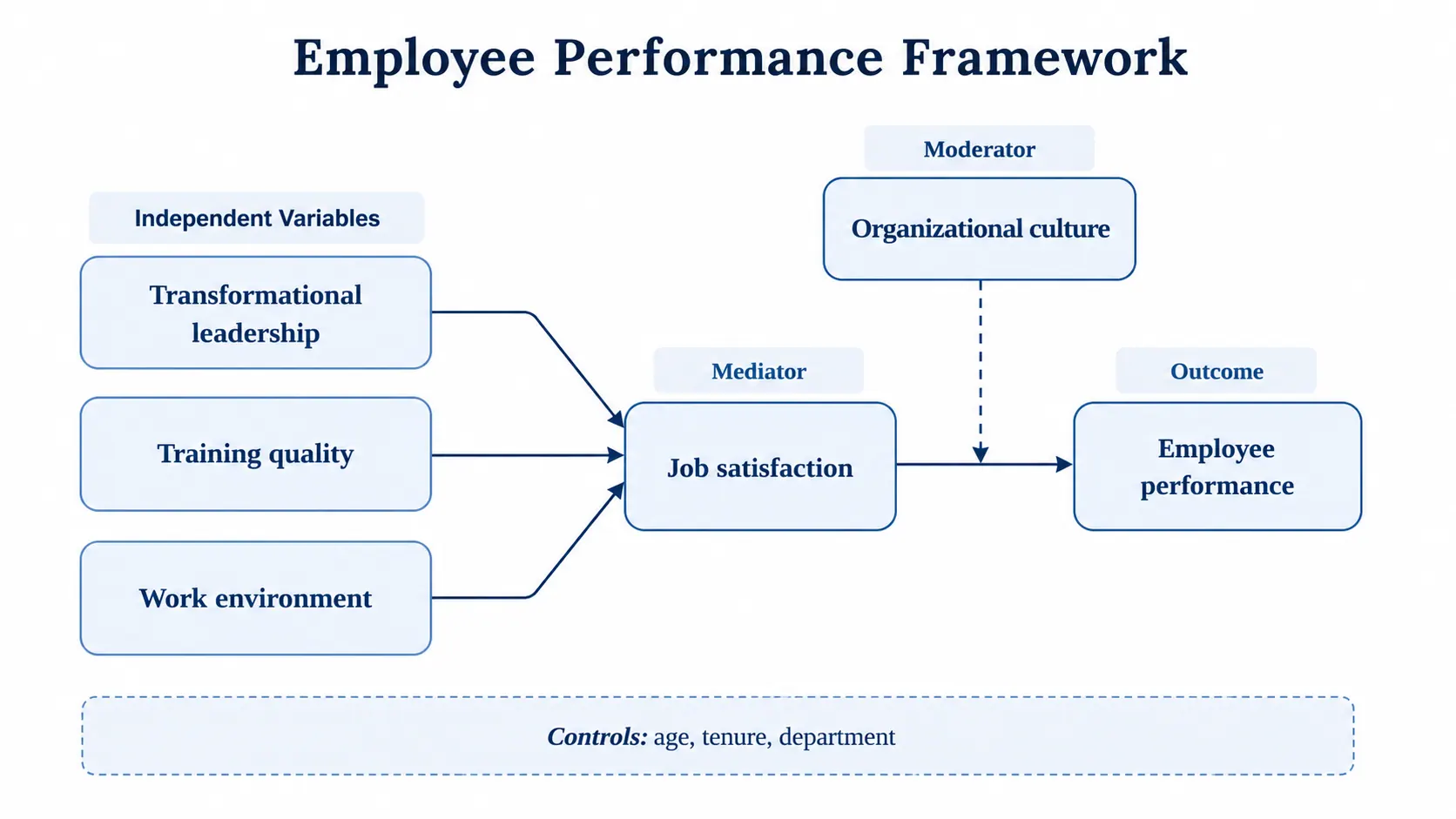
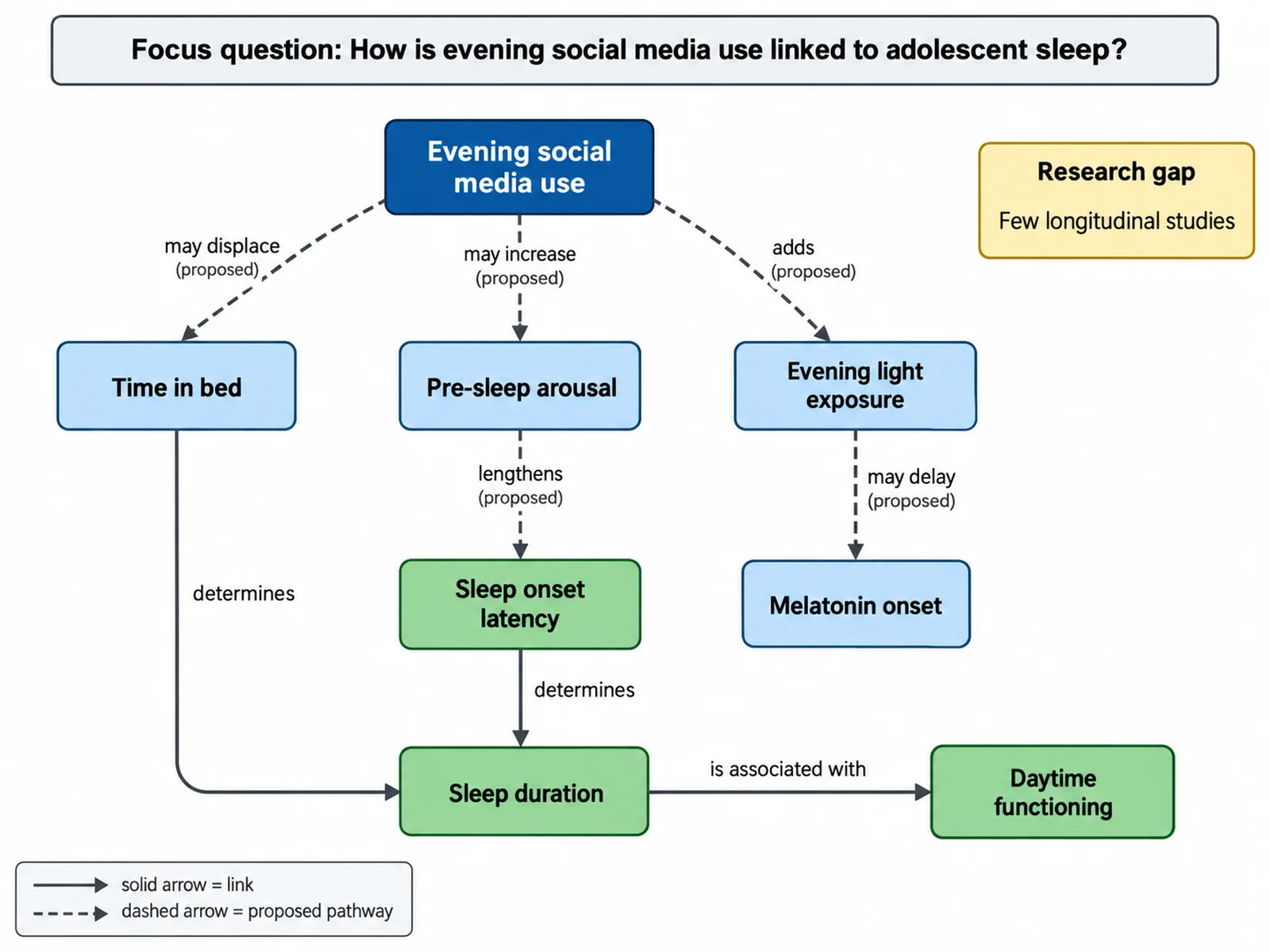
Research literature concept map of proposed pathways between evening social media use and adolescent sleep, with a research gap node

Prompt

Create a research literature concept map for the focus question "How is evening social media use linked to adolescent sleep?". Links: "Evening social media use" —may displace→ "Time in bed"; "Evening social media use" —may increase→ "Pre-sleep arousal"; "Evening social media use" —adds→ "Evening light exposure"; "Evening light exposure" —may delay→ "Melatonin onset"; "Pre-sleep arousal" —lengthens→ "Sleep onset latency"; "Time in bed" and "Sleep onset latency" —determine→ "Sleep duration"; "Sleep duration" —is associated with→ "Daytime functioning". Side box "Research gap": "Few longitudinal studies". Mark pathway links "proposed".

Thesis Literature Map

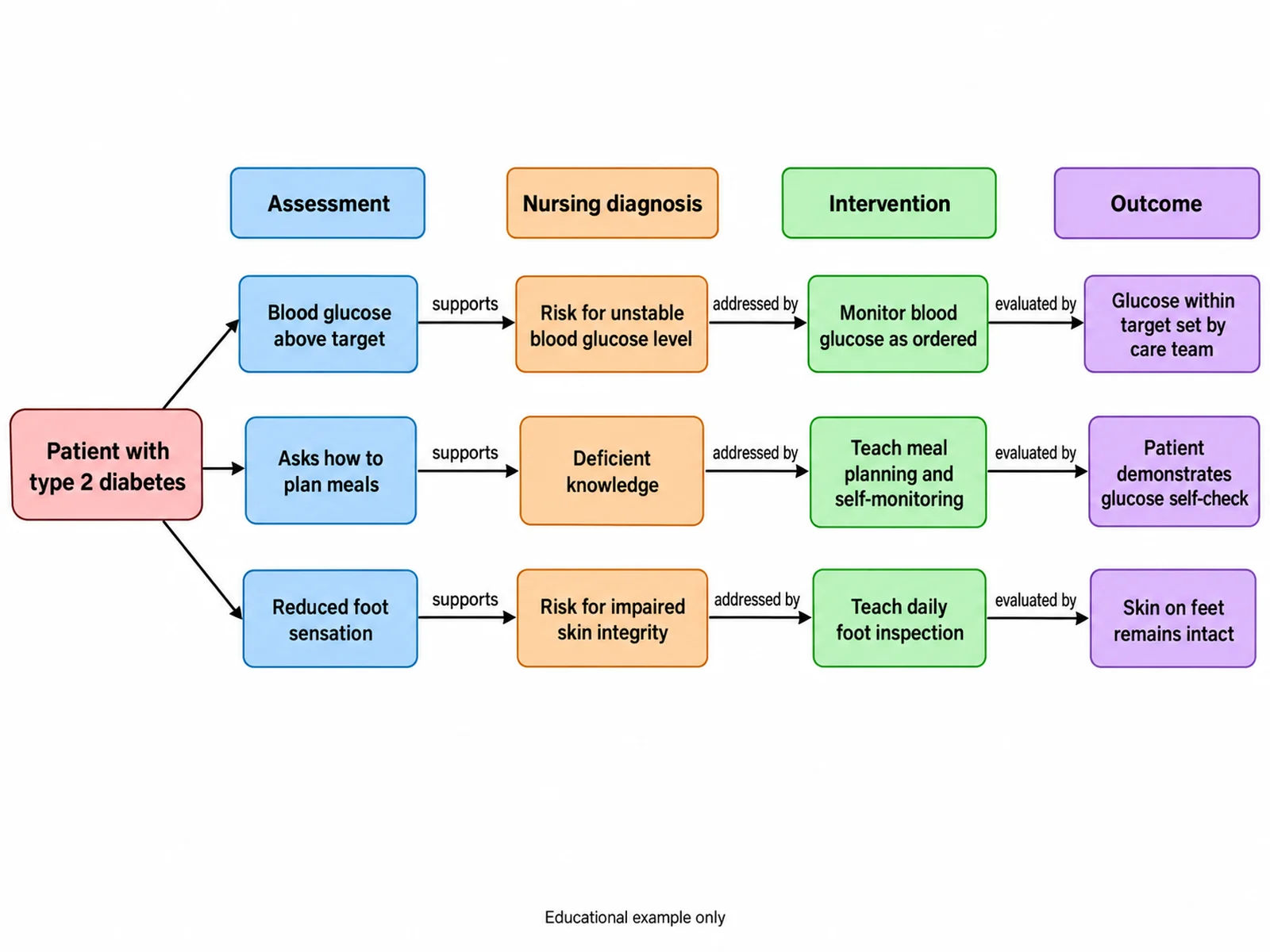
Educational nursing concept map for a patient with type 2 diabetes linking assessment data, nursing diagnoses, interventions, and outcomes

Prompt

Create an educational nursing care concept map. Center: "Patient with type 2 diabetes". Four columns: assessment, nursing diagnosis, intervention, outcome. "Blood glucose above target" —supports→ "Risk for unstable blood glucose level" —addressed by→ "Monitor blood glucose as ordered" —evaluated by→ "Glucose within target set by care team". "Asks how to plan meals" —supports→ "Deficient knowledge" —addressed by→ "Teach meal planning and self-monitoring" —evaluated by→ "Patient demonstrates glucose self-check". "Reduced foot sensation" —supports→ "Risk for impaired skin integrity" —addressed by→ "Teach daily foot inspection" —evaluated by→ "Skin on feet remains intact". Footer: "Educational example only".

Nursing Care Concept Map

How to make a concept map

1

Ask a focus question

Write one question the map should answer, then list 8 to 15 key concepts that the answer needs.

2

Write the propositions

Connect pairs of concepts as "concept → linking phrase → concept", rank them from general to specific, and add cross-links.

3

Generate and check

Generate the concept map, read every link aloud as a sentence, and fix any node, phrase, or arrow that is wrong.

What is a concept map?

A concept map is a diagram of nodes (concepts) joined by arrows that carry linking phrases. Each concept–link–concept triple forms a proposition you can read as a sentence: "Calvin cycle — fixes → carbon dioxide". The labels are what make it a concept map rather than a mind map. A mind map radiates from one central idea with unlabeled branches, while a concept map states how ideas relate and lets any concept connect to any other.

Because each link is an explicit claim, a concept map is easy to check: a teacher or supervisor can read the propositions one by one and spot a missing idea or a wrong relationship. That makes it useful for students checking their understanding and for researchers organizing the constructs in a field before writing.

How to build a concept map

  • Focus question: start with a question such as "How does a plant make glucose?" It decides what belongs on the map.
  • Key concepts: list nouns or short noun phrases, one idea per node. Keep processes and structures as separate nodes.
  • Hierarchy: place the most general concept at the top and more specific concepts below it.
  • Linking phrases: label every arrow with a verb phrase such as "produces", "takes place in", or "is evaluated by".
  • Cross-links: connect concepts on different branches. These links often show the deepest understanding.

Uses in teaching, study, and literature reviews

  • Teaching: introduce a unit, compare a class map before and after instruction, or hand out a blank concept map template to complete.
  • Study: turn chapter notes into propositions to find gaps in understanding before an exam. A concept map for students works best when the student writes the links.
  • Literature reviews: map constructs, proposed mechanisms, and research gaps for a thesis chapter, and show where studies agree or leave questions open.
  • Clinical education: nursing students link assessment data to nursing diagnoses, interventions, and outcomes.

Common mistakes and accuracy checks

  • Unlabeled arrows: a line with no linking phrase does not say how two concepts relate.
  • Too many nodes: beyond about 15 to 20 concepts, split the map into sub-maps.
  • Sentences in nodes: move verbs to the link and keep nodes short.
  • Wrong direction: "Stroma — takes place in → Calvin cycle" reads backward. Check every arrowhead.
  • Scientific errors: confirm each proposition against your textbook or sources. For example, the Calvin cycle uses ATP and NADPH from the light-dependent reactions; it does not release oxygen.

Concept Map Generator FAQ

A mind map branches outward from one central idea, and its lines usually carry no words. A concept map connects concepts with labeled arrows, so every link reads as a statement, such as "Chlorophyll absorbs light energy". Cross-links between branches are allowed and encouraged.

Map your topic

List your concepts and linking phrases, and generate a clear AI concept map for your class, revision notes, or literature review.